
The Difference Between Dry and Dehydrated Skin (And How to Treat Each)
Many people describe their skin as "dry" and immediately reach for a heavier cream, only to find that tightness, dullness and fine lines still show up by midday. In many cases, the problem is not dry skin at all, but dehydration. Although they can look and feel similar, dryness and dehydration are not the same condition, and treating one as if it were the other is a common reason routines stop working.
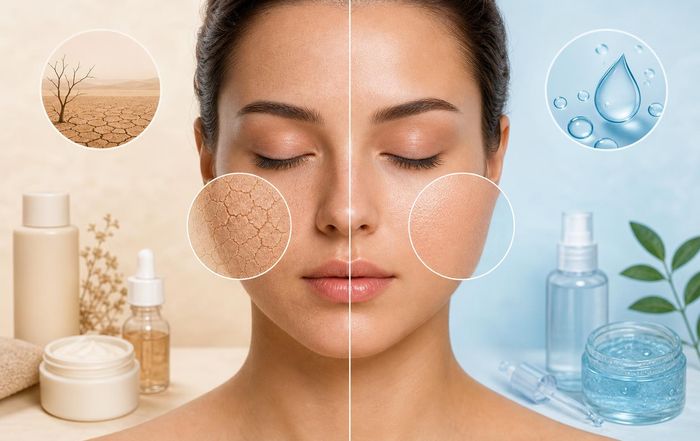
Dermatologists and skin scientists consistently distinguish between the two: dry skin is a skin type lacking oil, while dehydrated skin is a temporary condition lacking water. Understanding that difference changes what ingredients to look for, which habits to adjust, and how to build a routine that actually works for your face and body.
Below, we break down how to tell them apart, what causes each, how to treat them, and how to build a routine that supports a healthier skin barrier over time.
Dry vs. Dehydrated Skin: The Core Difference
From a dermatologic perspective, the simplest way to separate these terms is to look at what your skin is missing. Dry skin (xerosis) is characterized by a deficiency in sebum and lipids. According to the American Academy of Dermatology (AAD), people with naturally dry skin often have fewer functioning oil glands, which means their barrier produces less of the protective oils that keep moisture in and irritants out. This tends to be long-term and is often linked with genetics, age, and certain medical conditions like eczema.
Dehydrated skin, on the other hand, is defined by a lack of water in the outer layers of the skin, the stratum corneum. Research published in journals like the International Journal of Cosmetic Science has shown that transepidermal water loss (TEWL)-the rate at which water evaporates from the skin-rises when the barrier is compromised by factors such as over-cleansing, harsh actives, low humidity, or illness. Any skin type, including oily or combination, can become dehydrated, even if it produces plenty of oil.
Practically, that means someone with dry skin needs to replenish oils and strengthen the lipid barrier, while someone with dehydrated skin needs to restore and retain water with humectants and barrier-supportive care. Many people experience both at once, but separating the concepts helps you choose more targeted products and habits rather than simply "more moisture."
For readers who want to dive deeper into barrier health, our dedicated skincare section and guides and tips hub explore how the skin's outer layer functions and how to support it over time.
How to Tell If Your Skin Is Dry
Dry skin is usually a baseline characteristic rather than a passing phase. Dermatology organizations such as the British Association of Dermatologists note that people with naturally dry skin often report discomfort year-round, with seasonal flare-ups in cold or windy weather.
Common signs of dry skin include a persistent feeling of tightness, especially after cleansing or showering, visible flaking or rough patches on the cheeks, around the nose, or on the body, and a tendency toward irritation when using foaming cleansers or alcohol-heavy toners. Fine lines may appear more prominent not because of age alone but because the surface lacks the flexible, cushioning effect of natural oils. On the body, dry skin often shows up as ashy or powdery areas on the shins, elbows and hands, particularly in winter or in low-humidity indoor environments.
Dry skin is also more common as people age. Studies summarized by the National Institute on Aging highlight that oil production naturally declines over time, and the barrier's lipid content shifts, making it harder to hold onto moisture. Certain medical conditions, including atopic dermatitis (eczema), psoriasis, diabetes, and thyroid disorders, can further impair the skin's ability to maintain adequate lipids and hydration. In those cases, dryness may be accompanied by itching, redness, or distinct plaques that require medical assessment.
If your face feels dry no matter the season, you rarely see shine even by late afternoon, and lighter lotions never seem to be enough, you are likely dealing with a dry skin type. That calls for a routine focused on richer textures and barrier repair, which we'll explore later. Our beauty and routines sections often feature examples of how to adapt daily care to naturally dry complexions.
How to Recognize Dehydrated Skin
Dehydrated skin can be more confusing because it can appear on any skin type and can come and go. The International League of Dermatological Societies and related research on TEWL emphasize that dehydration is usually a functional issue: the barrier is letting water escape faster than it is being replenished. Oily, acne-prone skin can still look dull, feel tight after washing, or show fine "criss-cross" lines when pinched, all classic signs of dehydration.
One of the most telling signs is when the skin feels tight or uncomfortable but still looks shiny in the T-zone. You might notice makeup sitting on top of the skin rather than melding in, foundation catching on fine lines that weren't as visible before, or an overall "papery" look when you smile. Dehydrated skin often becomes more reactive, stinging with products that previously felt fine, because a compromised barrier allows irritants to penetrate more easily.
Lifestyle and environment play a huge role. Low humidity from air conditioning or heating, frequent air travel, hot showers, and overuse of exfoliating acids or retinoids can all strip water from the outer layers. The American Academy of Dermatology notes that even using very hot water or washing the face more than necessary can significantly increase water loss from the skin surface. Illness, fever, certain medications (like diuretics), and not drinking enough fluids can contribute, although topical hydration and barrier support remain key.
A quick at-home clue: if your skin looks plumper and smoother within minutes of applying a hydrating serum with humectants like glycerin or hyaluronic acid, but returns to looking dull later in the day, dehydration is likely part of the picture. Readers interested in pairing skincare with lifestyle choices can find complementary advice in our wellness and health and fitness sections.
Common Causes: Why Dryness and Dehydration Happen
Although dryness and dehydration are distinct, they often share overlapping triggers. Genetics and age are major contributors to dry skin. People with a family history of eczema or atopic conditions may inherit differences in barrier proteins like filaggrin, which affect how well the skin retains both lipids and water; this has been documented in research reviewed by organizations such as the National Eczema Association. Hormonal changes, including menopause, can also reduce sebum production, leading to a drier baseline skin type even in people who were oily in earlier decades.
Dehydration is more tied to external stressors and habits. Prolonged exposure to low-humidity environments, like heated indoor spaces in winter or airplane cabins, accelerates water evaporation from the skin. Harsh cleansers containing high levels of sulfates, frequent use of strong exfoliating acids, and aggressive scrubbing all disrupt the lipid matrix and corneocyte structure that normally slow water loss. The Mayo Clinic highlights hot showers and baths, as well as fragranced soaps, as common culprits in both facial and body dryness and dehydration.
Lifestyle factors matter as well. Inadequate fluid intake, high alcohol consumption, smoking, and diets low in essential fatty acids can all affect the quality of the skin barrier and its ability to hold water. While drinking more water does not instantly "hydrate" the skin in a cosmetic sense, research referenced by Harvard Health Publishing suggests that severe or chronic internal dehydration can worsen the appearance of the skin and delay barrier recovery. Medications such as diuretics, some acne treatments (notably oral isotretinoin), and certain antihistamines can also contribute to dryness and dehydration.
Weather and UV exposure add another layer. UV radiation damages collagen and impairs barrier function, increasing TEWL over time, while wind and cold strip away surface lipids. That is why dermatology guidelines from bodies like the European Academy of Dermatology and Venereology consistently recommend daily broad-spectrum sunscreen and gentle cleansing as foundational steps for nearly every skin type.
How Dry Skin Looks and Feels vs. Dehydrated Skin
It can be helpful to compare how each condition typically presents in day-to-day life. Dry skin often appears consistently matte with a lack of visible pores, especially on the cheeks and sides of the face. Flakes, rough patches, and a tendency toward redness or irritation when exposed to strong actives are frequent complaints. Applying a richer cream usually brings noticeable relief, and the skin may feel more comfortable throughout the day once adequate lipids are supplied.
Dehydrated skin, by contrast, can look both shiny and dull at the same time. The surface may have an oily film, particularly in the T-zone, while still showing fine dehydration lines around the eyes or mouth. Expressions can leave faint "imprints," and makeup may separate or cling to certain areas as the day goes on. Tightness after cleansing that eases once a hydrating serum or mist is applied is a classic sign. Many people describe a sense of their skin feeling "thirsty" even though they are using products regularly.
Another difference lies in how the skin responds to products. Dry skin often tolerates richer creams and oils well but may sting with foaming cleansers or astringent toners. Dehydrated skin can react to a wide range of products, not necessarily because of sensitivity to a specific ingredient but because the compromised barrier allows penetration of potential irritants. In practice, someone might think they have sensitive skin when they actually have dehydration on top of another skin type. Adjusting to gentler formulas and adding hydrating steps can reduce this reactivity.
Readers who are unsure where they fall on this spectrum may find it useful to keep a brief skincare diary over one to two weeks, noting how the skin looks and feels in different conditions and after different products. This kind of observation can help you apply the advice in our makeup and trends coverage more precisely to your own routine.
Treating Dry Skin: Rebuilding Lipids and Supporting the Barrier
For genuinely dry skin, the priority is to replenish missing oils and strengthen the lipid barrier. Dermatology guidelines from organizations such as the American Academy of Dermatology and the National Health Service (NHS) in the UK consistently recommend thick, fragrance-free moisturizers applied at least twice daily, especially after bathing when the skin is still slightly damp.
Ingredients to look for include occlusives like petrolatum, mineral oil, and dimethicone, which form a protective film that reduces water loss, and emollients such as shea butter, ceramides, cholesterol, and fatty alcohols (like cetyl or stearyl alcohol), which help fill gaps between skin cells and smooth the surface. Ceramide-containing formulations have been shown in clinical studies to improve barrier function and reduce dryness over time, making them a cornerstone for dry and eczema-prone skin.
Cleansing should be as gentle as possible. Non-foaming, cream or oil-based cleansers that avoid high concentrations of sulfates are typically better tolerated. The Cleveland Clinic advises limiting hot water exposure and keeping showers short, as prolonged, hot baths can strip away natural oils. On the body, applying a rich cream or ointment within a few minutes of stepping out of the shower-often called the "soak and seal" method-helps lock in moisture and improves comfort, especially on shins, hands and feet.
Lifestyle adjustments can strengthen these topical efforts. Including sources of essential fatty acids in the diet, such as oily fish, nuts, seeds, and plant oils, may support the skin's natural lipid production, although topical care remains the primary treatment. Protecting the skin from harsh weather with gloves, scarves, and appropriate clothing, and using a humidifier in extremely dry indoor environments, further reduces stress on an already oil-deficient barrier.
For persistent or severe dryness accompanied by itching, cracking, or signs of infection, consulting a dermatologist is important. Conditions such as eczema or psoriasis often need prescription treatments alongside over-the-counter moisturizers. Our brands and products coverage frequently highlights fragrance-free, barrier-focused ranges that align with dermatologist recommendations.
Treating Dehydrated Skin: Restoring Water and Reducing Loss
Dehydrated skin calls for a slightly different strategy: increase water content in the outer layers and reduce water loss, without necessarily adding heavy oils if your skin does not need them. Humectants-ingredients that attract and bind water-are central here. Glycerin, hyaluronic acid, sodium PCA, urea (at low concentrations), and aloe vera are widely used and supported by cosmetic science literature for their ability to increase stratum corneum hydration.
A well-designed routine for dehydration typically includes a gentle, non-stripping cleanser followed by a hydrating toner or essence, then a serum rich in humectants, and finally a moisturizer that provides enough occlusion to keep that water in place. The Journal of Clinical and Aesthetic Dermatology has published reviews noting that layering light, water-based products can significantly improve hydration levels, particularly when combined with moisturizers containing ceramides and other barrier-supportive lipids.
Just as important is what you remove from your routine. Over-exfoliation is a frequent cause of dehydration, especially with daily use of strong alpha-hydroxy acids (AHAs) or beta-hydroxy acids (BHAs). Dermatologists quoted by sources like Harvard Health Publishing often recommend limiting strong chemical exfoliants to a few times per week at most, and adjusting frequency if you notice stinging, redness, or prolonged tightness. Similarly, cutting back on foaming cleansers, alcohol-heavy toners, and frequent makeup removal with strong wipes can help the skin recover.
Environmental adjustments also make a visible difference. Using a humidifier in very dry climates, avoiding sitting directly under heating or air-conditioning vents, and applying a hydrating mist or serum during long flights can all reduce TEWL. While simply drinking more water will not fix dehydration on its own, maintaining adequate fluid intake, moderating alcohol and caffeine, and supporting overall health-as outlined by authorities like the World Health Organization-provide a healthier baseline for the skin to function.
Sunscreen remains essential. UV exposure not only accelerates aging but also impairs barrier function, increasing water loss. Broad-spectrum SPF 30 or higher, as recommended by the Skin Cancer Foundation, should be applied daily as the final step in the morning routine, over hydrating serums and moisturizers. Lightweight, hydrating sunscreen formulas can help avoid the heavy feel that sometimes discourages consistent use.
For readers exploring how technology intersects with skincare-such as hydration-tracking wearables or smart humidifiers-our technology beauty section often covers tools that may complement these topical strategies.
Can Skin Be Both Dry and Dehydrated?
Many people have both dry and dehydrated skin at the same time. A genetically oil-poor barrier that is also exposed to harsh weather, over-cleansing, or strong actives can lack both lipids and water, leading to flaking, tightness, dullness, and sensitivity all at once. This overlap is one reason the terms are often used interchangeably in everyday conversation, even though the underlying issues differ.
Treating combined dryness and dehydration means addressing both needs: water first, then oil and barrier support. A typical approach might involve applying a hydrating serum or essence immediately after cleansing, while the skin is still slightly damp, followed by a ceramide-rich moisturizer and, if needed, an occlusive balm on particularly dry areas. On the body, layering a lighter lotion under a thicker cream can offer both immediate hydration and longer-lasting comfort.
It also means being especially cautious with exfoliation and strong actives. Retinoids, vitamin C, and high-strength acids can be beneficial for concerns like pigmentation or fine lines, but they are best introduced slowly and supported with robust barrier care. Dermatologists often suggest starting with lower concentrations and using them only a few nights per week, increasing frequency as tolerated. If you notice a spike in tightness, stinging, or flaking, it is usually a sign to pause or reduce use rather than to add more products.
In some cases, persistent combined dryness and dehydration may signal underlying conditions such as eczema, rosacea, or seborrheic dermatitis. These can mimic simple dryness but often require professional diagnosis and tailored treatment. If your skin remains uncomfortable despite a gentle, hydrating routine, or if you see persistent redness, scaling, or burning, seeking advice from a board-certified dermatologist is advisable.
Building a Routine That Respects Your Skin's Needs
Once you understand whether your skin is primarily dry, dehydrated, or both, crafting a supportive routine becomes much more straightforward. For dry skin, prioritize richer creams, gentle cleansing, and consistent barrier repair. For dehydrated skin, focus on layering humectants, minimizing stripping habits, and protecting the barrier from environmental stress. For many, the most effective routines blend elements of both, adjusting with the seasons and life changes.
It can be helpful to think in terms of non-negotiable fundamentals-gentle cleansing, targeted hydration, appropriate moisturization, and daily sun protection-before layering in treatments for specific concerns like acne, pigmentation, or aging. From there, small adjustments in texture and ingredient emphasis can align your routine with your skin's particular balance of oil and water. Our skincare, routines, and food and nutrition sections collectively explore how topical care and lifestyle choices work together to support healthier skin over time.
Recognizing the difference between dryness and dehydration does not require a microscope or a clinic visit in most cases; it starts with paying attention to how your skin behaves, how it feels after cleansing and moisturizing, and how it responds to changes in environment and products. With that insight, the products on your shelf become tools you can use more deliberately, rather than a collection of guesses.
