
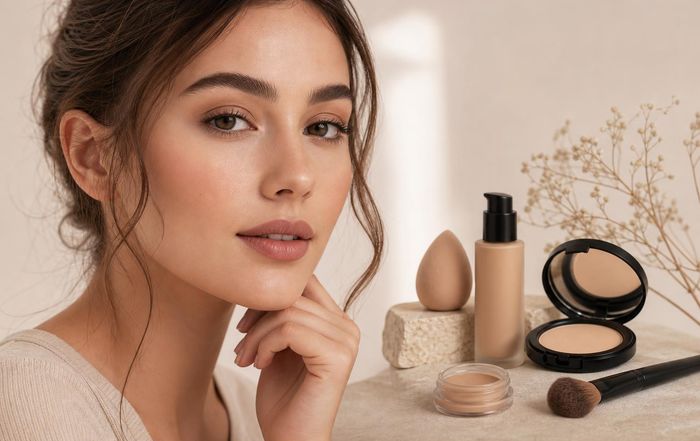
How to Create a Soft Matte Makeup Look Without Cakiness
A soft matte makeup look is one of the most flattering finishes for everyday wear: it blurs texture, controls shine, and photographs beautifully, without the heavy, flat effect of full-on matte glam. The challenge is avoiding cakiness-those visible layers of product that collect in fine lines, cling to dry patches, and make skin look older or mask-like. Achieving a smooth, soft-focus matte finish is less about buying the "right" full-coverage foundation and more about smart prep, thin layers, and targeted techniques.
Our guide breaks down each step-from skincare and base products to setting and touch-ups-so you can build a soft matte look that stays smooth and skin-like all day.
Start with skin prep that supports a soft matte finish
A matte base will only look as good as the skin underneath. Cakiness usually shows up first on dehydrated or flaky areas, so balancing moisture and oil control is essential. For most skin types, the goal isn't to strip away all shine, but to hydrate where you need it and mattify only where you get oily.
Cleansing with a gentle, low-foaming formula helps remove excess oil and sunscreen without leaving skin tight or squeaky. Over-cleansing or using harsh scrubs can cause rebound oiliness and create micro-flaking that matte products cling to. Dermatology organizations such as the American Academy of Dermatology recommend mild cleansers and lukewarm water to maintain the skin barrier, which is particularly important when you're layering complexion products. After cleansing, a hydrating toner or essence containing ingredients like glycerin, hyaluronic acid, or panthenol can plump the surface and reduce the appearance of fine lines that foundation might otherwise emphasize.
Moisturizer is non-negotiable, even for oily skin, but texture matters. Gel or lightweight lotion formulas with humectants and non-comedogenic emollients tend to sit better under a soft matte look than very occlusive creams. People with combination skin can apply a richer moisturizer to drier areas (cheeks, around the mouth) and a more oil-controlling formula on the T-zone. Ingredients such as niacinamide have been shown in clinical research to support barrier function and help regulate sebum, making them helpful under makeup for shine-prone complexions; several studies summarized by the Journal of Clinical and Aesthetic Dermatology highlight these benefits.
If you're dealing with texture-flakiness, rough patches, or clogged pores-consider integrating gentle chemical exfoliants (like low-strength AHAs or BHAs) into your broader skincare routine a few times per week rather than scrubbing right before makeup. Over-exfoliating immediately before application can create irritation and patchiness. Dermatologists and organizations such as the UK's National Health Service caution against harsh physical exfoliants for acne-prone skin, which can aggravate inflammation that makeup will struggle to conceal smoothly.
Finally, sunscreen is still essential during the day, but some formulas can interfere with a matte finish. Look for lightweight, non-greasy mineral or hybrid sunscreens labeled "cosmetically elegant" or "matte finish." Many Japanese and Korean sunscreens highlighted by reviewers at sites like Lab Muffin Beauty Science are praised for their thin textures that sit well under makeup. Let sunscreen fully set-usually at least 10-15 minutes-before applying primer or base products to avoid pilling and uneven coverage.
Choose the right base: foundation, skin tints, and coverage strategy
A soft matte look is more about technique than maximum coverage. Full-coverage, long-wear foundations can work, but they are also more likely to look cakey if applied heavily. For many, a flexible medium-coverage foundation or even a buildable skin tint paired with targeted concealer delivers a smoother, more modern result.
When selecting a base, focus on formulas described as "natural matte," "soft matte," or "satin-matte" rather than ultra-matte or "24-hour" full coverage. These usually contain a balance of pigments and blurring powders that control shine without completely eliminating dimension. Professional makeup artists often emphasize that sheer to medium coverage layered strategically creates a more skin-like finish than one thick layer of a heavy formula; this approach is echoed in interviews with artists like Lisa Eldridge and Wayne Goss on platforms such as YouTube and in coverage by outlets like Allure.
Shade and undertone accuracy are critical for avoiding a mask-like effect, especially in matte textures where the product doesn't "melt" into the skin as dewy formulas do. Many brands now offer online shade-matching tools and virtual try-ons; while not perfect, they can narrow options before testing in person. When in doubt, test along the jawline and look at the match in natural light, making sure it blends seamlessly into both face and neck.
Coverage strategy should start with less. Apply a thin layer of foundation to the center of the face-where most people have redness or discoloration-and blend outward. Then use a higher-coverage concealer only where necessary: around the nose, on blemishes, and under the eyes. This "spot correction" technique keeps the overall base thin and flexible while still delivering an even tone. Readers interested in refining this approach can explore more targeted makeup techniques that focus on placement rather than blanket coverage.
For those who prefer minimal makeup or have relatively even skin, a soft matte tinted moisturizer or blurring skin tint set with powder in key areas can be enough. This can also be an excellent strategy in hot or humid climates, where heavy foundation is more likely to break down or separate. Beauty editors at publications such as Vogue and Into The Gloss have noted the growing popularity of this lighter-coverage, skin-first approach, especially among people who want their natural texture to show through.
Primers, blurring products, and where to use them
Primers can be helpful in a soft matte routine, but they are not mandatory for everyone and can contribute to pilling or heaviness if layered without intention. The key is to choose formulas that address specific concerns and apply them only where needed rather than all over the face.
Silicone-based, pore-filling primers can visibly smooth enlarged pores and fine lines, particularly around the nose and cheeks, by creating a more even surface for foundation. However, when spread over the entire face or combined with very silicone-heavy foundations, they can create a slippery film that causes makeup to slide or ball up. Many professional artists recommend pressing a small amount only into texture-prone areas with fingertips, then allowing it to set before adding foundation. For those sensitive or allergic to silicones, there are water-based blurring primers using ingredients like silica or starches to softly mattify; brands often highlight these in marketing, and ingredient lists can be checked against resources like the Environmental Working Group's Skin Deep database for more detail.
Oil-controlling primers containing ingredients such as silica, clay, or polymeric absorbents can be useful for very oily T-zones. Applying them just to the forehead, nose, and chin can minimize shine breakthrough without drying out the entire face. People with dry or combination skin might instead opt for hydrating primers with a soft-focus finish, which add slip and prevent foundation from clinging to dry patches while still reducing surface shine.
Some products blur and mattify without being labeled as primers at all-for example, lightweight, translucent "blurring serums" or skincare-makeup hybrids that use silicone elastomers and fine powders. These can be layered after moisturizer and sunscreen to subtly refine texture before foundation. Readers who enjoy experimenting with hybrid formulas may find more options in the beauty and trends coverage that tracks new complexion launches and ingredient innovations.
Ultimately, the best approach is to treat primer as a targeted tool rather than a blanket step. If your foundation already wears well on your skin, a separate primer may be unnecessary; if you have specific issues like pronounced pores or midday shine, a small amount in the right area can significantly reduce the amount of foundation and powder required, which in turn lowers the risk of a cakey finish.
Application techniques that prevent buildup and texture
How makeup is applied often matters more than which product is used. Even the most finely milled foundation can look cakey if layered too heavily, buffed aggressively over dry patches, or mixed with incompatible formulas. Using tools and techniques that respect the skin's texture helps maintain that soft, blurred matte effect.
Many makeup artists recommend starting with a damp sponge or a soft, dense brush for foundation. A damp sponge naturally picks up excess product and presses pigment into the skin, creating a thin, even veil rather than streaky layers. Brushes can offer more coverage but may require extra blending to prevent brush marks on drier or textured areas. Using a stippling or pressing motion instead of dragging helps preserve coverage while minimizing micro-exfoliation of flaky skin. For those new to these tools, there are numerous step-by-step tutorials from credible creators and educators on platforms like Lisa Eldridge's official site and Pixiwoo's YouTube channel that demonstrate these motions clearly.
Layering in sheer passes is crucial. Apply a small amount of foundation, blend thoroughly, then step back and assess before adding more. It is easier to build coverage where needed than to remove excess once it has started to cake. Pay particular attention to areas with more movement-around the mouth, smile lines, and under the eyes-where thick layers are most likely to gather and crease. Keeping these zones thinner and relying more on pinpoint concealing can extend wear and reduce the need for heavy powdering later.
Concealer placement also affects whether the final look appears soft or heavy. Instead of painting large triangles under the eyes or covering half the cheek to hide dark circles, concentrate a small amount of a slightly peach or neutral corrector right where the darkness is most intense, then layer a thin veil of skin-tone concealer on top if needed. This method, often recommended in professional artistry classes and by brands like NARS and Make Up For Ever, allows better correction with less product. Similarly, for blemishes, a tiny brush or the tip of a clean cotton swab can place concealer exactly on the spot, which can then be gently tapped to blend without disturbing surrounding foundation.
Taking a brief pause between liquid or cream layers helps each one set slightly and reduces mixing that can lead to pilling. After finishing foundation and concealer, waiting a minute or two before powdering allows the base to mesh with your skincare and natural oils, which can improve the final texture. Readers looking to build a broader everyday routine around these techniques may also find it useful to explore daily beauty routines that integrate makeup steps with skincare and lifestyle habits.
Setting with powder: where, how much, and which type
Powder is often blamed for cakiness, but it is usually not the sole culprit; the problem is excess powder, applied over too much base, in the wrong areas. For a soft matte finish, powder should be used strategically to control shine and lock in makeup without completely flattening the skin's natural sheen.
Translucent, finely milled loose powders tend to create the smoothest soft-focus effect. They usually contain ingredients such as silica, talc, or mica that diffuse light and blur pores when used sparingly. Pressed powders can be convenient for touch-ups, but many include more binders and pigments, which can build up faster. For very dry or mature skin, some brands now offer "radiant matte" formulas that combine mattifying powders with micro-pearls, giving a subtle luminosity that prevents the chalky look; reviews on sites like Beautypedia by Paula's Choice often discuss how different powder textures behave on various skin types.
Application tools matter as much as the powder itself. A small, fluffy brush allows precise placement-under the eyes, sides of the nose, center of the forehead, chin-rather than coating the entire face. Pressing powder into the skin with a damp puff or sponge can give a longer-lasting, more airbrushed finish, but it also risks over-application if too much product is loaded at once. One useful technique is to tap excess powder off onto the back of the hand, then pick up a small amount with the puff before pressing lightly where shine is most unwanted.
Baking-applying a thick layer of loose powder and letting it sit for several minutes before brushing off-can create a very matte, long-wear effect for stage or photography, but it is rarely necessary for everyday soft matte looks and often emphasizes dryness and fine lines. People with deeper skin tones should be particularly cautious with heavy baking using translucent powders that may contain a white base, as this can cause flashback in photos. Resources such as Temptalia and The Cut have explored these issues in depth, including how to choose powders that avoid ashy casts on darker complexions.
Instead of powdering the entire face, consider leaving the high points-tops of the cheekbones, bridge of the nose, above the brows-either unpowdered or very lightly dusted. This preserves a hint of natural dimension, keeping the matte effect soft rather than flat. Those who want to dive deeper into choosing and comparing formulas can explore more product-focused coverage under brands and products, where textures, undertones, and finishes are often discussed in context.
Soft matte cheeks, eyes, and lips that still look fresh
Once the base is set, the rest of the makeup should complement, not compete with, the soft matte finish. Color products with the right texture and placement can keep the overall look modern and dimensional rather than powdery.
For cheeks, matte or satin-matte blushes are obvious choices, but cream blushes can also work beautifully under or over a light layer of powder if applied carefully. A popular professional technique is to use a cream blush before setting the face fully, then lightly powder and, if desired, add a sheer layer of matching powder blush on top for longevity. This "cream then powder" layering, when done with thin amounts, adds a natural flush that appears to come from within the skin rather than sitting on top. Avoid heavily shimmery blushes or bronzers if the goal is a truly soft matte effect; instead, choose formulas labeled "sheer matte," "satin," or "natural finish."
Bronzer and contour should also be chosen with finish in mind. Matte bronzers without large shimmer particles sculpt the face while maintaining the velvety look of the base. Using a light hand and diffusing edges carefully prevents the patchiness that can occur when powder bronzer grabs onto tacky or over-set foundation. Many artists suggest starting bronzer slightly higher on the cheekbone rather than low under it, which lifts the face visually and requires less product overall. Tutorials from sources such as Makeup.com by L'Oréal and Sephora's Beauty Hub often demonstrate placement tricks that preserve a soft, blurred effect.
For eyes, matte and soft-satin shadows complement a matte complexion well, especially for daytime. Priming the lids with a small amount of concealer or dedicated eye primer set with a touch of powder can prevent creasing without adding weight. Smoky or graphic looks can still be achieved using matte shadows, but blending is key; harsh edges and heavy shimmer can clash with the understated nature of a soft matte base. Those interested in staying ahead of color and texture trends on the eyes may want to follow evolving looks in the beauty trends section, where seasonal palettes and finishes are often highlighted.
Lips are where many choose to introduce contrast. A traditional matte lipstick can pair well with a soft matte face, but ultra-dry liquid mattes may emphasize lines and create an overall dehydrated appearance. More forgiving formulas-"soft matte," "velvet," or "blurred" lipsticks-offer a diffused finish that echoes the skin's soft-focus look. Blotting a creamy bullet lipstick with a tissue and pressing a little translucent powder over the top is another way to create a matte effect without the tight feeling some formulas cause. Keeping lips well-prepped with a non-greasy balm beforehand is essential; clinical discussions of chapped lips from organizations like the American Academy of Dermatology emphasize regular hydration and avoiding licking the lips, which can worsen dryness under matte products.
Managing different skin types: oily, dry, combination, and sensitive
Skin type plays a major role in how a soft matte look wears throughout the day and where cakiness is most likely to appear. Adjusting product choices and techniques to your skin's needs can significantly improve both comfort and appearance.
For oily skin, the temptation is often to over-mattify with strong cleansers, heavy mattifying primers, full-coverage foundation, and thick powder. This stacking of oil-control products can backfire, leading to dehydration and more visible texture. A better approach is to use a gentle cleanser, a lightweight but complete moisturizer, and a thin layer of oil-controlling primer only where truly necessary, followed by a medium-coverage, long-wear foundation applied sparingly. Blotting papers or a small amount of pressed powder for midday touch-ups generally work better than adding new layers of liquid foundation, which can mix with sebum and cake. Advice from dermatology resources like DermNet NZ often stresses that consistent skincare targeting oil regulation and acne management will support better makeup wear over time.
Dry or mature skin often struggles with matte finishes, which can emphasize fine lines and flaking. In these cases, a "soft matte" look may be better achieved using a hydrating, satin-finish foundation that is lightly set with powder only in strategic areas. Richer moisturizers and hydrating primers can prevent foundation from clinging, and cream blushes and bronzers tend to meld more naturally into the skin. Avoiding heavy baking and choosing powders with added emollients or light-reflecting particles can keep the complexion from appearing chalky. Publications like Byrdie and Refinery29 frequently interview artists who specialize in makeup for mature skin, offering specific product and technique recommendations that prioritize smoothness over extreme mattification.
Combination skin benefits from a zoned approach: more mattifying, long-wear products in the T-zone and more hydrating textures on the cheeks and perimeter of the face. This might mean using two different primers or even mixing a drop of facial oil into foundation for the drier areas while keeping it more concentrated in the center. Building a customized beauty routine that respects these differences usually yields better results than expecting a single product to perform perfectly everywhere.
Sensitive or reactive skin requires extra care when layering multiple products. Fragrance-free, non-comedogenic, and tested-for-sensitive-skin formulas may reduce the risk of irritation that can cause redness and flakiness, both of which make matte makeup more challenging. Patch testing new products and introducing them one at a time, as recommended by organizations such as the National Eczema Association, helps identify potential triggers before they become a problem under a full face of makeup.
Touch-ups, longevity, and avoiding end-of-day heaviness
Even the most carefully applied soft matte look will evolve over hours of wear, especially in warm climates, during long workdays, or at events. The goal with touch-ups is to refresh and rebalance without adding so much product that the base becomes thick and uneven.
Blotting papers or even a clean tissue pressed gently onto shiny areas can absorb excess oil before additional makeup is applied. Removing oil first prevents new layers from mixing with sebum and turning into a paste. After blotting, a small amount of finely milled pressed powder, tapped on with a fluffy brush or puff, is usually enough to restore a velvety finish. Adding more liquid or cream foundation on top of an already-set base is generally riskier and should be reserved for small areas where coverage has worn away, applied with a fingertip or tiny brush and blended carefully.
Setting sprays can also support longevity, but their effects vary widely. Some are primarily hydrating, helping powders meld into the skin and reducing a powdery look; others contain polymers that create a film to lock makeup in place. A light mist of a flexible setting spray after powdering can soften any remaining chalkiness and help the base look more like skin. Reviews and ingredient breakdowns from sources like Cosmetics Info and INCIDecoder can be helpful for understanding how specific sprays might interact with your skin type and products.
If makeup starts to look heavy late in the day, it can be more effective to remove and reapply in key areas rather than endlessly layering. For example, gently wiping off creased concealer under the eyes with a damp cotton bud and reapplying a tiny amount, then setting lightly, yields a fresher result than stacking more product on top of creases. Similarly, if the nose area has broken down, cleansing and re-priming that small zone before reapplying foundation can restore smoothness without disturbing the rest of the face.
Building a routine that fits your lifestyle-how long you wear makeup, your environment, and how often you can realistically touch up-is as important as the products themselves. Readers interested in aligning their makeup habits with broader wellness and daily life patterns can explore related pieces in the wellness and guides and tips sections, where topics like sleep, stress, and skincare consistency are often connected to how makeup performs.
Crafting a soft matte makeup look without cakiness is ultimately about restraint and precision: well-prepared skin, thin layers, targeted coverage, and thoughtful setting. By focusing on texture and placement rather than maximum coverage, it becomes possible to enjoy the flattering blur of matte makeup while still letting real skin-and its natural dimension-show through.
