
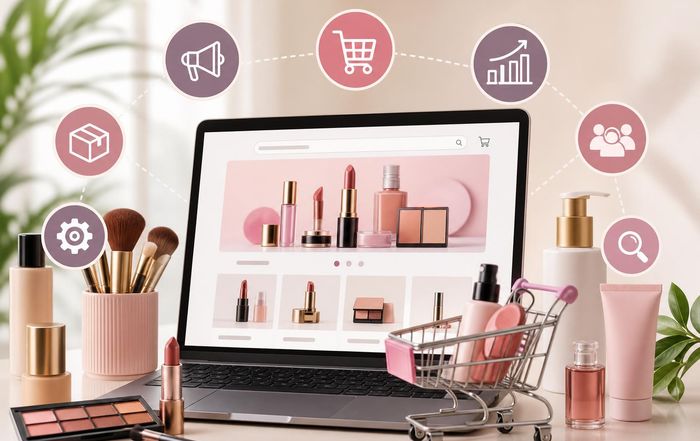
Professional Skills Needed in Beauty E-Commerce
The New Face of Beauty Commerce
Beauty e-commerce has evolved into a complex, data-driven and highly competitive ecosystem where digital storefronts compete with global marketplaces, social platforms and immersive virtual experiences, and for BeautyTipa and its truly amazing fashion fit fans across the United States, Europe, Asia, Africa and the Americas, this shift has turned beauty from a purely product-centric category into a sophisticated, service-driven and technology-enabled industry that demands a new blend of professional skills. As consumers in markets from the United Kingdom and Germany to South Korea and Brazil increasingly research, compare and purchase beauty products online, brands and retailers must combine deep industry expertise with advanced digital capabilities, operational excellence and a rigorous commitment to trust and transparency in order to build enduring relationships and sustainable growth.
The professional skills now required in beauty e-commerce extend far beyond traditional retail or marketing roles; they integrate knowledge of skincare science, digital merchandising, data analytics, supply chain management, financial literacy, regulatory compliance and cross-cultural communication. For the teams who shape the content and experiences on BeautyTipa and for hot professionals working in or entering the sector, understanding these skills is critical to navigating an environment where consumer expectations are shaped by platforms such as Amazon, Sephora, Ulta Beauty, L'Oréal, Estée Lauder Companies and fast-growing digital-first brands across North America, Europe and Asia.
Deep Beauty and Skincare Expertise as a Strategic Asset
The foundation of professional success in beauty e-commerce remains deep category knowledge, because consumers searching for skincare, makeup, wellness or fragrance products increasingly expect scientifically grounded content, transparent ingredient information and tailored recommendations that align with their personal routines and goals. Professionals who manage online assortments, craft product descriptions or design digital campaigns must understand skin types, common conditions, ingredient interactions and emerging cosmetic science, drawing on reputable sources such as the American Academy of Dermatology and the British Association of Dermatologists to stay current with evidence-based guidance.
On BeautyTipa, this expertise translates into educational content that helps readers navigate complex product categories, compare formulations and design personalized routines, and the same skills are essential for e-commerce specialists who curate product ranges or optimize category pages. Those working in merchandising or content roles benefit from a working knowledge of cosmetic chemistry, which can be deepened through resources from the Society of Cosmetic Chemists and the Cosmetics Europe trade association, allowing them to interpret ingredient lists, assess claims and collaborate effectively with product development and regulatory teams.
This depth of expertise is particularly important in skincare, where BeautyTipa offers focused coverage through its dedicated skincare section and where consumer interest in active ingredients such as retinoids, vitamin C, niacinamide and peptides continues to grow. Professionals who can translate complex science into accessible language, while maintaining accuracy and regulatory compliance, strengthen both the credibility of their brand and the trust of their customers, especially in highly informed markets such as the United States, South Korea, Japan and the Nordic countries.
Digital Marketing, Storytelling and Brand Building
If product knowledge is the foundation, digital marketing and storytelling are the engines that drive discovery and loyalty in beauty e-commerce. In 2026, professionals in this field must master search engine optimization, paid media, email marketing, social commerce, influencer partnerships and content strategy, while also understanding how algorithms on platforms such as Google, Meta, TikTok and Pinterest shape visibility and engagement. Learning to align content with search intent, optimize product pages for organic discovery and manage performance campaigns requires familiarity with tools like Google Analytics, Google Search Central and advertising platforms across social networks.
Beauty brands and retailers that succeed online increasingly differentiate themselves through compelling narratives around ingredients, sustainability, inclusivity and results, and this is where editorial skills converge with marketing expertise. For BeautyTipa, which curates insights on beauty, trends and brands and products, the ability to craft long-form guides, expert interviews and data-rich explainers helps readers make confident decisions and positions the platform as a trusted advisor rather than a simple catalog. Professionals in brand and content roles must be able to develop coherent tone-of-voice guidelines, plan multi-channel campaigns and measure their impact on traffic, engagement and conversion.
Influencer and creator collaborations remain central to beauty marketing, but the required skills have shifted from simple outreach to sophisticated partnership management, authenticity assessment and compliance with advertising regulations. In key markets such as the United States, the Federal Trade Commission sets disclosure standards for sponsored content, while in the United Kingdom the Advertising Standards Authority enforces similar rules, and professionals must ensure that creators clearly communicate partnerships and avoid misleading claims. This combination of creative storytelling, analytical measurement and ethical governance defines the modern beauty e-commerce marketer.
Data Literacy, Analytics and Personalization
Data has become the currency of digital commerce, and in beauty e-commerce it enables advanced segmentation, personalized recommendations and predictive inventory planning that can significantly enhance both customer experience and profitability. Professionals across functions, from marketing to merchandising to finance, need strong data literacy: the ability to interpret dashboards, understand attribution models, evaluate A/B tests and translate customer behavior into actionable strategies. Familiarity with analytics platforms, customer data platforms and experimentation tools is no longer confined to specialists; it is increasingly a core competency for managers and leaders.
Beauty brands now routinely analyze browsing patterns, purchase histories and engagement metrics to refine product assortments, adjust pricing and tailor messaging, always within the boundaries of privacy regulations such as the General Data Protection Regulation in Europe and evolving state-level privacy laws in the United States. Professionals must understand consent management, data minimization and secure handling of personal information, often in collaboration with legal and IT teams, in order to design compliant yet effective personalization strategies. In markets like Germany, France and the Netherlands, where data protection awareness is particularly high, this balance between personalization and privacy is a key competitive differentiator.
On BeautyTipa, data-driven insights can inform which guides and tips resonate most strongly, which product categories gain traction in specific regions and how readers move between sections such as wellness, health and fitness and food and nutrition. Professionals who can connect these behavioral signals to editorial planning, advertising strategy and partnership development help the platform evolve in step with its global audience, from Canada and Australia to Singapore and South Africa.
E-Commerce Operations, Logistics and Supply Chain Mastery
Behind every seamless beauty purchase lies a complex network of inventory management, fulfillment, logistics and returns, and professionals who understand this operational backbone are essential to building resilient and responsive e-commerce businesses. Skills in demand include demand forecasting, warehouse management, last-mile logistics coordination and reverse logistics for returns and recycling, often supported by enterprise systems and specialized software. The disruptions of recent years have underscored the importance of supply chain resilience, and organizations such as the Council of Supply Chain Management Professionals provide frameworks and education that beauty e-commerce professionals increasingly draw upon.
Beauty products present specific operational challenges, including temperature sensitivity, regulatory requirements for shipping certain ingredients, and the need for careful packaging to prevent leakage or damage. Professionals managing operations in key markets such as the United States, the United Kingdom, Germany and Japan must navigate carrier regulations, customs procedures and, in some cases, special handling requirements for aerosols or alcohol-based products, often referencing guidelines from agencies like the International Air Transport Association. In parallel, the growing emphasis on sustainability pushes operations teams to reduce packaging waste, optimize transportation routes and consider refillable or recyclable formats, aligning with research and standards from organizations such as the Ellen MacArthur Foundation.
For platforms like BeautyTipa, which spotlight innovation in technology and beauty and business practices, operational excellence is part of the broader story of how brands deliver on their promises. Professionals who can communicate operational constraints and opportunities to marketing, finance and customer service teams, while also negotiating effectively with logistics partners and marketplaces, contribute to a cohesive and responsive customer experience across regions from Europe to Asia-Pacific and Latin America.
Technology, AI and Digital Experience Design
Beauty e-commerce in 2026 is deeply intertwined with advanced technologies, from AI-powered recommendation engines and virtual try-on tools to augmented reality consultations and conversational interfaces. Professionals do not all need to be software engineers, but they must understand the capabilities and limitations of these technologies, how they integrate with existing platforms and how they shape user journeys across devices. Learning from technology leaders and best practices documented by organizations such as the World Wide Web Consortium and the Nielsen Norman Group helps teams design accessible, intuitive and inclusive experiences for diverse global audiences.
Virtual try-on for makeup, hair color and even skincare diagnostics has become a standard expectation in many markets, with companies like Perfect Corp. and ModiFace partnering with leading retailers and brands. Professionals overseeing these tools must evaluate their accuracy, bias risks, data usage policies and impact on conversion, ensuring that they serve all skin tones, ages and genders fairly and respectfully. At the same time, they must coordinate with developers, UX designers and legal teams to integrate these experiences into websites and apps, while also aligning them with editorial content on platforms such as BeautyTipa, where readers may explore product reviews, tutorials and routines before engaging with interactive tools on partner sites.
Accessibility is another critical dimension of digital experience design, particularly for global audiences that include users with visual, auditory or motor impairments. Professionals should be familiar with the Web Content Accessibility Guidelines and collaborate with designers and developers to ensure that navigation, color contrast, text alternatives and interactive features meet or exceed these standards. This commitment not only reflects legal obligations in regions such as the European Union and North America but also reinforces the inclusive values that many beauty brands now champion.
Regulatory, Ethical and Sustainability Competence
Operating in beauty e-commerce requires navigating a dense and evolving web of regulations related to cosmetics safety, labeling, claims, advertising, data privacy and environmental impact. Professionals must understand the differences between regulatory frameworks such as the European Union Cosmetics Regulation, the oversight of the U.S. Food and Drug Administration for cosmetics in the United States, and national rules in markets like Canada, Australia, China, South Korea and Brazil. This knowledge is crucial not only for regulatory specialists but also for marketers, product managers and international expansion teams who plan launches, craft claims and translate packaging.
Ethical considerations intersect with regulation in areas such as animal testing, ingredient sourcing, labor practices and environmental impact. Consumers and advocacy groups increasingly scrutinize supply chains and sustainability claims, referencing resources such as the Roundtable on Sustainable Palm Oil and the UN Global Compact, and professionals must ensure that brand messaging aligns with verified practices. Greenwashing risks are significant, especially in Europe and markets with strong consumer protection laws, and misaligned claims can quickly erode trust built over years.
Sustainability competence extends to packaging design, carbon footprint measurement and circular business models, and professionals often collaborate with external consultants, certification bodies and NGOs to set and achieve credible targets. For BeautyTipa, which covers business and finance as well as beauty trends, highlighting brands that combine financial performance with responsible practices helps readers and industry professionals learn more about sustainable business practices and understand which skills are needed to drive this transformation from within organizations.
Global, Cross-Cultural and Localization Skills
Beauty is inherently cultural, and successful e-commerce professionals must be adept at tailoring strategies, assortments and messaging to diverse markets across North America, Europe, Asia, Africa and South America. Preferences for textures, fragrances, coverage levels, shades and routines vary significantly between, for example, France, Japan, Nigeria and Mexico, and professionals need the research skills, cultural sensitivity and local partnerships to adapt effectively. Organizations such as the Euromonitor International and the McKinsey Global Institute publish market analyses that can support strategic decisions, but local consumer insights and qualitative feedback remain equally important.
Localization goes beyond translation; it encompasses imagery, product naming, claims, pricing, payment methods and customer service practices. Professionals overseeing international expansion must coordinate with local agencies, translators and regulatory experts to ensure that content resonates with local expectations and complies with national laws. In markets like China, where platforms such as Tmall and JD.com dominate, or in Southeast Asia, where Shopee and Lazada are key, understanding platform-specific behaviors and promotional calendars is as important as understanding local beauty rituals. BeautyTipa, through its international coverage, illustrates how global trends intersect with regional nuances, and professionals who can read and respond to these dynamics are better equipped to build truly global beauty businesses.
Cross-cultural communication skills are also critical within organizations, where teams often span time zones and cultural backgrounds. Managers and individual contributors must be able to collaborate effectively in virtual environments, navigate different communication styles and align around shared goals while respecting local market realities. This human dimension of global e-commerce is sometimes overlooked, yet it underpins the ability to execute complex, multi-country initiatives successfully.
Financial Acumen and Commercial Strategy
As beauty e-commerce has matured, financial literacy and commercial strategy skills have become essential for professionals at all levels, not only for those in finance roles. Understanding unit economics, gross margin, customer acquisition cost, lifetime value, inventory turns and cash flow dynamics enables more informed decision-making across marketing, merchandising, operations and technology investments. Professionals who can interpret financial statements, build business cases and evaluate the return on investment for campaigns or technology projects are better positioned to influence strategy and secure resources.
The shift toward omnichannel models, where online and offline sales interact, further complicates financial analysis, requiring skills in attribution modeling, channel profitability assessment and scenario planning. Resources from organizations such as the CFA Institute and the Corporate Finance Institute can help professionals build these capabilities, while industry-specific benchmarks from research firms inform realistic performance expectations. For platforms like BeautyTipa, which explore the financial side of beauty in their business and finance coverage, highlighting how financial discipline and creativity coexist in successful beauty e-commerce ventures provides valuable context for aspiring and current professionals.
Negotiation skills with suppliers, distributors, marketplaces and technology vendors are another aspect of commercial competence. Professionals must balance cost, quality, service levels and strategic alignment, often across multiple regions and currencies, and must understand contractual terms, performance clauses and risk-sharing mechanisms. This combination of analytical and interpersonal skills is increasingly important in an environment where competition for visibility, traffic and customer loyalty is intense.
Talent, Careers and Continuous Learning in Beauty E-Commerce
The rapid evolution of beauty e-commerce has created a diverse range of career paths, from digital merchandising and performance marketing to product management, data science, UX design, supply chain management and regulatory affairs. Professionals entering or advancing within this sector need not only technical and domain skills but also a commitment to continuous learning, as tools, regulations and consumer behaviors change quickly. Online education platforms, industry associations and executive programs at institutions such as INSEAD or London Business School offer opportunities to deepen expertise in digital business, marketing analytics and leadership.
For readers of BeautyTipa exploring roles in the sector, the platform's jobs and employment coverage can provide insights into emerging roles, required competencies and regional hiring trends across markets like the United States, Canada, the United Kingdom, Germany, Singapore and the United Arab Emirates. Employers increasingly seek candidates who can demonstrate cross-functional understanding, for example marketers who appreciate supply chain constraints or technologists who understand skincare science and consumer psychology, and who can collaborate effectively in interdisciplinary teams.
Soft skills such as communication, problem-solving, adaptability and ethical judgment are as important as technical skills, particularly in leadership roles. Professionals must be able to articulate complex ideas to non-specialists, manage stakeholders across departments and geographies, and make decisions under uncertainty while maintaining a customer-centric perspective. In beauty e-commerce, where brand trust and emotional resonance are central, these human skills can be decisive in building teams and cultures that deliver consistently high-quality experiences.
Can We Help in Shaping Professional Excellence?
As beauty e-commerce continues to expand and diversify, super sites like BeautyTipa play a vital role in connecting professionals, brands and consumers across categories such as makeup, fashion, wellness, skincare and technology. By curating expert perspectives, practical guides and in-depth original analyses on guides and tips, BeautyTipa helps its growing and happy engaged audience understand not only which products and trends are shaping the market, but also which skills and capabilities underpin the success of leading beauty e-commerce businesses.
For organizations seeking to build or strengthen their digital beauty presence, the path forward involves assembling teams that blend scientific knowledge, digital marketing acumen, data literacy, operational expertise, regulatory awareness, cross-cultural sensitivity and financial discipline. For individuals, it means investing in learning, seeking cross-functional experiences and aligning personal values with the ethical and sustainability commitments that increasingly define the industry. In this landscape, BeautyTipa serves as both a new online guide and a positive bridge, linking the aspirations of professionals and consumers with the evolving demands of a dynamic, global and technology-driven beauty ecosystem.
Those who cultivate these professional skills will not only navigate the complexities of beauty e-commerce but will also help shape a more informed, inclusive and responsible industry, one in which digital innovation enhances rather than replaces the human connection at the heart of beauty.
