
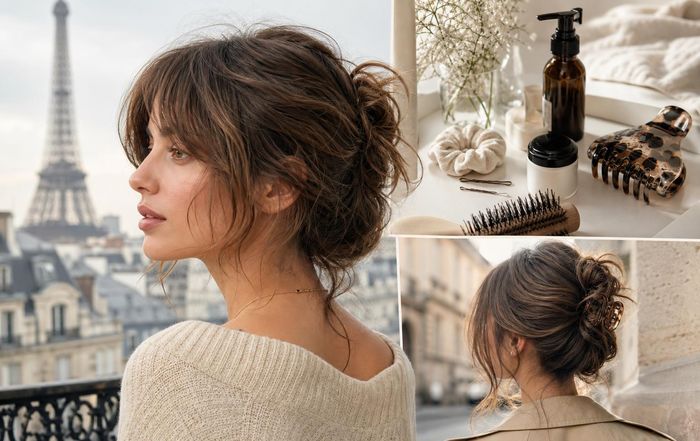
The French Approach to Effortless Everyday Hair Styling
French women's hair has become a kind of global shorthand for "effortless": slightly undone, never over-styled, and somehow flattering from every angle. Yet behind that apparent nonchalance is a very specific set of habits, product choices, and styling shortcuts that prioritize texture, health, and personality over perfection.
For hot readers who are tired of high-maintenance routines and overcomplicated tutorials, the French approach offers a more relaxed, sustainable way to style hair day to day-without losing polish or individuality.
What "French Effortless" Really Means
When international beauty media talk about "French girl hair," they are usually describing a few recurring ideas rather than a single look. French hairdressers and stylists often emphasize the concept of coiffé-décoiffé-literally "done-undone." The hair is styled enough to look intentional, but never so controlled that it appears stiff or overly groomed. Texture, movement, and natural fall are more important than perfect curls or razor-sharp lines.
In practice, this means embracing a slightly irregular wave, a fringe that grows out gracefully, or a cut that looks just as good air-dried as it does blow-dried. French stylists such as David Mallett and Christophe Robin have repeatedly said in interviews with outlets like Vogue and Into The Gloss that they prefer hair to look "lived in" rather than freshly blow-out smooth. That preference is tied to a broader beauty culture that prioritizes long-term health-of the skin, hair, and scalp-over short-term, high-impact transformations.
This aesthetic also reflects a practical reality: most people in France do not have time for a daily 45-minute styling routine before work. Everyday hair has to survive a commute, the weather, and a long day without constant touch-ups. That is why cut, color, and care are treated as the foundation of style. When the underlying shape and condition are right, the amount of daily effort required drops dramatically, which aligns closely with the low-effort, high-impact routines many readers seek in their beauty and routines.
The Cut Comes First: Building Shape That Styles Itself
The cornerstone of an effortless French hairstyle is a cut designed to fall into place on its own. Instead of relying on hot tools to create volume or movement, French stylists tend to cut hair in a way that enhances its natural tendencies-whether that means waves, curls, or straight strands with a bit of bend.
A few principles are common. First, there is a preference for softer, piecey layers over heavy, uniform layering. These "invisible" layers, often cut using slide or point-cutting techniques, encourage hair to move without creating obvious steps. Stylists like Delphine Courteille and Odile Gilbert have described in interviews that they often cut hair dry or nearly dry for this reason: it lets them see how the hair actually behaves in real life, which is crucial when the goal is minimal daily styling.
Second, French cuts tend to avoid extremes that require constant upkeep. Micro-short bangs, ultra-sharp bobs, or very geometric shapes can look striking but often demand frequent trims and precise styling. Instead, many French women opt for mid-length cuts, soft shags, grown-out fringes, or bobs with slightly broken lines-shapes that can grow out gracefully over several months. This approach is echoed in education from professional organizations like L'Oréal Professionnel and La Fédération de la Haute Coiffure Française, which emphasize adaptability and movement in everyday cuts.
Finally, the consultation is key. A French stylist is likely to ask how often you realistically style your hair, whether you air-dry, and how you usually wear it for work, social events, and weekends. The cut is then tailored to match that lifestyle, not the other way around. For readers considering a change, it is worth bringing this philosophy to their own salon visits, wherever they live, and asking for a shape that looks good air-dried rather than only after a salon blow-dry.
Color That Ages Well and Grows Out Softly
Just as the cut is designed for low maintenance, French color philosophy focuses on subtlety and longevity. Techniques like balayage-which originated in France in the 1970s and 1980s and literally means "to sweep" in French-were developed to create soft, sun-kissed highlights that grow out without a harsh line. According to L'Oréal Professionnel's historical notes on balayage, this freehand painting method was a response to foil highlights that looked too uniform and artificial on everyday hair.
The goal is often to mimic how hair might naturally lighten in the sun: slightly brighter around the face, on the mid-lengths, and at the ends, with deeper tones at the roots. This allows for longer stretches between color appointments and reduces the need for constant root touch-ups. French colorists like Christophe Robin have also championed gentle, ammonia-free formulas and plant-based dyes, which can be less aggressive on the hair fiber, though results and durability vary by product and hair type.
Importantly, French color is usually chosen to complement skin tone and natural hair pigment rather than radically change it. A brunette might add caramel or hazelnut balayage rather than going fully blonde. A blonde might deepen slightly to a beige or honey shade that flatters the complexion. Dermatology sources such as the American Academy of Dermatology highlight that frequent bleaching and high-lift coloring can weaken the hair shaft and increase breakage, so a more restrained approach can help preserve hair health over time.
For readers curious about color but wary of damage, this philosophy offers a useful middle ground: opt for subtle, strategically placed lightening, avoid frequent full-head bleaching, and prioritize glosses or toners that enhance shine. Those choices support the kind of healthy, reflective hair that looks styled even when it has only been air-dried and finger-combed.
Washing Less, Caring More: The French Haircare Routine
One of the most persistent clichés about French beauty is that French women wash their hair less often. While individual habits vary, surveys and reporting by outlets such as Le Figaro and Elle France suggest that many people in France shampoo two to three times a week rather than daily. This aligns with recommendations from dermatologists and trichologists: the American Academy of Dermatology notes that how often you should wash depends on hair type and scalp oiliness, but daily shampooing is often unnecessary for drier or textured hair.
The French approach typically emphasizes a few key ideas. First, the scalp is treated as part of skincare. Brands like Kérastase, René Furterer, and Christophe Robin have built entire lines around scalp health, including gentle exfoliating scrubs and soothing treatments. A healthy scalp supports stronger hair growth and can reduce issues like flaking or irritation, which is particularly relevant for readers interested in holistic skincare and wellness.
Second, conditioner and masks are used strategically rather than slathered from roots to ends in every wash. Many French stylists recommend applying conditioner from mid-lengths downward, leaving the roots lighter to maintain volume. Once or twice a week, a richer mask can be used on sensitized lengths, especially on color-treated or heat-styled hair. The British Association of Dermatologists and other professional groups emphasize that over-washing and aggressive cleansing can strip the hair and scalp of protective oils, so a slightly more restrained routine can be beneficial.
Third, heat styling is often reduced. Air-drying is common, especially in urban centers like Paris where many people walk or take public transport and may not want to spend extra time blow-drying in the morning. When heat is used, it tends to be minimal: a quick rough-dry for the roots, a few passes of a curling iron on the front sections, or a brief touch-up of the fringe. This lower-heat approach helps maintain the integrity of the cuticle, leading to smoother, shinier hair over time.
For readers building or revising their own routines, adopting a French-inspired schedule might mean washing every other day or every third day, focusing on gentle formulas, and investing in one good mask rather than multiple styling products that attempt to correct damage after the fact. This aligns with the idea of a streamlined but effective regimen, similar to the "fewer, better" philosophy many people already apply to guides and tips in skincare.
Texture Over Perfection: How French Women Actually Style Their Hair
On a typical weekday, styling is often surprisingly simple. Many French women with naturally straight or slightly wavy hair will apply a small amount of leave-in cream or lightweight oil to damp lengths, then either air-dry or rough-dry with a hairdryer without a brush. Once dry, they might add a texturizing spray or a touch of dry shampoo at the roots to create lift and a slightly lived-in finish. Hairstylists interviewed in French editions of Glamour and Marie Claire frequently mention that they prefer to "mess up" hair at the end of styling-raking fingers through curls or shaking out waves-to avoid a too-perfect result.
For wavy and curly hair, the focus is on enhancing natural pattern rather than forcing it straight. Curl creams, gels with flexible hold, and diffusers are used to define curls while maintaining softness. The British Association of Dermatologists and curly-hair specialists often recommend avoiding heavy sulfates and alcohol-rich styling products, which can dry out textured hair. This dovetails with French preferences for milder formulas and multi-use products that condition while styling.
Accessories are used sparingly but effectively. A simple black hair elastic, a tortoiseshell clip, or a silk scrunchie is more common than elaborate hairpieces. The idea is to secure the hair without drawing too much attention to the mechanism. Low buns, loose ponytails, and half-up styles dominate, especially for workdays and commutes. The "imperfection" is often intentional: a few pieces left out around the face, a bun that is slightly off-center, or a ponytail with a bit of volume at the crown.
Readers looking to adapt this approach can think in terms of minimal but strategic steps: one product for moisture, one for texture, and one simple way to tie hair back. On days when there is more time or a special occasion, the same foundation can be dressed up with a slightly smoother blow-dry, a polished wave, or a sleeker bun-without abandoning the underlying preference for movement and ease. Those interested in product exploration can find more ideas within brands and products coverage, but the French model suggests starting small and building only as needed.
The Role of Lifestyle: Sleep, Nutrition, and Stress
The French approach to hair is not only cosmetic; it is also linked to lifestyle. While stereotypes should be treated cautiously, there is strong scientific evidence that sleep, nutrition, and stress have a direct impact on hair health. The American Academy of Dermatology notes that significant stress can trigger temporary hair shedding (telogen effluvium), while deficiencies in iron, vitamin D, and certain B vitamins can contribute to hair thinning. Similarly, research summarized by Harvard Health Publishing highlights that a balanced diet rich in protein, healthy fats, and micronutrients supports hair growth.
French public health messaging, including guidance from Santé publique France, often emphasizes balanced eating patterns, moderate alcohol consumption, and regular physical activity, which indirectly benefit hair. While not unique to France, this integration of wellness and appearance aligns with the idea that "effortless" hair is easier to achieve when the underlying biology is supported. For readers, this means that focusing solely on external products without considering overall wellbeing may limit results.
Simple habits-such as not sleeping with very tight hairstyles, using a silk or satin pillowcase to reduce friction, and avoiding harsh crash diets-can make a noticeable difference over time. These choices mirror broader interests in health and fitness and food and nutrition, where small, sustainable changes often outperform drastic but short-lived interventions.
Everyday French-Inspired Hairstyles You Can Recreate
Translating the French approach into concrete, everyday styles does not require living in Paris or visiting a specific salon. A few adaptable ideas work across many hair types and lifestyles, and they can be adjusted for different lengths and textures without becoming time-consuming.
One of the most universal is the low, loose bun. Start with hair that has some natural texture-either from air-drying, a previous day's wave, or a light mist of salt or texturizing spray. Gather it at the nape of the neck, twist loosely, and secure with an elastic or a claw clip, allowing some pieces to fall naturally around the face. The result is polished enough for an office or dinner but relaxed enough for everyday errands. French stylists often suggest pulling slightly at the crown after securing the bun to create a bit of volume and avoid a flat silhouette.
Another staple is the "half-up, half-down" style. This works particularly well on mid-length or long hair with some movement. Take the front sections from temple to temple, twist or loosely pin them at the back of the head, and leave the rest of the hair free. The effect is soft and romantic, especially when combined with curtain bangs or face-framing layers. Unlike more structured updos, this look is forgiving of flyaways and can be refreshed throughout the day with a quick finger-comb.
For shorter hair, such as a bob or lob, the French signature is often a slightly tousled wave. After washing, apply a lightweight styling cream or sea-salt spray and either air-dry or rough-dry. Then, if desired, use a curling iron on just a few random sections, alternating direction and leaving the ends slightly straighter for a modern finish. Run fingers through to break up the curls, and finish with a spritz of flexible-hold hairspray or dry texture spray. Tutorials from French stylists on platforms like YouTube and Instagram often demonstrate this process in under 10 minutes, underscoring how minimal the effort can be when the cut is supportive.
Readers interested in integrating these ideas into broader beauty habits can explore complementary looks in makeup and fashion coverage, where similar "effortless but intentional" principles often apply.
Adapting the French Philosophy to Different Hair Types and Cultures
It is important to acknowledge that the canonical image of "French girl hair" in international media has historically centered on white, often Paris-based women with fine to medium, straight to wavy hair. This narrow portrayal has been widely critiqued in recent years by French journalists and influencers of diverse backgrounds. Publications such as Le Monde and Libération have highlighted how Black, North African, Asian, and mixed-heritage French women have long navigated different textures and cultural expectations.
The underlying philosophy of effortlessness, however, can absolutely be adapted to a wide range of hair types. For coily and Afro-textured hair, "low effort" might mean protective styles like braids, twists, or buns that can be maintained for days or weeks with minimal daily manipulation. French and international trichologists, as well as organizations like the American Academy of Dermatology, emphasize that these styles can help reduce breakage when installed and maintained correctly. Incorporating gentle scalp oils, satin scarves, and minimal heat aligns perfectly with the French emphasis on long-term hair health.
For very fine or oily hair, washing less frequently may feel unrealistic. In those cases, a French-inspired approach might involve using a gentle, frequent-use shampoo, adding a volumizing spray at the roots, and embracing lighter, airier styles like a wispy fringe or layers that create movement without heavy products. The key is to work with the hair's natural tendencies rather than forcing it to behave like a different texture.
Cultural context also matters. In humid climates, for example, "effortless" might mean accepting a certain level of frizz and focusing on definition and hydration rather than complete smoothness. Dermatology resources from organizations such as DermNet New Zealand note that environmental factors, including humidity and UV exposure, significantly affect hair behavior and condition. Adapting the French philosophy might therefore involve choosing anti-humidity serums, UV-protective sprays, or hats and scarves, while still keeping daily styling steps to a minimum.
Ultimately, the French approach is less about copying a specific look and more about adopting a mindset: prioritize health, embrace texture, simplify routines, and allow hair to reflect personal identity rather than a rigid trend. Readers can integrate these principles into their own routines, drawing selectively on techniques and products that fit their hair type, climate, and lifestyle, and exploring evolving trends through dedicated trends and beauty coverage.
Bringing It All Together
Effortless French-inspired hair is the product of many small, thoughtful choices rather than one secret product or shortcut. A cut that suits the natural texture, color that grows out softly, a washing routine that respects the scalp, minimal heat styling, and simple but intentional everyday hairstyles all contribute to the final impression. When combined with attention to overall wellbeing-sleep, nutrition, and stress management-the result is hair that looks "done" even when very little has been done to it.
For anyone feeling overwhelmed by complex tutorials and crowded bathroom shelves, the French model offers a reassuring alternative: do a bit less, but do it better. By investing in the fundamentals and accepting a degree of imperfection, everyday hair can become more manageable, more individual, and more in tune with the rest of a considered beauty routine.
