
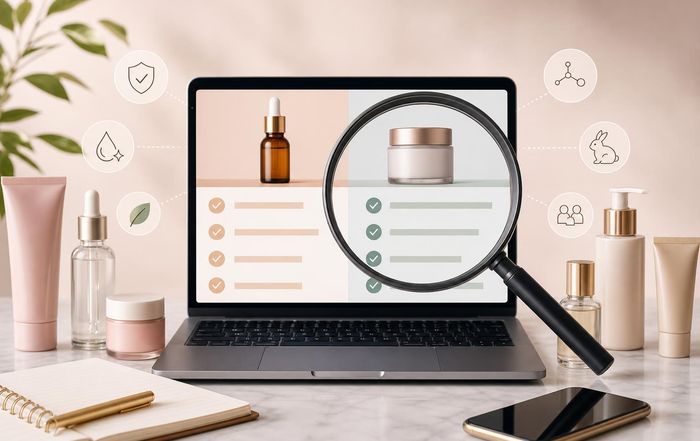
How Beauty Consumers Compare Product Claims Online?
The New Digital Beauty Consumer
Beauty has become one of the most intensely researched consumer categories online, with shoppers in the United States, Europe, Asia and beyond moving from impulsive, aesthetics-driven purchases to careful, evidence-informed decisions grounded in digital investigation, peer validation and transparent brand communication. On our fashion radar, this shift is visible every day in the way readers move between sections such as beauty, skincare, wellness and business and finance, comparing ingredient lists, marketing promises, clinical data and sustainability credentials before choosing a serum, sunscreen or wellness supplement.
The modern beauty consumer in 2026 is not only more informed but also more demanding, shaped by years of access to global information, social media discourse and regulatory conversations. Consumers in the United States and Canada routinely consult resources such as the U.S. Food and Drug Administration via the FDA's pages on cosmetics regulation, while those in the European Union and the United Kingdom increasingly reference the European Commission database on cosmetics legislation when trying to understand the legal boundaries surrounding product claims. This regulatory awareness, once confined to industry insiders, has become part of the everyday vocabulary of beauty enthusiasts who want to know not only whether a product works, but also whether a brand is communicating responsibly and lawfully.
In this environment, product claims are no longer accepted at face value. Instead, claims are interrogated, cross-referenced and benchmarked against a global backdrop of competitors and expert commentary. BeautyTipa has evolved into a good news, positive inspiring guide through this complexity, offering structured guides and tips, technology insights and trend analysis that help readers transform scattered online information into coherent, confident decisions.
From Marketing Slogans to Evidence-Led Expectations
The language of beauty marketing has changed dramatically over the last decade, and consumers have changed with it. Where phrases such as "miracle cream" or "age-defying" once went unchallenged, beauty shoppers in 2026 actively question what such wording means in practice, how it is substantiated and whether it aligns with the standards set by regulators and professional organizations. Many now consult independent authorities such as the American Academy of Dermatology, where they can learn more about evidence-based skincare, to compare brand promises with dermatologist-backed guidance on ingredients like retinoids, niacinamide and vitamin C.
In markets such as Germany, France and the Nordic countries, there is heightened sensitivity to greenwashing and vague "clean" claims, prompting consumers to seek out more precise definitions from organizations like the European Chemicals Agency, which provides information on substances used in consumer products. As a result, the bar for credibility has risen: beauty brands are now expected to explain not just what a product is free from, but what it actually does, how it does it and how those outcomes were measured.
On BeautyTipa.com, readers frequently move from trend-oriented content in the trends and technology beauty sections to more foundational education in skincare and health and fitness, reflecting an evolving mindset: claims are no longer isolated slogans but part of a wider personal and scientific context. A brightening serum, for example, is evaluated not only on its promise to "fade dark spots," but also on its active concentration, supporting clinical trials, compatibility with a broader routine and alignment with individual skin concerns in diverse regions from South Korea to Brazil.
How Consumers Deconstruct Claims Step by Step
The process of comparing product claims online has become methodical, even if it remains informal and highly personalized. Beauty consumers now engage in a multi-stage evaluation journey that often begins with inspiration and ends with a cross-device, cross-platform verification exercise.
The first stage typically involves discovery through social media, editorial content or online events. Users might encounter a new moisturizer highlighted in a feature or a trending foundation showcased during a virtual launch covered in the events section. At this point, initial claims such as "clinically proven hydration for 72 hours" or "non-comedogenic for acne-prone skin" serve as hooks that capture attention.
The second stage is preliminary verification, where consumers visit the brand's official website and product page to examine the full description, ingredient list and any mention of clinical studies. Many will cross-check this information with publicly available scientific summaries on platforms such as PubMed, where they can explore dermatology and cosmetic science research, or with educational articles from institutions like Harvard Health Publishing, which provides accessible overviews of topics such as skin health and aging. During this phase, shoppers start to distinguish between marketing language and substantiated performance, paying close attention to wording like "tested," "evaluated," "in vitro" and "in vivo."
The third stage focuses on peer validation. Consumers read long-form reviews, watch video demonstrations and scrutinize before-and-after images on platforms that prioritize authenticity. Many also turn to consumer advocacy and product testing organizations such as Consumer Reports, where they can review independent product testing methodologies, to understand how rigorous comparative evaluations are conducted. Although not every beauty product appears in such databases, the principles of impartial testing and transparent methodology influence how readers of BeautyTipa interpret informal online reviews and influencer content.
The fourth stage involves contextualization within personal routines and lifestyles. At this point, users revisit 100% original and unique resources here especially the routines and food and nutrition sections, to align product claims with their broader wellness habits, dietary patterns and environmental exposures. A brightening serum targeting hyperpigmentation, for example, may be assessed alongside information about sun protection recommendations from the World Health Organization, where consumers can learn more about UV exposure and skin cancer prevention. The claim is thus evaluated not in isolation, but in relation to daily sunscreen use, diet, sleep and stress management.
Finally, the fifth stage is comparative benchmarking. Consumers place multiple products side by side, often in spreadsheets or saved lists, and compare price per milliliter, ingredient concentrations, claim strength, brand reputation and sustainability credentials. They may consult organizations like the Environmental Working Group, which offers databases to explore ingredient safety profiles, or refer to sustainability frameworks from the United Nations Environment Programme, where they can learn more about sustainable consumption and production. This structured comparison process transforms a once-emotional purchase into a considered investment decision.
The Role of Ingredients, Science and Dermatology
In every major beauty market from the United States and Canada to South Korea, Japan and the Nordic countries, ingredient literacy has become the foundation of claim comparison. Rather than accepting a claim such as "reduces wrinkles," consumers ask which active ingredient is responsible, at what percentage, in which vehicle and supported by which type of study. Ingredients like retinol, peptides, alpha hydroxy acids and ceramides are no longer mysterious; they are researched terms that consumers routinely cross-reference with expert resources.
Professional organizations such as the British Association of Dermatologists offer public information that allows consumers to understand common skin conditions and treatments, while the Dermatology Times news platform helps industry watchers and advanced consumers follow clinical and market developments in dermatology. This confluence of professional and consumer-oriented information has created a new standard in which claims must align with dermatological consensus to be considered credible.
You know our editorial teams recognize that readers in regions including the United Kingdom, Germany, France, Italy, Spain, Singapore and Australia routinely cross-reference product claims with scientific narratives. Articles that explore retinoid usage, for example, are crafted to bridge consumer curiosity with evidence-based insights, linking the marketing promise of "smoother texture" to underlying mechanisms such as increased cell turnover and collagen synthesis. This approach not only supports informed decision-making but also enhances the perceived trustworthiness of brands that communicate in a similarly transparent and technically accurate manner.
Sustainability, Ethics and the Rise of Conscious Claims
Beyond performance, consumers now scrutinize ethical and environmental dimensions of beauty claims, especially in markets such as the Netherlands, Switzerland, the Nordic region and parts of Asia-Pacific. Phrases like "eco-friendly," "sustainable" and "cruelty-free" are carefully examined against benchmarks established by global initiatives and certification bodies. Organizations such as Leaping Bunny provide guidance on cruelty-free standards, while the Roundtable on Sustainable Palm Oil explains responsible sourcing of palm oil. These frameworks help consumers evaluate whether a product's ethical claims are substantive or merely decorative.
Moreover, the growing emphasis on climate responsibility has led many consumers to investigate corporate sustainability reports, supply chain disclosures and packaging choices. Businesses that align with principles promoted by the UN Global Compact, where companies can learn more about responsible business practices, are increasingly favored by consumers who want their skincare and makeup routines to reflect broader values. For fashionable folks here, this convergence of beauty, ethics and global responsibility is not an abstract concept; it is a daily decision point where a product's environmental footprint can determine whether it is added to a cart or abandoned in favor of a more transparent competitor.
Technology, AI and Personalization in Claim Comparison
Technological innovation has fundamentally transformed how consumers compare product claims online. In 2026, artificial intelligence, augmented reality and data-driven recommendation engines are embedded across e-commerce platforms, brand websites and independent publishers. Consumers in markets ranging from the United States and United Kingdom to South Korea and Singapore routinely use virtual try-on tools and AI-powered skin analysis apps to visualize potential outcomes before committing to a purchase, effectively testing the plausibility of claims like "flawless coverage" or "instant radiance" in real time.
Technology companies such as Google have expanded their focus on product comparison experiences, allowing users to explore and compare products across retailers, while beauty-specific platforms leverage machine learning to match consumers with formulations aligned to their skin type, tone and concerns. These tools dissect claims into measurable attributes, such as coverage level, finish, longevity and comedogenicity, and then correlate them with user feedback and expert reviews.
On, the recently updated technology beauty section tracks these developments closely, examining how AI-driven diagnostics, ingredient databases and smart mirrors are reshaping consumer expectations. When a brand asserts that a serum "visibly reduces pores," consumers increasingly expect this claim to be supported by quantifiable metrics that can be validated through digital tools, such as before-and-after imaging, pore count analysis or texture mapping. Technology thus becomes both a marketing asset and a mechanism for accountability, reinforcing the importance of accurate, data-backed claims.
Social Media, Influencers and the New Word-of-Mouth
Social platforms remain central to the way beauty consumers compare product claims, but their role has matured significantly. In 2026, audiences across North America, Europe, Asia and Latin America are more skeptical of sponsored content and more attuned to the difference between authentic long-term usage reviews and one-off promotional posts. Influencers and creators who disclose partnerships transparently and provide detailed, time-stamped updates on product performance tend to enjoy higher levels of trust.
Platforms such as YouTube and TikTok host extensive libraries of comparative content in which creators pit products against each other under controlled conditions, testing claims like "waterproof," "transfer-resistant" or "24-hour wear" through wear tests, sweat sessions and flash photography. Consumers in markets such as Brazil, South Africa and Thailand often rely on these visual demonstrations to assess how a foundation or lipstick performs on diverse skin tones, climates and lifestyles, thereby contextualizing claims that may have been formulated with different demographics in mind.
Within this ecosystem, BeautyTipa occupies a complementary role, offering structured analysis and editorial oversight that synthesizes the fragmented insights of social media into coherent guidance. The platform's makeup and fashion sections, for instance, often reference trends emerging from social channels, but present them through a lens of practicality, longevity and ingredient awareness. This synthesis helps readers reconcile the aspirational visuals of influencers with the grounded realities of product formulation, skin biology and daily wear.
Price, Value and the Business of Claims
Economic conditions and cost-of-living pressures across regions such as the United Kingdom, Germany, Canada, Australia and New Zealand have sharpened consumer focus on value. Beauty shoppers are now more likely to question whether premium pricing is justified by superior ingredients, robust clinical data or enhanced sustainability, rather than by packaging or celebrity endorsements alone. Claims like "luxury," "professional-grade" or "spa-quality" are increasingly evaluated against objective markers of performance and provenance.
Financial literacy and business awareness have become part of the beauty conversation, with many consumers following industry analyses from sources such as McKinsey & Company, where they can explore reports on the global beauty market. These insights help professional people looking at business and finance content understand how marketing budgets, distribution strategies and investor expectations influence the intensity and style of product claims. The result is a more discerning audience that recognizes the commercial drivers behind messaging while still seeking genuine innovation and efficacy.
In this context, mid-priced and drugstore brands that communicate modest, well-substantiated claims often gain ground against prestige competitors whose promises appear exaggerated or opaque. The democratization of information has eroded the automatic association between high price and high performance, replacing it with a more nuanced calculus in which ingredient quality, transparency and third-party validation carry greater weight.
Regional Nuances in Claim Evaluation
Although the overall trend toward critical evaluation of product claims is global, regional nuances shape how consumers interpret and compare those claims. In the United States and Canada, there is strong emphasis on dermatological endorsement and sensitivity to litigation risk, which leads consumers to scrutinize disclaimers and fine print carefully. In the United Kingdom, Germany and the Nordic countries, regulatory rigor and consumer protection traditions foster a culture in which vague or absolute claims are quickly challenged.
In France, Italy and Spain, heritage, sensorial experience and brand storytelling remain influential, but they now coexist with heightened interest in ingredient transparency and sustainability. Consumers in the Netherlands, Switzerland and the Scandinavian countries often place particular emphasis on environmental impact and ethical sourcing, aligning beauty choices with broader societal commitments to sustainability and social responsibility.
Across Asia, diversity is even more pronounced. In South Korea and Japan, technologically advanced formulations and rapid innovation cycles mean that claims about novel ingredients and delivery systems are common, prompting consumers to cross-reference scientific terminology with local dermatology resources and academic publications. In China, Thailand, Singapore and Malaysia, mobile-first shopping behaviors and super-app ecosystems encourage real-time comparison of claims, prices and user feedback, often within a single interface. Meanwhile, in markets such as South Africa and Brazil, climate considerations, skin tone diversity and hair texture variability require that claims be assessed for relevance to local conditions, rather than assumed to be universally applicable.
For the community coming here whose audience spans these regions, editorial coverage must reflect this complexity, acknowledging that a "whitening" claim in one market may be interpreted very differently from a "brightening" claim in another, and that local regulatory frameworks and cultural norms profoundly affect how consumers perceive and evaluate marketing language.
Employment, Skills and the Professionalization of Beauty Knowledge
The professional landscape surrounding beauty has also evolved, with more individuals pursuing careers that sit at the intersection of aesthetics, science, technology and communication. The growth of roles such as cosmetic chemist, regulatory affairs specialist, beauty data analyst and ethical sourcing manager has created a labor market in which expertise in claim substantiation and transparent communication is increasingly valued.
Organizations like the Society of Cosmetic Chemists provide educational resources and events to support professionals in cosmetic science, while business-focused institutions and universities offer specialized programs in beauty marketing and product development. For inspired individuals jobs and employment content, this professionalization presents new career pathways that align personal passion for beauty with rigorous standards of evidence, compliance and ethics.
As more professionals with scientific and regulatory backgrounds enter brand, retail and media roles, the quality of information available to consumers improves. Product descriptions become more precise, educational content more accurate and influencer collaborations more responsible. This ecosystem reinforces a virtuous cycle in which informed professionals create better claims, and informed consumers reward those claims with loyalty and advocacy.
Building Trust in an Era of Infinite Choice
So the beauty consumer faces an unprecedented abundance of choice, with thousands of new products launching each year across skincare, makeup, haircare, fragrance, wellness and nutrition. Amid this noise, trust has emerged as the decisive factor that determines which claims are believed, which brands are embraced and which platforms become daily companions.
For fashion research team, earning and maintaining that trust requires unwavering commitment to clarity, depth and independence. By combining in-depth ingredient education, coverage of scientific and regulatory developments, analysis of business dynamics and practical guides and tips for everyday routines, the platform helps readers in North America, Europe, Asia, Africa and South America navigate the complex landscape of product claims with confidence.
As consumers continue to refine their methods for comparing claims-drawing on dermatology, technology, sustainability frameworks and peer insights-the beauty industry is being reshaped around a new standard of Experience, Expertise, Authoritativeness and Trustworthiness. Brands that embrace this standard, communicate transparently and invite informed scrutiny will thrive in the years ahead, while those that cling to vague promises and opaque practices will find it increasingly difficult to compete in a world where every claim can be questioned, researched and compared in a matter of seconds.
In this evolving landscape, BeautyTipa.com stands not merely as an observer but as an active inspirational partner to the global beauty consumer, offering the knowledge, structure and perspective needed to transform marketing language into meaningful, evidence-based choices that honor both personal aspirations and collective responsibility.
