
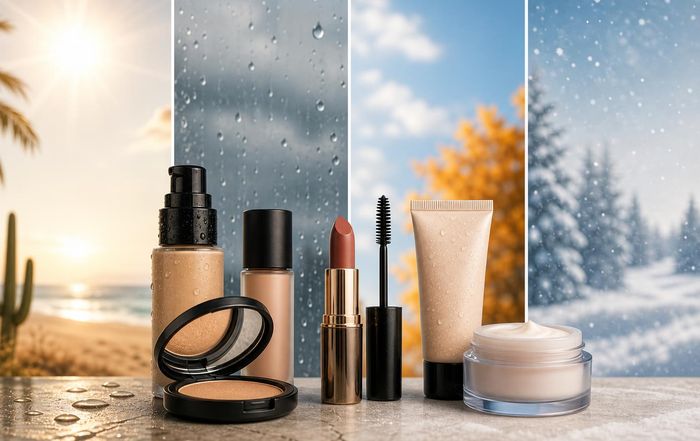
How Climate Affects Makeup Wear and Product Choice in 2026
Climate, Beauty, and the New Reality of Makeup
By 2026, climate is no longer a distant environmental concern; it is a daily operational factor for the global beauty industry and a decisive influence on how makeup performs on real faces in real conditions. Rising temperatures, shifting humidity patterns, prolonged heat waves, and increasingly polluted urban air are changing not only how long foundation lasts, but also which products consumers in New York, London, Berlin, Toronto, Sydney, Paris, Milan, Madrid, Amsterdam, Zurich, Shanghai, Stockholm, Oslo, Singapore, Copenhagen, Seoul, Tokyo, Bangkok, Helsinki, Johannesburg, São Paulo, Kuala Lumpur, and Auckland ultimately trust. For BeautyTipa and its international audience, understanding the interplay between climate and makeup wear is now central to making informed decisions about formulations, routines, and brands that align with both personal performance expectations and broader environmental values.
The acceleration of climate change documented by organizations such as the Intergovernmental Panel on Climate Change has clear implications for skin health and cosmetic behavior. Prolonged UV exposure, increased air pollution, and more frequent extreme weather events are driving a new era of climate-adaptive beauty, in which product choice is inseparable from geography, season, and lifestyle. As consumers explore the latest insights on beauty and lifestyle at BeautyTipa, they increasingly seek products that can withstand a humid Bangkok commute, a dry Berlin winter, or a smoggy Los Angeles afternoon, while still aligning with evolving expectations for sustainability, ingredient transparency, and ethical business practices.
The Science of Skin, Climate, and Makeup Performance
Climate affects the skin's barrier function, hydration levels, sebum production, and microbiome, and these physiological shifts directly influence how makeup adheres, oxidizes, creases, or fades throughout the day. Dermatological research, summarized by institutions such as the American Academy of Dermatology, has shown that high humidity tends to increase sebum production and perspiration, which can cause foundation to break apart and eyeliner to smudge, whereas low humidity dehydrates the stratum corneum, leading to flakiness that makes even premium foundations cling to dry patches and emphasize texture. In parallel, exposure to UV radiation and airborne pollutants accelerates oxidative stress in the skin, which not only drives premature aging but also affects how pigments and active ingredients behave on the skin's surface.
For consumers exploring climate-resilient skincare foundations at BeautyTipa, the key is recognizing that makeup is not a static layer sitting on top of the skin; it is a dynamic interface that interacts with natural oils, sweat, environmental particles, and even the microbiome. In hot and humid climates, heat-induced vasodilation and sweating can dilute water-based formulas and destabilize emulsion systems, while in cold and dry climates, compromised barrier function can increase sensitivity to fragrances, preservatives, and certain pigments. Laboratories at leading companies such as L'Oréal, Estée Lauder, and Shiseido are investing in climate-specific stability testing and advanced film-forming polymers that can adapt to varying levels of moisture and temperature, aiming to create products that remain flexible rather than cracking or melting under stress.
Hot and Humid Climates: Longevity, Sweat, and Shine
In tropical and subtropical regions such as Southeast Asia, parts of South America, and increasingly warm summers across the United States and Europe, heat and humidity are the primary enemies of long-wear makeup. Consumers in Singapore, Bangkok, Rio de Janeiro, Miami, and Madrid report similar challenges: foundation sliding off by midday, mascara transferring under the eyes, and lipstick bleeding at the edges. Meteorological data from organizations like the World Meteorological Organization indicate that heat waves and high-humidity periods are becoming more frequent and intense, which means that traditional formulations developed for temperate climates are often no longer sufficient.
In these conditions, sebum-resistant and sweat-resistant technologies become crucial. Many modern long-wear foundations incorporate volatile silicones and advanced film-formers that create breathable yet tenacious layers, capable of withstanding the combination of oil and moisture without clogging pores. Consumers who consult climate-aware makeup guidance on BeautyTipa are increasingly advised to favor lightweight, buildable coverage with high pigment efficiency rather than heavy, occlusive layers that can trap sweat and lead to breakouts. Setting sprays that use flexible polymers, rather than high alcohol content alone, are gaining prominence because they maintain comfort while locking in makeup during long, hot days.
Eye and lip products also adapt in humid climates. Tubing mascaras, which use polymers that form tiny water-resistant sleeves around lashes and can be removed with warm water, have become popular in cities like Tokyo and Seoul where humidity is high but consumers demand impeccable detail and precision. Transfer-proof liquid lipsticks and lip tints, pioneered by brands such as Peripera and Fenty Beauty, offer color that resists smudging even when the skin's surface is moist. The challenge for brands is to balance performance with comfort, as overly matte or drying formulas can compromise the lip barrier, a concern highlighted in dermatology resources such as the Cleveland Clinic.
Cold and Dry Climates: Dehydration, Texture, and Comfort
At the other end of the spectrum, cold and dry climates in Scandinavia, Canada, parts of Germany and Switzerland, and high-altitude regions present a different set of challenges. Low ambient humidity and indoor heating strip moisture from the skin, leading to tightness, flaking, and increased sensitivity, which in turn can cause foundation to appear patchy and powder products to accentuate fine lines. Research from organizations like the National Institutes of Health has documented how reduced humidity impairs the skin barrier, decreasing its ability to retain water and defend against irritants, which makes the choice of base makeup and primers especially critical.
For audiences seeking tailored wellness and skin strategies at BeautyTipa, the advice in cold and dry climates shifts toward barrier-supportive routines that integrate humectants such as glycerin and hyaluronic acid, along with occlusive or semi-occlusive ingredients like squalane or ceramides, before makeup application. Cream and liquid formulas, from blushes to highlighters, generally perform better than powders in these environments, because they move with the skin and do not cling to dry patches. Foundations with luminous or satin finishes are preferred to ultra-matte textures, which can make skin appear older and more fatigued under harsh winter lighting.
Lip care is another major concern in cold climates. Tinted balms and nourishing lipsticks enriched with shea butter or plant oils have gained traction, as they provide both color and protection. Brands such as La Roche-Posay and CeraVe, often recommended by dermatologists and featured in resources like the Mayo Clinic, have expanded their offerings of barrier-repairing creams that double as makeup-prep products, blurring the line between skincare and cosmetics. For BeautyTipa readers in cities like Stockholm, Oslo, Helsinki, and Montreal, this hybrid approach is increasingly considered essential to maintaining both comfort and aesthetic performance throughout long, dry winters.
Urban Pollution, Heat Islands, and Makeup Oxidation
Beyond temperature and humidity, urban air quality exerts a significant influence on makeup wear and product selection. Large metropolitan areas in North America, Europe, and Asia face growing concerns about particulate matter, nitrogen dioxide, and ozone, which can not only damage skin but also interact with cosmetic pigments and bases. The World Health Organization has repeatedly highlighted the health impacts of air pollution, and the beauty industry has responded by investing in anti-pollution claims, antioxidant-enriched formulas, and protective primers designed to minimize adhesion of pollutants to the skin.
One visible manifestation of pollution and oxidizing conditions is foundation oxidation, where a product appears to darken or shift undertone after application. This phenomenon is influenced by the interaction of pigments with skin oils, pH, and environmental oxidants, and is particularly problematic in dense urban environments such as Beijing, Delhi, or Los Angeles, but is also reported in European and American cities experiencing more frequent heat waves and smog events. Brands are reformulating with more stable pigment systems and adding antioxidants like vitamin C, vitamin E, and ferulic acid, seeking to slow oxidative reactions that compromise both color accuracy and skin health.
For readers exploring technology and beauty innovation at BeautyTipa, the trend toward "anti-pollution makeup" reflects a broader convergence of cosmetic science and environmental health. Primers that create semi-occlusive protective films, mists containing chelating agents to bind heavy metals, and foundations marketed with blue-light and infrared protection are increasingly common. While regulatory bodies such as the European Chemicals Agency continue to scrutinize ingredient safety, consumers are learning to interpret claims critically and prioritize brands that provide transparent research and testing data rather than relying solely on marketing language.
Regional Climate Profiles and Makeup Strategies
Because BeautyTipa serves an international audience, regional climate profiles significantly shape both product availability and consumer expectations. In the United States and Canada, where climates range from humid subtropical in the Southeast to semi-arid in the West and subarctic in the North, consumers often build seasonal makeup wardrobes, rotating between lightweight, sweat-resistant products for summer and richer, hydrating formulas for winter. In the United Kingdom, Germany, the Netherlands, and Scandinavia, moderate to cool climates with variable humidity encourage a focus on versatile, layerable products that can adapt to changing conditions throughout the day.
In Mediterranean countries such as France, Italy, and Spain, where summers are increasingly hot and dry and winters are relatively mild, there is a growing preference for breathable, skin-like bases that can withstand heat without suffocating the skin. In Asia, regional variation is even more pronounced: monsoon-influenced humidity in Thailand and Malaysia, dry winters in northern China, and four distinct seasons in Japan and South Korea create a complex tapestry of climate-driven needs. Consumers in Seoul and Tokyo, already accustomed to advanced, climate-aware formulations, have helped pioneer categories such as cushion foundations with high SPF and humidity-resistant wear, which are now popular globally.
In the Southern Hemisphere, Australian and New Zealand consumers contend with high UV indices and increasingly volatile weather patterns, prompting strong demand for SPF-infused makeup and mineral-based sunscreens that sit well under foundation. The Australian Government's Cancer Council has long emphasized the importance of daily sun protection, and this public health messaging has directly influenced the integration of broad-spectrum SPF into primers, tinted moisturizers, and setting sprays. In South Africa and Brazil, diverse climates from coastal humidity to inland dryness mean that consumers often seek guidance from localized beauty communities and platforms such as BeautyTipa, which aggregate climate-specific tips, product reviews, and expert advice under one digital roof.
Climate-Resilient Routines: From Preparation to Setting
Climate does not only dictate which products to purchase; it fundamentally reshapes daily routines. Readers who explore routine-building content at BeautyTipa are increasingly encouraged to think in terms of climate-responsive steps rather than rigid, universal sequences. In hot and humid environments, the emphasis is on lightweight, non-comedogenic skincare that controls oil without stripping the barrier, followed by thin layers of long-wear makeup that can be easily touched up. Water-resistant sunscreens, preferably non-greasy and quick-absorbing, are essential as a base, and powder application focuses on strategic areas prone to shine rather than mattifying the entire face, preserving a more natural finish.
In cold and dry climates, routines pivot toward nourishment and protection. Richer moisturizers, hydrating serums, and barrier creams are applied before makeup to prevent flaking and discomfort, and hydrating mists may be used throughout the day to refresh the complexion without disturbing coverage. Cream-based color products, such as blush and bronzer sticks, are favored for their ability to blend seamlessly into moisturized skin. Setting products are chosen carefully: rather than heavy powders that emphasize dryness, consumers gravitate toward fine, luminous powders or hydrating setting sprays that lock in makeup while maintaining a dewy, healthy appearance.
Across all climates, the concept of "skin prep" has evolved into a strategic response to environmental stressors. Dermatologists and cosmetic chemists, including experts cited by the British Association of Dermatologists, emphasize the importance of gentle cleansing, appropriate moisturization, and daily sun protection as non-negotiable foundations for any makeup routine. BeautyTipa integrates these principles into its guides and tips, helping readers translate broad scientific insights into practical morning and evening rituals that respect both climate and skin type.
Ingredient Innovation and Climate-Adaptive Formulations
As climate pressures intensify, ingredient innovation has become a key differentiator for brands seeking to demonstrate expertise and trustworthiness. Formulators draw on advances in polymer chemistry, pigment technology, and biotechnology to create products that can flex with environmental changes. Film-forming agents that respond to moisture levels, encapsulated pigments that release color gradually, and adaptive powders that control shine without overdrying are among the technologies reshaping complexion products in 2026. Industry research hubs and conferences, often reported by sources such as Cosmetics & Toiletries, showcase how climate data is now integral to product development.
At the same time, consumers are scrutinizing ingredient lists more closely, often consulting resources like the Environmental Working Group's Skin Deep database to evaluate potential health and environmental impacts. This dual demand for performance and safety is pushing companies to reformulate away from certain volatile organic compounds, heavy silicones, and controversial preservatives, while still delivering sweat resistance, transfer resistance, and long wear. Brands that can transparently explain how their climate-adaptive technologies work, and how they have been tested in diverse conditions, are gaining a competitive edge among informed audiences in North America, Europe, and Asia.
For BeautyTipa, which curates brand and product insights for a global readership, this shift underscores the importance of evaluating not only shade ranges and finishes but also environmental claims, lab testing protocols, and region-specific performance. The platform increasingly highlights products that have undergone multi-climate trials, including hot-humid, hot-dry, cold-dry, and temperate conditions, reflecting the reality that many consumers travel frequently or live in regions experiencing rapid climatic variability.
Business, Finance, and the Climate-Driven Beauty Market
Climate's influence on makeup wear is also reshaping the business and financial landscape of the beauty sector. Investors, analysts, and brand strategists, including those following trends via Business of Fashion, recognize that climate-resilient products represent both a risk and an opportunity. Companies that fail to adapt formulations to new environmental realities risk higher return rates, negative reviews, and reputational damage, particularly in digitally savvy markets where consumers share climate-specific performance feedback on social media. Conversely, brands that lead in climate-aware innovation can command premium pricing and build strong loyalty in key regions.
Supply chains are also under pressure. Extreme weather events can disrupt sourcing of natural ingredients, affect manufacturing timelines, and complicate logistics, driving interest in more resilient, diversified supply networks. Sustainability considerations overlap with climate performance, as consumers increasingly expect brands to address their environmental footprint along with product efficacy. Reports from organizations such as the World Economic Forum highlight how climate risk is now embedded in corporate strategy, including in beauty and personal care. BeautyTipa, through its business and finance coverage, tracks how leading companies integrate climate resilience into innovation pipelines, marketing narratives, and investor communications.
In parallel, climate is shaping employment and skills in the beauty sector. Product development teams now require familiarity with environmental science and data analytics, while marketing professionals must understand regional climate narratives to craft credible messaging. Beauty advisors in retail and digital channels need training to recommend climate-appropriate products, from SPF-infused foundations in Australia to humidity-proof setting sprays in Singapore. These evolving roles intersect with the broader labor market trends covered in BeautyTipa's jobs and employment section, where climate literacy is emerging as a valuable professional asset.
Consumer Education, Digital Tools, and Personalization
The rise of climate-aware beauty has also accelerated demand for sophisticated consumer education and digital tools. Virtual try-on technologies, already widespread, are now being complemented by climate-based recommendation engines that factor in a user's location, season, and even daily weather forecast. Large technology players and startups alike, some profiled by outlets such as MIT Technology Review, are exploring machine learning models that predict not only shade matches but also wear-time and finish under specific environmental conditions.
For BeautyTipa, which positions itself as a trusted guide in this evolving landscape, personalization is not merely about algorithms but about contextual education. Articles, interviews, and tutorials help readers understand why a foundation that performs flawlessly in London might fail in Singapore, or why a beloved matte lipstick in Toronto winter may feel uncomfortably dry in a Sydney summer. By linking climate, skin type, and lifestyle, the platform empowers users to make informed choices rather than relying on one-size-fits-all recommendations.
Interactive tools, climate-based product filters, and region-specific content are likely to expand further as climate variability intensifies. This localized approach is particularly relevant for audiences across Europe, Asia, Africa, and the Americas, where microclimates and urban heat islands create distinct challenges even within the same country. As consumers become more sophisticated, they expect platforms like BeautyTipa to integrate scientific insights from sources such as the National Oceanic and Atmospheric Administration with practical, real-world testing and community feedback.
Toward a Climate-Smart Beauty Future
In 2026, the relationship between climate and makeup wear is no longer a niche concern; it is a central organizing principle for product development, marketing, and consumer decision-making across the global beauty ecosystem. From the humid streets of Bangkok and the dry winters of Berlin to the high-UV coasts of Sydney and Cape Town, climate shapes not only how long makeup lasts but also how consumers perceive value, safety, and authenticity in the brands they choose to support. The convergence of dermatological science, environmental data, and cosmetic innovation is creating a new paradigm in which climate-smart beauty is both a performance requirement and an ethical imperative.
For BeautyTipa, this transformation reinforces its mission to provide authoritative, trustworthy, and experience-driven content that connects beauty, wellness, and lifestyle in a rapidly changing world. By curating insights on global trends, highlighting regionally relevant events and industry developments, and anchoring every recommendation in a nuanced understanding of climate, the platform equips its international audience to build makeup wardrobes and routines that are as resilient and adaptive as the world they inhabit. As climate patterns continue to evolve, the most successful beauty strategies will be those that recognize makeup not as a static mask, but as a dynamic, climate-responsive extension of skin health, personal expression, and informed, responsible choice.
