
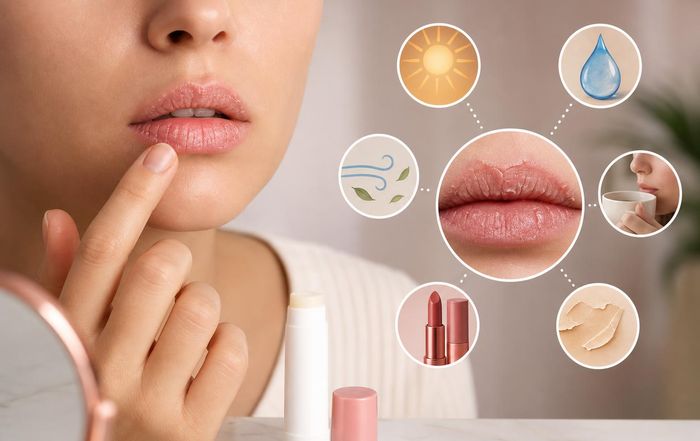
Why Your Lips Stay Dry Despite Using Lip Balm
For many people, lip balm is a constant companion-on the nightstand, in every bag, on the desk. Yet lips can still feel flaky, tight, or even painfully cracked no matter how often product is reapplied. When that happens, the problem usually isn't that the lips are "impossible," but that something about the ingredients, your routine, or your environment is quietly working against you. This fashionable guide looks at the most common reasons lips stay dry despite regular balm use, what science says about lip hydration, and how to build a routine that actually keeps your lips smooth and comfortable.
How Lip Skin Works (And Why It Dries Out So Easily)
The skin on the lips is structurally different from the rest of the face and body. Dermatology research shows that lip skin is much thinner, with fewer layers of the protective stratum corneum and almost no melanin, sweat glands, or oil (sebaceous) glands compared with normal facial skin. That means lips:
Lose moisture more quickly.
Have a weaker barrier against irritants and allergens.
Are more sensitive to temperature, wind, and sun exposure.
Because lips do not produce their own oils, they rely heavily on external protection-water intake, ambient humidity, and topical products. When that protection is incomplete or disrupted, dryness and chapping follow quickly. The American Academy of Dermatology (AAD) notes that exposure to cold, dry air, sun, and irritants are key drivers of cheilitis (inflamed, chapped lips), and that habits like lip licking can make the problem worse by increasing water loss from the lip surface.
Understanding this fragile structure is important: a lip balm that simply "feels nice" isn't always enough. The product has to support the barrier, not just mask dryness for a few minutes.
When Lip Balm Backfires: Ingredients That Can Make Dryness Worse
If lips stay dry or even get more irritated despite frequent balm use, one of the first suspects is the ingredient list. Many popular formulas contain components that feel soothing at first but can irritate or dehydrate over time, especially on already compromised lip skin.
Dermatologists and organizations like the AAD and National Eczema Association often highlight the following as potential culprits:
Fragrances and flavorings
Added scent or flavor is one of the most common reasons for lip irritation. These may include:
Essential oils such as peppermint, spearmint, citrus, cinnamon, clove.
Synthetic fragrance blends.
Food-like flavors (vanilla, chocolate, berry, cola).
Fragrance is among the leading causes of cosmetic contact allergy. On the lips, where the barrier is thin, even a mild sensitivity can lead to redness, burning, and persistent dryness that doesn't improve with more balm. If your lips tingle, burn, or feel "too cool" after application, that's a sign to reconsider the formula.
Menthol, camphor, phenol, and "tingling" agents
Many "medicated" or "cooling" balms use menthol, camphor, phenol, or eucalyptus to create a numbing, minty, or tingling sensation. While these may temporarily relieve discomfort, they can also be irritating, especially with frequent use. The Cleveland Clinic and other dermatology centers note that such ingredients may contribute to a cycle where lips feel drier and more inflamed over time, prompting even more reapplication.
Salicylic acid and exfoliating ingredients
Some lip products contain salicylic acid or other exfoliants to smooth flaky lips. On the face, low concentrations can help with acne or rough texture, but on the lips they can be too strong, stripping away the already-thin protective layers and worsening dryness. Overuse of physical scrubs on the lips can have a similar effect.
Allergens like lanolin or certain preservatives
Lanolin is a natural wax from sheep's wool that is very effective as an occlusive for many people, but it's also a known allergen. If lips are persistently red, itchy, or swollen along with dryness, a lanolin sensitivity is possible. Likewise, certain preservatives (like some formaldehyde-releasing agents) and dyes can trigger allergic contact cheilitis in susceptible individuals. Guidance from the American Contact Dermatitis Society emphasizes patch testing for people with recurrent lip problems.
If you suspect your balm is making things worse, switching to a very simple, fragrance-free formula for a few weeks can be revealing.
For readers exploring broader ingredient questions in their routines, the skincare hub on skincare offers deeper ingredient breakdowns and product guidance.
Occlusive vs. Hydrating: What Your Lips Actually Need
Not all lip balms work the same way. Many focus on occlusion-forming a barrier over the skin-without providing much actual hydration. Others are mostly oils that soften but don't lock in moisture effectively.
Lips generally benefit from three types of ingredients working together:
Humectants: Attract water into the outer skin layers. Examples include glycerin, hyaluronic acid, aloe vera, and urea in low concentrations. Humectants work best when there is moisture to hold (from water intake or a damp lip surface) and when they're paired with occlusives.
Emollients: Smooth and soften the skin by filling in tiny cracks in the surface. Plant oils (like jojoba, sunflower, or squalane), shea butter, cocoa butter, and ceramides are common emollients. They help the lips feel supple and comfortable.
Occlusives: Form a protective layer that reduces transepidermal water loss. Petrolatum (petroleum jelly), mineral oil, dimethicone, beeswax, and certain plant waxes are typical examples. Petrolatum, in particular, is considered by dermatologists and the AAD to be one of the most effective occlusives available.
A lip balm that is mostly wax with little humectant or emollient content may sit on top of the lips without doing much for deeper hydration. Conversely, a balm that is mostly humectants without sufficient occlusives may initially plump the lips but then allow moisture to evaporate, sometimes leaving them feeling even drier, especially in low-humidity environments.
Balms that combine glycerin or hyaluronic acid with petrolatum, shea butter, and/or ceramides often perform better for stubborn dryness. When evaluating products, looking for this balance can be more useful than marketing terms like "ultra-hydrating" or "intensive."
Readers interested in how these categories fit into broader routines may find the guides in guides and tips helpful when choosing products that complement each other.
The "Lip Balm Addiction" Myth and What's Really Happening
The idea that lips become "addicted" to balm and stop moisturizing themselves is widespread. In reality, lips don't produce significant oil in the first place, so there is no oil production to "shut off." The Mayo Clinic and other medical sources clarify that lip balm does not physiologically cause dependency in the way a drug would.
However, there is a real behavioral cycle that can make it feel like an addiction:
Using a balm with irritants (fragrance, menthol, flavor).
Experiencing temporary relief, then rebound dryness or burning.
Reapplying more often to soothe the new discomfort.
Gradually developing chronic irritation or contact allergy.
In this scenario, it's not the concept of lip balm that is the problem, but the specific product or ingredients. Switching to a bland, fragrance-free, petrolatum-based balm often breaks this cycle. The AAD specifically recommends plain petrolatum for very dry or chapped lips because it's both effective and less likely to irritate.
If someone feels compelled to apply balm dozens of times a day, it is worth asking whether the lips are genuinely dry or whether the product itself is causing low-grade irritation that keeps drawing attention to the area.
Lifestyle Habits That Quietly Sabotage Lip Hydration
Even with an excellent balm, everyday habits can undermine lip health. Some of the most common include:
Lip licking and biting
Licking dry lips feels intuitive, but saliva evaporates quickly, taking moisture with it and leaving lips even drier. Saliva also contains digestive enzymes that can irritate the delicate lip skin. Chronic lip licking can lead to "lip licker's dermatitis," where the area around the mouth becomes red, chapped, and sometimes painful. The AAD notes that breaking this habit is essential for healing.
Biting or picking at flakes further damages the barrier, creating tiny wounds and making it harder for balms to work effectively.
Dehydration and low humidity
Internal hydration matters. While drinking excessive water won't magically fix every dryness issue, research on skin physiology indicates that inadequate fluid intake can contribute to reduced skin hydration more broadly. At the same time, living or working in very dry indoor environments-especially heated or air-conditioned spaces-dramatically increases water loss from the lips.
Using a humidifier in bedrooms or office spaces, particularly in winter, can significantly reduce dryness. Organizations like the U.S. Environmental Protection Agency (EPA) provide guidance on indoor humidity, generally suggesting a range of about 30-50% to balance comfort and mold prevention.
Breathing through the mouth
Habitual mouth breathing, whether from nasal congestion, sleep apnea, or simple habit, exposes the lips to a constant flow of drying air. Studies on sleep-disordered breathing show that mouth breathing at night often correlates with morning dry mouth and lips. Addressing underlying nasal issues with a healthcare professional or using interventions like nasal strips (when appropriate) can indirectly improve lip comfort.
Irritating toothpaste or mouthwash
Minty, whitening, or strongly flavored oral care products can irritate the lips and the corners of the mouth in some people. Ingredients like sodium lauryl sulfate (SLS), strong flavor oils, or peroxide-based whiteners may contribute to chronic chapping, especially at the lip line. The British Dental Journal and other dental sources have discussed SLS as a potential irritant in susceptible individuals. Switching to a gentler, SLS-free toothpaste and milder mouthwash can make a noticeable difference for some.
For readers looking to align their lip care with overall wellness habits, the features in wellness and health and fitness can help connect daily routines with skin health.
Environmental Stress: Weather, Sun, and Indoor Climate
Lips are constantly exposed, and environmental conditions can quickly overwhelm even a good balm if not accounted for.
Cold, wind, and winter conditions
Cold air holds less moisture than warm air, and wind increases evaporation from the skin surface. This combination makes winter a high-risk season for chapped lips. The Canadian Dermatology Association and similar organizations emphasize using thicker, more occlusive balms in cold weather and reapplying more frequently when outdoors.
Covering the mouth with a scarf in very cold or windy conditions provides a physical barrier, which can be especially helpful for people with sensitive or eczema-prone skin.
Heat, sun, and UV damage
Ultraviolet (UV) exposure is a major but often overlooked cause of lip dryness and damage. The lower lip, in particular, is more exposed to sunlight and, over time, can develop actinic cheilitis-sun-induced damage that causes chronic dryness, scaling, and sometimes precancerous changes. The Skin Cancer Foundation strongly recommends using lip products with broad-spectrum SPF 30 or higher during the day, especially for people spending significant time outdoors.
Many ordinary balms do not contain UV filters, or contain only low SPF levels. For daytime, especially in sunny climates or at high altitudes, a dedicated SPF lip product is important. At night, a more nourishing, non-SPF balm can be used instead.
Indoor heating and air conditioning
Central heating and air conditioning both reduce indoor humidity, sometimes to desert-like levels. Over time, this can dry out not only the lips but also the eyes and nasal passages. A Harvard Health overview on winter skin care notes that using humidifiers, avoiding very hot showers, and applying moisturizers (including lip balm) immediately after cleansing can help preserve skin hydration. For lips, keeping a balm near where you sleep and work, and applying before long flights or car rides, can mitigate the impact of dry air.
Those exploring seasonal beauty strategies can find broader advice in the routines and trends sections, where environmental shifts often shape skincare and makeup choices.
Underlying Skin Conditions and Medications
Sometimes persistent dry lips are not just a cosmetic issue but a symptom of an underlying condition or side effect of medication. In these cases, lip balm alone will rarely solve the problem.
Eczema and atopic dermatitis
People with eczema or atopic dermatitis often have a genetically weaker skin barrier, and this can extend to the lips. Eczematous cheilitis may present as chronic dryness, redness, and scaling, sometimes extending slightly beyond the vermilion border of the lips. The National Eczema Association notes that fragrance-free, hypoallergenic balms and avoidance of common allergens are especially important for this group, and that prescription treatments may be needed during flares.
Allergic or irritant contact cheilitis
Chronic lip inflammation from allergy or irritation is common and can be triggered by lipsticks, balms, dental materials, metals (like nickel from musical instruments), foods, or even musical instrument reeds. The American Contact Dermatitis Society highlights patch testing as the gold standard to identify specific allergens. If lips remain dry and inflamed despite careful use of simple balms, consulting a dermatologist for patch testing can be decisive.
Nutritional deficiencies
Deficiencies in certain B vitamins (particularly B2, B3, B6, B12), iron, and zinc can contribute to dry, cracked lips and angular cheilitis (cracking at the corners of the mouth). NHS and NIH resources note that symptoms like fatigue, pale skin, or hair shedding alongside lip issues may point toward a deficiency. Blood tests through a healthcare provider can help clarify this.
Medications causing dryness
Several medications list dry lips or dry mouth as possible side effects. Common examples include:
Isotretinoin (for acne).
Some diuretics and antihypertensives.
Certain antidepressants and antihistamines.
Chemotherapy agents.
When medication is the driver, dermatologists often recommend thick, bland occlusive balms and sometimes adjunct treatments. Patients on isotretinoin, for example, are frequently advised to use petrolatum or ceramide-rich lip products multiple times a day. Guidance from organizations like the American Academy of Dermatology emphasizes proactive lip care for people on these therapies.
If you suspect a medication is contributing to dryness, it's important to discuss options with a prescribing doctor rather than stopping treatment abruptly.
How to Build a Lip Routine That Actually Works
When lips remain dry despite balm use, a structured but simple approach can help identify what's going wrong and reset the barrier.
Step 1: Strip it back to a "bland" balm
For at least two weeks, use a very simple, fragrance-free, dye-free balm. Look for a short ingredient list with things like petrolatum, mineral oil, ceramides, shea butter, and glycerin. Avoid menthol, camphor, strong flavors, and essential oils during this period. This "elimination" phase mirrors how dermatologists often approach irritated facial skin.
Applying a thicker layer at night can function as an overnight lip mask. For daytime, a thinner layer under or over lip color is usually sufficient.
Step 2: Add SPF during the day
Use a separate lip product with broad-spectrum SPF 30 or higher when outdoors. Mineral filters (zinc oxide, titanium dioxide) are often better tolerated by sensitive lips than some chemical filters, though texture and white cast can vary. The Skin Cancer Foundation and AAD both stress that lips are a frequent site for sun damage, so this step is not only about dryness but also long-term health.
Step 3: Support hydration and environment
Drink water regularly, but also pay attention to humidity. If indoor air is very dry, consider:
Using a humidifier in frequently used rooms.
Avoiding sitting directly in front of fans or vents.
Applying balm before bed, before flights, and before long outdoor exposure.
These small changes can amplify the effect of a good balm.
Step 4: Break unhelpful habits
Consciously reduce lip licking, biting, and picking. Some people find that keeping lips consistently coated with balm reduces the urge to lick or bite because the surface feels smoother. If stress triggers these habits, integrating stress-management techniques into a broader wellness routine can be helpful.
Step 5: Reintroduce color and flavor carefully
Once lips are stable for a few weeks, color cosmetics or flavored balms can be reintroduced one at a time. If a particular lipstick or flavored product causes burning or dryness within a day or two, it becomes easier to identify and avoid that specific formula. Keeping a mental or written note of problematic ingredients can guide future purchases.
For those balancing lip health with makeup looks, the makeup and beauty sections provide ideas for pairing comfortable textures with different finishes and trends.
When to See a Dermatologist
Most dry lip issues improve with gentler products, SPF, and environmental adjustments. However, medical assessment is important if:
Dryness and cracking persist for more than 4-6 weeks despite careful care.
There is significant pain, bleeding, or crusting.
The corners of the mouth are persistently cracked and sore.
White, scaly, or thickened patches develop, especially on the lower lip.
There is concern about possible infection (pus, yellow crusts, spreading redness).
You suspect an allergy but can't identify the trigger.
Dermatologists can assess for actinic cheilitis, infections, eczema, psoriasis, lichen planus, or other conditions that may mimic simple chapping. They may prescribe topical corticosteroids, calcineurin inhibitors, antifungals, or other treatments depending on the diagnosis. Resources from organizations like the American Academy of Dermatology, British Association of Dermatologists, and national health services can help locate qualified specialists.
Putting It All Together
When lips stay dry despite diligent balm use, it usually points to one (or several) of the following:
The balm contains irritants or allergens that quietly inflame the lips.
The formula doesn't balance humectants, emollients, and occlusives effectively.
Lifestyle habits like licking, mouth breathing, or harsh oral products are undermining the barrier.
Environmental stressors-cold, wind, sun, or dry indoor air-aren't adequately addressed.
An underlying condition or medication is driving chronic dryness.
By simplifying products, choosing ingredients that genuinely support the lip barrier, protecting against UV and harsh weather, and paying attention to overall health, most people can move from constant reapplication to stable, comfortable lips. From there, experimenting with textures, tints, and finishes becomes less about damage control and more about expression-something that sits right at the intersection of everyday care, beauty, and personal style.
