
The Best Order to Apply Toner, Serum, and Moisturizer (and Why It Matters)
Getting the order of toner, serum, and moisturizer right can make the difference between a routine that just feels nice and one that actually delivers results. Because these products are formulated with different textures and purposes, applying them in the wrong sequence can dilute active ingredients, interfere with absorption, or even cause irritation.
This guide breaks down the ideal order step by step, explains the "why" behind each move, and shows how to adapt the routine for different skin types and concerns.
For broader routine planning and product ideas, readers can also explore skincare, beauty, and routines articles on the site.
The core rule: thinnest to thickest, water to oil
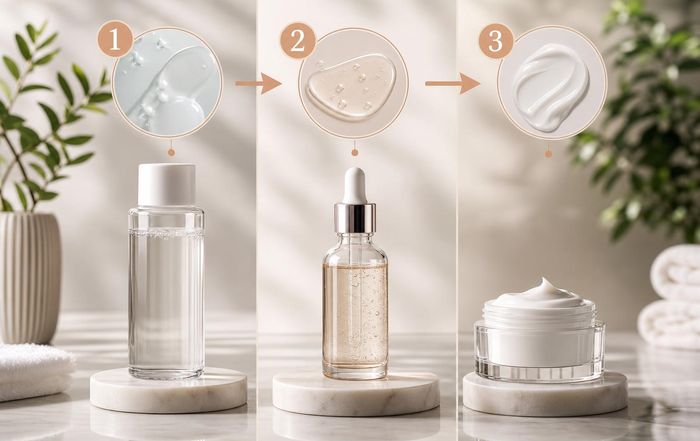
Dermatologists and cosmetic chemists generally agree on a simple principle: apply products from thinnest to thickest, and from most watery to most occlusive. The American Academy of Dermatology (AAD) notes that lighter, water-based formulas should go on before heavier creams so that actives can penetrate effectively without being blocked by occlusive layers of oil or waxes (AAD guidance on skincare routines).
For a basic routine built around toner, serum, and moisturizer, that translates to:
Cleanser
Toner
Serum
Moisturizer
Sunscreen (AM only, after moisturizer)
Each step prepares the skin for the next: cleansing removes impurities, toner rebalances and hydrates, serum delivers targeted actives, and moisturizer seals everything in.
Step 1: Start with a clean canvas
Before toner, serum, or moisturizer, skin needs to be clean but not stripped. A gentle cleanse removes sunscreen, makeup, excess oil, and pollution particles that can interfere with absorption or contribute to irritation.
Dermatology groups such as the Cleveland Clinic and Mayo Clinic recommend choosing a cleanser suited to your skin type and avoiding harsh scrubs that damage the barrier (Cleveland Clinic on facial cleansing, Mayo Clinic on skin care basics). For most people, washing twice daily (morning and night) is sufficient; those with very dry or sensitive skin may prefer a single evening cleanse plus a quick water rinse in the morning.
After cleansing, gently pat skin with a towel until it is damp rather than dripping. Many hydrating ingredients, like hyaluronic acid and glycerin, actually perform better when applied to slightly moist skin because they can bind water at the surface. At this point, the skin is ready for toner.
Readers interested in building a full routine around cleansing and treatment can find more guidance in our guides and tips section.
Step 2: Toner - reset, hydrate, and prep
Toner is often misunderstood as an astringent step meant to "tighten pores," but modern formulations are closer to lightweight liquid treatments. They are designed to rebalance pH after cleansing, add an initial layer of hydration, and sometimes deliver gentle exfoliating or soothing ingredients.
Why toner comes before serum
Toners are almost always the thinnest, most watery product in a routine, so they should go on immediately after cleansing. Applying toner first helps:
Rehydrate skin after cleansing, especially if you use foaming or sulfate-based cleansers.
Restore the skin's slightly acidic pH, which supports barrier function and microbiome balance (Journal of Cosmetic Dermatology review on skin pH).
Improve penetration of subsequent active ingredients by softening the stratum corneum (outermost skin layer).
If a serum is applied before toner, the watery toner can dilute the serum's actives and disrupt how it sets on the skin. That's why toner typically goes first.
How to apply toner correctly
Most dermatologists and cosmetic formulators suggest avoiding harsh, alcohol-heavy toners, especially for dry or sensitive skin. The British Association of Dermatologists notes that alcohol-based astringents can impair the barrier and increase irritation, particularly when combined with exfoliating acids or retinoids (BAD advice on cosmetic products).
For application:
Pour a small amount into clean hands, then press or pat onto the face, or
Use a soft cotton pad if the toner is exfoliating or if you want a mild secondary cleanse.
Let the toner absorb for 20-60 seconds until the skin feels lightly damp but not wet. Then move on to serum.
Hydration-focused toners pair particularly well with actives and are a recurring theme in our wellness and skincare coverage, where barrier health is central.
Step 3: Serum - your targeted treatment layer
Serums are concentrated formulas designed to deliver active ingredients such as vitamin C, niacinamide, peptides, or exfoliating acids. Because they usually have a fluid or gel-like texture and contain smaller molecules or higher active concentrations than moisturizers, they should be applied before heavier creams.
Why serum follows toner
After toner, the skin is hydrated and more receptive, which can enhance penetration of serum actives. If a moisturizer or oil goes on first, it can create an occlusive layer that physically slows or blocks water-based serums from absorbing properly. The Harvard Health Publishing skincare overview emphasizes that treatment products like serums should usually be applied before moisturizers for this reason (Harvard on basic skin care).
How to apply serum for best results
A few practical points help maximize serum benefits and minimize irritation:
Use a pea-sized amount or a few drops, depending on the formula's instructions. More is not always better; higher quantities can increase irritation without improving results.
Apply to slightly damp skin (from toner) and gently spread over the face and neck, avoiding the immediate eye area unless the formula is designed for it.
Give the serum 30-60 seconds to sink in before moving to moisturizer, especially if the texture is sticky or layered with other actives.
If using more than one serum, the same "thinnest to thickest" rule applies. A watery antioxidant serum could go on first, followed by a slightly thicker hydrating serum. However, combining too many actives can overwhelm skin; dermatologists often recommend focusing on one or two key actives in a routine, especially if you're just starting out.
For readers interested in exploring specific active ingredients, our brands and products and trends sections frequently examine how newer serums compare with established formulations.
Step 4: Moisturizer - seal in hydration and support the barrier
Moisturizers are designed to do three primary things: add water to the skin (humectants), prevent water loss (occlusives), and soften the surface (emollients). They are usually thicker than toners and serums, which is why they belong later in the routine.
Why moisturizer is the final skincare step (before sunscreen)
Once toner has prepped the skin and serum has delivered targeted actives, moisturizer acts as a protective seal. It locks in hydration and slows transepidermal water loss, which is especially important if your serums contain exfoliating acids or retinoids that can compromise barrier function. The AAD emphasizes that moisturizing is key even for oily and acne-prone skin, as a healthy barrier can reduce irritation and help maintain treatment tolerance (AAD on moisturizer use).
If moisturizer is applied too early-before serums-its occlusive ingredients can prevent water-based treatments from penetrating effectively. Used at the end, it helps "lock in" previous layers and creates a smoother surface, which is beneficial before makeup application.
How to apply moisturizer
Use enough to cover the face and neck in a thin, even layer. For most people, a nickel-sized amount is sufficient, but richer creams may require less. Massage gently until absorbed, paying attention to areas that tend to be drier, like around the nose and cheeks. In the morning, follow with a broad-spectrum sunscreen of at least SPF 30 as the final step.
Readers who want to see how moisturizers fit into makeup prep can explore our makeup and fashion sections, where base products and skin-finish trends are often discussed together.
Where sunscreen fits into the order
In the morning, sunscreen should be applied after moisturizer and before makeup. Mineral and chemical sunscreens alike are formulated to form an even film over the skin to protect against UV radiation. The U.S. Food and Drug Administration (FDA) and organizations like Cancer Research UK stress that adequate application and reapplication are essential for effective protection (FDA on sunscreen use, Cancer Research UK on sunscreen advice).
If a moisturizer includes SPF, it can simplify the routine, but many dermatologists caution that people often under-apply SPF moisturizers. A dedicated sunscreen layer, used liberally, is a more reliable option, especially for extended outdoor exposure.
Adapting the order for different skin types
The basic sequence-cleanser, toner, serum, moisturizer, sunscreen-stays the same, but the formulas and sometimes the frequency of each step should reflect your skin type and concerns.
Oily or acne-prone skin
For oily or breakout-prone skin, the American Academy of Dermatology recommends non-comedogenic, oil-free products and gentle cleansing to avoid stripping the barrier (AAD acne skincare tips). Toners may include ingredients like salicylic acid or witch hazel in low concentrations, but high-alcohol formulas can worsen oiliness over time by triggering rebound sebum production.
In this case, the order remains the same, but you might choose:
A lightweight, hydrating toner rather than a strong astringent.
A serum with niacinamide, salicylic acid, or azelaic acid to manage breakouts.
A gel or lotion moisturizer instead of a heavy cream.
If using a strong acne treatment (such as prescription retinoids or benzoyl peroxide), dermatologists sometimes suggest applying a light moisturizer before the treatment to buffer irritation. This is an intentional exception to the usual order and should ideally be guided by a professional.
Dry or sensitive skin
For dry or sensitive skin, barrier support is the priority. The National Eczema Association highlights the importance of fragrance-free, gentle products and regular moisturization to reduce dryness and irritation (NEA skincare guidance). In this context:
Toner should be hydrating and alcohol-free, with ingredients like glycerin, panthenol, or centella asiatica extract.
Serums might focus on hyaluronic acid, ceramides, or peptides rather than strong acids.
Moisturizer can be richer, with occlusives like petrolatum, shea butter, or squalane.
The order stays the same, but you may find that one serum step is enough, and exfoliating toners are used less frequently (for example, once or twice a week at night).
Combination or normal skin
Combination skin often benefits from a flexible approach: the same order, but spot-application of certain products. For example, a hydrating toner all over, a clarifying serum only on the T-zone, and a slightly richer moisturizer on drier areas. Normal skin types may tolerate a wider range of actives, but adding products gradually is still wise to monitor how the skin responds.
How long to wait between toner, serum, and moisturizer
A common question is whether each step needs a long "drying time." In most cases, long waits are unnecessary and can make routines harder to maintain.
Dermatologists often suggest a practical approach:
After toner: wait about 20-60 seconds, until the skin feels damp rather than wet.
After serum: wait 30-60 seconds, or until it feels mostly absorbed and not overly tacky.
After moisturizer: sunscreen can usually go on immediately, as many modern formulas are designed to layer.
The exception is when using strong actives like retinoids or exfoliating acids. Some dermatologists recommend the "sandwich method," layering moisturizer before and after retinoid application to reduce irritation, which may involve slightly longer waits between steps. If you're using prescription treatments, following your dermatologist's timing advice is more important than any generalized rule.
Common mistakes and how to fix them
Even with the right order, a few missteps can undermine your routine.
One frequent issue is using too many exfoliating products at once-such as an acid toner, an exfoliating serum, and a retinoid moisturizer. Research published in clinical dermatology journals indicates that over-exfoliation can disrupt the barrier, leading to redness, flakiness, and increased sensitivity to UV and pollution (overview of exfoliation and barrier function in Clinical, Cosmetic and Investigational Dermatology). To avoid this, limit strong exfoliants to a few times a week and avoid stacking multiple high-strength acids in a single routine.
Another mistake is skipping moisturizer because the skin feels oily. As the AAD notes, even oily skin needs hydration; otherwise, the barrier may become compromised, potentially triggering more oil production and making acne treatments harder to tolerate. Choosing a lightweight, non-comedogenic gel or lotion can solve this without feeling greasy.
Finally, some people apply facial oils before water-based serums, which can interfere with penetration. Oils, when used, should generally be applied after moisturizer at night, or mixed into moisturizer, not before toner or serum.
For more in-depth troubleshooting, our health and fitness and wellness sections often explore how lifestyle, sleep, and stress interact with skin health and routine tolerance.
Putting it all together: a simple AM and PM example
A basic example routine shows how toner, serum, and moisturizer fit into a typical day. This is not a one-size-fits-all prescription, but a template that can be adapted with different actives.
Morning:
Gentle cleanser
Hydrating toner
Antioxidant serum (such as vitamin C, if tolerated)
Lightweight moisturizer
Broad-spectrum sunscreen SPF 30+
Evening:
Makeup/sunscreen removal (if needed) plus gentle cleanser
Hydrating or mildly exfoliating toner (exfoliating no more than a few nights per week)
Treatment serum (for example, niacinamide, peptides, or a retinoid, depending on your routine)
Moisturizer (richer at night if skin is dry)
Those interested in broader lifestyle and beauty context can explore additional routine ideas across our routines, beauty, and skincare hubs.
A quick recap of the best order
The most effective way to apply toner, serum, and moisturizer is guided by texture and function:
Cleanser clears the way.
Toner resets pH, adds light hydration, and prepares the skin.
Serum delivers focused active ingredients into that hydrated canvas.
Moisturizer seals everything in, supports the barrier, and creates a smoother surface.
Sunscreen, in the morning, is the essential final layer of protection.
Within this structure, products can be tailored to skin type, climate, and personal preference, but the core order remains the same for most people. Getting this sequence right does not require an elaborate routine-only an understanding of how each step supports the next.
