
How to Organize Beauty Products for Daily Mega Efficiency
The New Reality of Beauty Organization
Woah beauty routines have expanded far beyond a simple cleanser and moisturizer. Consumers across North America, Europe, Asia, Africa, and South America now juggle multi-step skincare regimens, hybrid makeup-skincare formulas, wellness supplements, and an ever-growing collection of devices, from LED masks to AI-powered skin analyzers. For the many beautiful fans of BeautyTipa who navigate demanding professional lives in cities from New York and London to Singapore, Seoul, and São Paulo, the question is no longer how many products they own, but how effectively they can access and use them every single day.
This shift has turned beauty organization into a strategic discipline rather than a purely aesthetic exercise. Efficiently arranged skincare, makeup, wellness, and haircare products can shorten morning routines, reduce decision fatigue, minimize product waste, and support better skin and health outcomes. As beauty intersects with technology, finance, and lifestyle, the way products are stored and sequenced increasingly reflects a person's priorities, schedule, and long-term goals. For BeautyTipa, whose editorial focus spans beauty, wellness, skincare, routines, and business and finance, this topic sits at the intersection of performance and self-care, merging practicality with the pursuit of excellence.
Why Organization Drives Beauty and Wellness Outcomes
Organizing beauty products for daily efficiency is ultimately about behavior design. Research in behavioral science from institutions such as Harvard University and University College London has consistently shown that environment shapes habit formation. When essential products are visible, logically arranged, and easy to reach, it becomes significantly easier to adhere to routines that support skin health, mental wellbeing, and professional readiness. Learn more about how environment influences behavior through resources from Harvard Health Publishing.
In the context of skincare, dermatologists affiliated with organizations like the American Academy of Dermatology emphasize consistency as the single most important factor in achieving results from active ingredients such as retinoids, vitamin C, niacinamide, and AHAs. When serums are buried behind unused products, or sunscreen is stored away from the bathroom mirror, adherence drops and outcomes suffer. Readers can explore foundational skincare principles in professional guidance from the American Academy of Dermatology.
Similarly, wellness routines that combine topical care with nutrition, sleep, and stress management are far easier to maintain when supplements, sleep aids, and fitness accessories are placed in intuitive locations. For example, collagen or omega-3 supplements stored near breakfast items, or magnesium placed beside evening skincare, reinforce holistic rituals that support both appearance and overall health. This integration aligns with BeautyTipa's broader focus on health and fitness and food and nutrition, where efficiency and consistency are equally critical.
Auditing the Beauty Collection: From Clutter to Clarity
Before any effective organization system can be implemented, a thorough audit of existing products is essential. In 2026, consumers in markets such as the United States, United Kingdom, Germany, France, and South Korea often own dozens, if not hundreds, of items accumulated from social media trends, global travel, and promotional bundles. Without a structured audit, even the most elegant storage solutions will quickly revert to chaos.
A professional-grade audit begins by gathering all skincare, makeup, fragrance, haircare, body care, tools, and wellness-related items into a single space. This process mirrors inventory review practices used by leading beauty retailers such as Sephora and Ulta Beauty, which rely on category segmentation to manage thousands of SKUs efficiently. Readers interested in how large retailers manage assortment and stock rotation can explore industry insights from McKinsey & Company's beauty reports.
Once gathered, products should be evaluated according to multiple dimensions: expiration date, current skin or hair needs, frequency of use, compatibility with other products, ingredient sensitivity, seasonality, and professional or social demands. Dermatological guidance from organizations like the Mayo Clinic highlights the importance of discarding expired sunscreens, unstable vitamin C serums, and contaminated eye products to reduce the risk of irritation or infection. Learn more about product safety and expiration from the Mayo Clinic.
At this stage, it is useful to distinguish between core, supporting, experimental, and archival products. Core products are those used daily, such as cleansers, moisturizers, sunscreens, and go-to base makeup. Supporting products include weekly masks, exfoliants, or styling treatments. Experimental products are recent purchases or trend-driven items still under evaluation. Archival products include special-occasion fragrances, professional kits, or sentimental items. For BeautyTipa readers who regularly explore brands and products and emerging trends, this categorization prevents experimental purchases from overwhelming the products that truly matter.
Designing an Efficient System Around Daily Routines
Once the audit is complete, the next step is to structure storage around actual routines rather than arbitrary categories. Efficiency is achieved when the physical flow of products mirrors the sequence of morning, evening, and weekend rituals. This approach is supported by time-management frameworks frequently discussed by organizations such as Harvard Business Review, which emphasize designing environments that reduce friction in high-frequency tasks. Learn more about optimizing daily workflows through Harvard Business Review.
For morning routines, products that must never be skipped-cleanser, antioxidant serum, moisturizer, and sunscreen-should be placed at eye level and within arm's reach of the bathroom sink or vanity mirror. Makeup essentials that are crucial for professional settings, such as foundation, concealer, brow products, and a neutral lip color, should be positioned in a dedicated "workday ready" zone, minimizing the time required to assemble a polished look before early meetings or commutes.
Evening routines, which often involve more steps, benefit from a separate, calmer space. Retinoids, richer moisturizers, overnight masks, and specific treatment products can be grouped together in a section that signals "skin recovery mode." By aligning this zone with evening rituals such as reading, journaling, or meditation, individuals can transform skincare into a decompression ritual that supports sleep quality. For those exploring holistic approaches, resources from Cleveland Clinic provide useful perspectives on the relationship between skin, stress, and sleep, which can be explored via Cleveland Clinic's wellness resources.
Weekends and special occasions often call for bolder makeup, experimental masks, or styling tools that are not needed daily. These can be stored slightly further away but still clearly labeled and visible, allowing quick access when social events or travel arise. For readers who follow BeautyTipa's coverage of events and fashion, this separation ensures that high-impact looks are available without disrupting weekday efficiency.
Zoning by Function, Formula, and Frequency
Professional organizers and interior designers increasingly recommend zoning as a core strategy for managing complex collections. Zoning involves dividing storage spaces by function and frequency of use, then refining by formula type. This technique is particularly valuable in compact urban apartments in cities such as Tokyo, Hong Kong, London, Paris, and New York, where every centimeter of shelf and drawer space must be justified.
A well-designed system might dedicate one primary zone to daily skincare, arranged in the order of application: cleanser, toner or essence, treatment serums, eye care, moisturizer, and sunscreen. A second zone can be assigned to daily makeup, ordered from base to finish: primer, foundation or tinted moisturizer, concealer, contour or bronzer, blush, highlighter, eye products, and lips. A third zone can serve as a wellness and fragrance area, including supplements, aromatherapy, and signature scents. Readers can deepen their understanding of optimal skincare sequencing through educational resources such as Cleveland Clinic's skincare guidance.
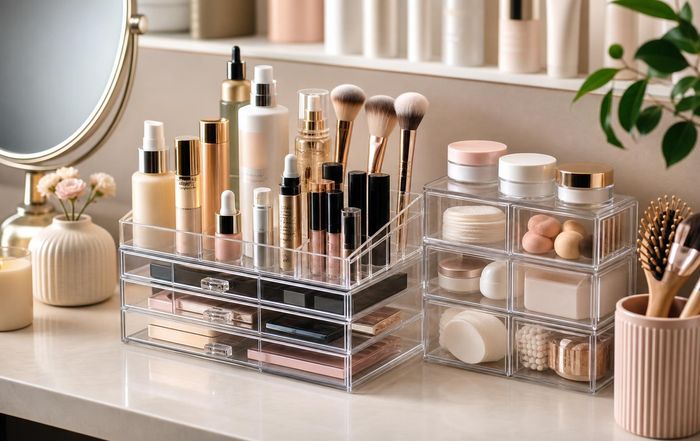
Within each zone, formulas should be grouped by texture and packaging: pumps together, jars together, droppers together. This not only creates visual coherence but also reduces the risk of spills and contamination. For example, glass droppers containing active serums should be stored upright and easily visible to avoid accidental overuse or neglect. This level of attention to detail aligns with the precision that BeautyTipa promotes in its guides and tips, where readers are encouraged to treat their beauty routines as high-performance systems rather than ad hoc experiments.
Leveraging Technology and Smart Storage in 2026
By 2026, beauty technology has moved decisively into the mainstream. Smart mirrors, app-connected skincare fridges, and AI-powered inventory trackers are no longer niche luxuries but increasingly common tools among professionals and enthusiasts. For BeautyTipa readers interested in technology and beauty, integrating these tools into organization strategies can significantly enhance daily efficiency.
Smart mirrors from companies such as HiMirror and Simplehuman now offer skin analysis, lighting adjustments that simulate office or outdoor environments, and reminders for product usage. When paired with disciplined physical organization, these devices can recommend which products to prioritize on a given day based on skin condition, environmental factors, and even local pollution levels. Readers curious about environmental impacts on skin can explore data and advice from organizations like the World Health Organization, available via the WHO's environmental health resources.
App-based inventory systems, whether standalone or integrated into broader wellness apps, allow users to log purchase dates, track expiration timelines, and measure usage frequency. This is particularly relevant for professionals in beauty and wellness roles, such as makeup artists, estheticians, and brand consultants, who need to ensure product safety and regulatory compliance. The U.S. Food and Drug Administration provides useful information on cosmetic labeling and safety, which can be explored through FDA cosmetic resources.
Smart storage, including temperature-controlled drawers or mini-fridges, helps preserve volatile ingredients such as vitamin C, certain peptides, and natural formulations with minimal preservatives. While not every product requires refrigeration, selectively cooling serums, eye creams, and some masks can extend their stability and enhance sensory experience. Scientific perspectives on ingredient stability can be found through organizations such as the British Association of Dermatologists, whose educational materials are accessible via the BAD's public information.
Financial and Sustainability Benefits of Thoughtful Organization
Efficient organization is not only a matter of convenience; it has direct implications for personal finance and sustainability. In leading markets such as the United States, United Kingdom, Germany, France, Japan, and South Korea, consumers frequently report purchasing duplicate products because they cannot locate existing items or forget what they own. This behavior contributes to unnecessary spending and increased waste.
By implementing a clear organizational system and, where appropriate, digital tracking, individuals can align their purchasing decisions with actual needs and usage patterns. This approach parallels inventory optimization strategies used by global consumer goods companies such as L'Oréal and Unilever, which rely on data to balance availability with waste reduction. Readers interested in the business side of beauty can explore industry analyses and case studies through Deloitte's consumer products insights.
From a sustainability perspective, organizing products to ensure they are used before expiration significantly reduces the volume of partially used items that end up in landfills. Environmental organizations such as the United Nations Environment Programme encourage responsible consumption patterns, including mindful purchasing and reduced waste, which can be explored through UNEP's sustainable consumption resources. For BeautyTipa, which increasingly covers the financial and environmental dimensions of the industry in its business and finance section, organization is a practical lever that empowers readers to align beauty, budget, and values.
Adapting Organization for Global Lifestyles and Spaces
Beauty organization challenges vary significantly across regions. In compact apartments in Tokyo, Seoul, Singapore, Hong Kong, and major European capitals, vertical storage, multi-functional furniture, and modular systems are essential. In larger homes in North America, Australia, and parts of Europe, the challenge often lies in managing dispersed storage across multiple bathrooms, bedrooms, and closets. In emerging markets across Africa, South America, and Southeast Asia, hot and humid climates may require additional attention to storage conditions to protect product integrity.
Regardless of geography, the principles remain consistent: prioritize accessibility for daily essentials, maintain visibility of active and seasonal products, and create dedicated zones for special-occasion or professional items. Readers can find inspiration for adapting these principles to different living environments through interior and lifestyle resources such as Architectural Digest, which frequently showcases storage solutions in high-end homes and compact urban spaces.
For international professionals and frequent travelers, portable organization becomes equally important. Curated travel kits that mirror at-home routines, with miniatures or decanted products, help maintain consistency across time zones and climates. This is particularly relevant for BeautyTipa's globally mobile audience, who can explore additional regional perspectives in the platform's international coverage.
Integrating Makeup, Fashion, and Professional Image
In 2026, beauty organization cannot be separated from broader questions of personal branding and professional image. For many BeautyTipa readers in corporate, creative, and entrepreneurial roles, makeup and grooming are strategic tools for communication and confidence. A well-structured system that links makeup choices to wardrobe and calendar demands can dramatically simplify getting ready for work, client meetings, or public appearances.
One effective approach is to create a "capsule" makeup collection that parallels a capsule wardrobe: a curated set of products that harmonize with key wardrobe colors, preferred silhouettes, and signature accessories. This capsule can be stored in a prominent, easily accessible section, while more experimental shades and textures are kept in a secondary zone. This method reflects styling principles often discussed by leading fashion publications such as Vogue, whose insights on coordination and personal style can be explored through Vogue's fashion and beauty content.
By aligning makeup storage with wardrobe organization-placing frequently used lipsticks near jewelry, or storing foundation and concealer close to everyday work attire-individuals reduce the cognitive load of decision-making during busy mornings. This integrated approach resonates with BeautyTipa's dual focus on makeup and fashion, encouraging readers to view beauty organization as a core component of their overall professional strategy.
Supporting Career Development in the Beauty and Wellness Sectors
For professionals working within the beauty, wellness, and fashion industries, organization is not just a personal matter but a core competency. Makeup artists, skincare specialists, salon owners, brand representatives, and content creators are judged not only on their creative output but also on their ability to manage products efficiently, maintain hygiene, and present a polished working environment.
In markets such as the United States, United Kingdom, Canada, Germany, and Australia, employers and clients increasingly expect beauty professionals to demonstrate rigorous hygiene protocols, transparent product labeling, and streamlined kit organization. Career-focused resources from organizations such as Indeed and LinkedIn highlight the importance of operational discipline in client-facing roles, which can be explored through LinkedIn's career development content.
For readers of BeautyTipa who are exploring or advancing careers in these fields, the platform's jobs and employment section can be complemented by a deliberate focus on kit architecture, labeling, and replenishment systems. Adopting the same principles used in professional studios-clear zoning, inventory tracking, and regular audits-strengthens both client trust and long-term career prospects.
Building a Personalized, Future-Proof System with BeautyTipa Knowledge Guides
Ultimately, organizing beauty products for daily maximum efficiency is about designing a system that reflects individual priorities, environments, and ambitions, while remaining flexible enough to adapt to new products, technologies, and life stages. For some BeautyTipa glamour followers, this may mean a minimalist, highly curated shelf that aligns with a disciplined skincare philosophy. For others, it may involve an expansive, meticulously cataloged collection that supports content creation, professional services, or a deep passion for experimentation.
Across these diverse scenarios, the core principles remain constant: audit thoroughly, design storage around real routines, zone by function and frequency, leverage technology intelligently, and align organization with financial and sustainability goals. As beauty continues to evolve at the intersection of science, technology, and lifestyle, these principles will only become more relevant.
BeautyTipa is uniquely positioned to support this evolution, offering integrated coverage of skincare, routines, trends, guides and tips, and the broader business and technological landscape that shapes the industry. By applying the strategies outlined here and staying engaged with expert-driven content on BeautyTipa's main platform, lovely readers can transform their beauty spaces into efficient, inspiring environments that support not only daily performance but also long-term wellbeing and professional success.
