
Smart Skincare Storage Tips for Better Product Performance
The Strategic Role of Storage in Modern Skincare
By 2026, skincare has evolved from a simple daily habit into a sophisticated, data-informed ritual, where consumers across North America, Europe, Asia, Africa, and South America carefully select serums, essences, and creams based on ingredients, clinical claims, and ethical standards. Yet even the most advanced formulas from leading brands can underperform or degrade prematurely if they are not stored correctly, which is why BeautyTipa has made intelligent skincare storage a central theme in its guidance for readers who expect both efficacy and longevity from their routines. As skincare markets in the United States, United Kingdom, Germany, Canada, Australia, and fast-growing hubs such as South Korea, Japan, Singapore, and Brazil mature, consumers are discovering that proper storage is not a minor detail but a critical extension of product design, ingredient stability, and overall skin health.
Dermatology and cosmetic science research, as summarized by organizations such as the American Academy of Dermatology and resources like the Mayo Clinic, consistently emphasize that exposure to light, heat, humidity, and air can accelerate the breakdown of active ingredients, alter textures, and increase the risk of irritation or contamination. Learn more about how environmental factors affect the skin barrier through dermatology-focused content on the Harvard Health Publishing website, which helps frame why environmental control is equally important for the products themselves. For a platform like BeautyTipa, which curates insights on skincare, wellness, and beauty for an international audience, the question is no longer whether storage matters, but how readers can realistically optimize storage in homes, offices, and travel settings without turning their bathrooms into laboratories.
Understanding Ingredient Stability and Why It Matters
The performance of skincare products depends heavily on the chemical stability of their active and supporting ingredients, including antioxidants, retinoids, peptides, exfoliating acids, and botanical extracts, all of which can be sensitive to air, light, and temperature. Vitamin C serums, for example, especially those formulated with L-ascorbic acid, are notoriously prone to oxidation, which is why leading dermatology resources such as the Cleveland Clinic explain that discoloration, changes in smell, or a shift in texture may indicate a loss of potency. Readers can explore how antioxidants behave and degrade over time on the National Center for Biotechnology Information platform, which aggregates peer-reviewed research from laboratories in France, Italy, Spain, China, and beyond.
Retinoids, including retinol and prescription-strength tretinoin, widely used in markets like South Korea, Japan, and Europe, are similarly sensitive to light and air, which is why many high-end brands choose opaque or airless packaging and recommend storage away from direct light and excessive heat. Glycolic, lactic, and salicylic acids, common in exfoliating toners and acne-focused treatments across North America, Asia, and Europe, can also be affected by pH shifts that may be exacerbated by poor storage conditions. Authoritative institutions such as the British Association of Dermatologists and the European Academy of Dermatology and Venereology provide clinical context on how these ingredients work in skin, which in turn supports the rationale for careful handling and storage. For readers of BeautyTipa, who often combine multiple actives in sophisticated routines, understanding ingredient fragility is essential to protecting both product investment and skin health.
Temperature: Finding the Optimal Range for Everyday Products
Temperature is one of the most critical variables in skincare storage, yet it is also one of the most misunderstood, with social media trends in the United States, United Kingdom, and South Korea popularizing beauty fridges and ultra-cool storage without always explaining when such practices are truly beneficial. In general, most skincare products are designed to be stored at room temperature, usually around 20-25°C (68-77°F), a standard referenced by regulatory and scientific bodies such as the U.S. Food and Drug Administration and the European Medicines Agency, which provide guidance on product stability testing. Readers can learn more about how cosmetics are evaluated for stability and shelf life through the U.S. FDA's information on cosmetics and personal care, which clarifies that manufacturers test within defined temperature ranges to simulate real-world conditions in regions from Canada and Germany to Singapore and South Africa.
Excessive heat, particularly above 30°C (86°F), can accelerate chemical reactions that degrade sensitive actives and emulsions, a concern that has become especially relevant as global temperatures rise and heatwaves become more frequent in Europe, Asia, and North America. Households in Spain, Italy, Australia, and Brazil that lack consistent air conditioning may unwittingly expose products to repeated heat cycles, especially when items are stored on sunny countertops or near radiators. Conversely, storing products in very cold environments can alter viscosity, crystallize certain ingredients, or destabilize emulsions, which may cause separation or graininess. The International Organization for Standardization (ISO) publishes standards for cosmetic stability testing that reference various temperature conditions, and professionals in cosmetic chemistry frequently consult resources like the Society of Cosmetic Chemists to design robust formulations that can withstand moderate fluctuations. For BeautyTipa readers, the most reliable approach is to maintain products in a consistently cool, dry place away from heat sources, with refrigeration reserved for specific formulas that benefit from lower temperatures, such as certain eye gels, vitamin C serums, or probiotic-based treatments when recommended by the brand.
Light and Air: Invisible Enemies of Active Ingredients
Light exposure, particularly ultraviolet and high-energy visible light, can trigger photodegradation reactions in many cosmetic ingredients, a process that has been well documented in scientific literature and by institutions like the Journal of the American Academy of Dermatology and the Royal Society of Chemistry. Transparent or lightly tinted packaging may be visually appealing on bathroom shelves in London, New York, Paris, Berlin, or Tokyo, but it offers limited protection against light-induced breakdown, especially for light-sensitive compounds such as retinoids and certain plant extracts. Consumers who leave serums and creams on windowsills or open shelving in bright bathrooms effectively expose them to continuous low-level light stress, which can gradually erode efficacy long before the printed expiration date.
Air exposure is equally significant, particularly for formulas containing antioxidants like vitamin C, vitamin E, ferulic acid, resveratrol, and green tea extracts, which can oxidize when repeatedly exposed to oxygen. Resources like the Environmental Working Group's Skin Deep database and the Campaign for Safe Cosmetics have helped consumers from Canada to Norway and New Zealand become more ingredient-literate, which in turn has increased scrutiny of packaging choices such as open jars versus airless pumps. From a storage perspective, minimizing the time that containers remain open, closing lids tightly after each use, and avoiding the habit of leaving droppers or spatulas exposed on countertops are simple yet powerful ways to preserve potency. On BeautyTipa, where editorial content often highlights packaging innovation in brands and products, the interplay between light, air, and formulation design is emphasized as a key factor in long-term product performance.
Humidity, Bathrooms, and the Risk of Contamination
Humidity is another critical yet often overlooked factor in skincare storage, particularly for readers in regions with tropical or subtropical climates such as Thailand, Malaysia, Singapore, and parts of Brazil and South Africa, as well as for those living in coastal cities across Europe and North America. Bathrooms, which are the default storage location for many consumers, combine high humidity, frequent temperature swings, and potential exposure to microorganisms, all of which can shorten product shelf life and increase the risk of contamination. Organizations such as the World Health Organization and national health agencies like Health Canada and the UK National Health Service have repeatedly highlighted the importance of controlling moisture and microbial growth in household environments, guidance that extends naturally to personal care items kept in steamy bathrooms.
Jar packaging, which requires users to repeatedly dip fingers or spatulas into the product, is particularly vulnerable to contamination if stored in humid, warm spaces, and this risk increases when multiple people share the same bathroom in households from Germany to Japan and Mexico. Powder-based products, clay masks, and natural or preservative-light formulations may also be more susceptible to changes in consistency or microbial growth when exposed to prolonged humidity. Many cosmetic formulators reference guidelines from the Cosmetics Europe association and the Personal Care Products Council in the United States when designing preservation systems, but even the most robust systems can be challenged by poor storage practices. For the BeautyTipa audience, relocating the majority of skincare products to a cool, dry bedroom drawer or dedicated cabinet, while keeping only daily essentials in the bathroom, balances convenience with preservation and reduces unnecessary exposure to moisture.
Packaging, Design, and the Business of Longevity
The global skincare industry, led by conglomerates such as L'Oréal, Estée Lauder Companies, Shiseido, and emerging innovators from South Korea, France, and Scandinavia, has increasingly recognized that packaging is not merely a branding tool but a performance technology that can significantly influence stability and user experience. Airless pumps, opaque containers, UV-protective glass, and single-dose capsules are all strategies designed to limit exposure to light, air, and contamination, thereby extending product viability from New York and Toronto to Stockholm, Copenhagen, and Zurich. Industry analysis from organizations like McKinsey & Company and Deloitte has underscored how packaging innovation is becoming a competitive differentiator, particularly in premium segments where consumers expect both sustainability and performance. Learn more about sustainable business practices and packaging trends through the Ellen MacArthur Foundation, which promotes circular economy principles that are increasingly influencing cosmetic design.
For readers of BeautyTipa, who follow trends at the intersection of technology and beauty, this evolution in packaging design underscores a broader shift toward performance-centric and environmentally conscious solutions. Refillable systems, popular in France, Germany, and Japan, must be carefully stored and maintained to prevent contamination, which places greater responsibility on the consumer to adopt hygienic storage habits. Meanwhile, minimalist and natural brands operating in markets like Australia, New Zealand, and South Africa sometimes choose lower preservative loads, which can be appealing from a clean beauty perspective but may require stricter adherence to storage instructions. BeautyTipa's editorial approach, grounded in experience, expertise, and trustworthiness, encourages readers to evaluate not only the ingredient list but also the packaging format and recommended storage conditions as part of their overall purchasing decision.
Smart Storage at Home: Building a Skincare "Command Center"
Designing an effective skincare storage system at home begins with understanding the specific climate, living space, and daily habits of the user, whether they are in a compact apartment in Hong Kong, a townhouse in London, a condominium in Toronto, or a family home in Johannesburg. An ideal setup often involves a dedicated, temperature-stable area such as a bedroom dresser, closet shelf, or vanity away from direct sunlight and heating or cooling vents, where products can be organized by type, frequency of use, or time of day. Interior design and organization experts, including those frequently featured by Architectural Digest and House Beautiful, have shown how well-planned storage not only preserves products but also streamlines routines by making it easier to access the right items at the right time. For BeautyTipa, which regularly publishes guides and tips on optimizing routines, this concept of a skincare "command center" reflects the platform's emphasis on intentional, efficient self-care.
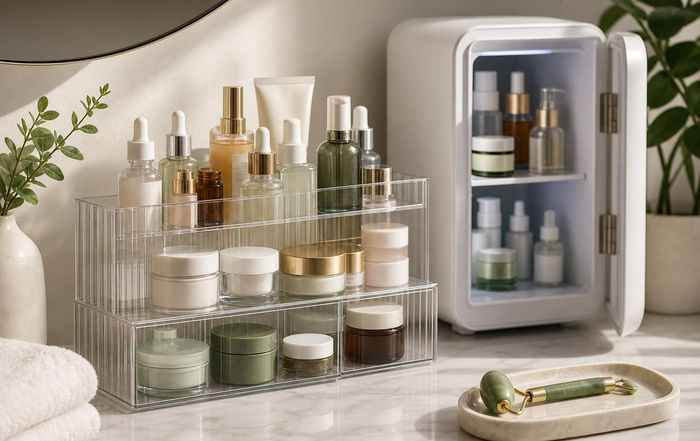
Temperature-controlled drawers or compact skincare fridges can be useful for particularly sensitive items or in warmer climates, but they should be used judiciously and in line with brand recommendations, as not all products are formulated to be refrigerated. Resources such as Consumer Reports and the Good Housekeeping Institute have tested and reviewed beauty fridges and storage solutions, providing data on energy use, temperature consistency, and practicality, which can help consumers decide whether such devices are a worthwhile investment. For many readers across Europe, Asia, and North America, simple measures such as relocating products away from bathroom humidity, closing containers promptly, and periodically reviewing expiration dates can have a substantial impact on performance without requiring expensive equipment. BeautyTipa encourages its audience to integrate storage decisions into broader lifestyle and business and finance considerations, viewing smart storage as both a protective measure for personal health and a way to maximize return on investment in high-quality skincare.
Travel, Work, and On-the-Go Skincare Storage
As international travel and hybrid work patterns rebounded and evolved by 2026, skincare storage challenges extended beyond the home, particularly for professionals commuting between offices in New York, London, Singapore, Dubai, and Shanghai, or traveling frequently across Europe, Asia, and North America. Air travel exposes products to pressure changes, temperature fluctuations, and varying levels of humidity, which can stress packaging and formulations, especially if items are stored in overhead bins or checked luggage subject to extreme temperatures. Aviation and travel health resources from organizations such as the International Air Transport Association (IATA) and Centers for Disease Control and Prevention (CDC) highlight how cabin environments differ from typical household conditions, reinforcing the need for secure, leak-proof packaging and compact formats.
For on-the-go storage, travel-sized containers, solid cleansers, and stick formats can reduce exposure to air and contamination, while also complying with liquid restrictions in airports across Europe, Asia, and North America. Professionals working in offices without climate-controlled personal storage may choose to keep only a minimal set of daily essentials at work, stored in opaque pouches or drawers away from windows, while maintaining the bulk of their products at home in optimal conditions. Platforms like Allure and Vogue Business have documented how beauty routines adapt to mobile lifestyles, which complements BeautyTipa's own coverage of jobs and employment and the realities of maintaining wellness and appearance in demanding professional environments. For frequent travelers in regions such as Australia, New Zealand, Scandinavia, and South Africa, planning ahead by decanting necessary products into high-quality, airtight travel containers and storing them in insulated pouches can mitigate the impact of external conditions on product integrity.
Smart Technology and the Future of Skincare Storage
The integration of technology into beauty has accelerated rapidly, with BeautyTipa closely tracking innovations that sit at the intersection of technology and beauty, from AI-driven skin analysis to app-connected devices and smart mirrors. In the context of storage, smart beauty fridges, humidity-controlled cabinets, and app-enabled inventory systems are beginning to appear in premium markets in the United States, Japan, South Korea, Germany, and China, promising to monitor temperature, light exposure, and expiration dates in real time. Consumer electronics leaders and beauty-tech startups, some backed by major players like Samsung, LG, and L'Oréal, are experimenting with sensors and connectivity to create intelligent storage environments that can alert users when conditions fall outside optimal ranges or when products are nearing the end of their recommended shelf life.
Technology and innovation analysts at organizations such as CB Insights and Forrester Research have noted that connected beauty devices are part of a broader shift toward personalized, data-driven self-care ecosystems, in which storage becomes another parameter to be optimized alongside ingredient selection and routine design. Learn more about how the Internet of Things is reshaping consumer products through resources on the World Economic Forum website, which frequently discusses the digital transformation of everyday objects. For BeautyTipa, which serves readers from North America, Europe, Asia, Africa, and South America, the key question is how these technologies can deliver practical, trustworthy benefits rather than simply adding complexity or cost. The platform's editorial stance emphasizes that while smart storage can be valuable for enthusiasts and professionals, especially in hot or humid climates, the fundamentals of cool, dark, and dry storage remain the foundation of effective skincare preservation.
Sustainability, Waste Reduction, and Responsible Consumption
Smart storage is not only about maximizing performance; it is also an important lever for reducing waste and supporting more sustainable consumption in beauty, wellness, and fashion. When products are stored poorly and expire prematurely, consumers in Canada, France, Italy, Netherlands, Switzerland, and beyond may discard nearly full bottles and jars, contributing to both financial loss and environmental impact through increased plastic, glass, and chemical waste. Sustainability-focused organizations such as Greenpeace and the World Wildlife Fund (WWF) have highlighted the environmental footprint of the beauty industry, from packaging to microplastics and water use, while initiatives like the UN Environment Programme encourage brands and consumers to adopt more circular and resource-efficient practices. Learn more about sustainable consumption patterns through the United Nations Environment Programme's resources, which provide a global context for individual choices.
By extending the usable life of products through thoughtful storage, consumers can buy fewer replacements, reduce the frequency of discarding unused items, and make more intentional purchasing decisions that align with both their values and budgets. This perspective resonates strongly with BeautyTipa readers who are interested not only in appearance but also in health and fitness, food and nutrition, and fashion, viewing personal care as part of a holistic, sustainable lifestyle. Financial literacy platforms and business media such as Bloomberg, Financial Times, and The Wall Street Journal have also begun to analyze how conscious consumption in beauty intersects with broader trends in ESG investing and corporate responsibility, reinforcing the idea that smart storage is one piece of a much larger puzzle. On BeautyTipa, articles that connect skincare behavior with long-term financial planning and environmental impact help readers make decisions that support both personal well-being and global sustainability.
Integrating Smart Storage into a Holistic Beauty Lifestyle
Smart skincare storage, when viewed through the lens of experience, expertise, authoritativeness, and trustworthiness, becomes more than a set of technical guidelines; it is a strategic practice that supports the entire beauty and wellness ecosystem that BeautyTipa curates for its global audience. Whether a reader is experimenting with advanced actives in South Korea, building a minimalist routine in Scandinavia, navigating sensitive skin in Canada, or balancing makeup and skincare in Brazil, the way products are stored directly influences both results and safety. By understanding ingredient stability, managing temperature, light, and humidity, respecting packaging design, and embracing technology and sustainability where appropriate, consumers can transform storage from an afterthought into a deliberate, value-enhancing component of their routines.
As BeautyTipa continues to serve readers from the United States and United Kingdom to Germany, France, Italy, Spain, Netherlands, China, Japan, Thailand, Finland, Norway, Denmark, Singapore, South Africa, Malaysia, New Zealand, and beyond, smart storage guidance will remain embedded across its content pillars, from skincare and routines to business and finance and technology-driven beauty. The platform's mission is to ensure that every serum, cream, and cleanser featured on BeautyTipa not only looks appealing on the shelf but also delivers its full promise on the skin, supported by informed, intelligent storage practices that reflect the realities of modern life in 2026.
