
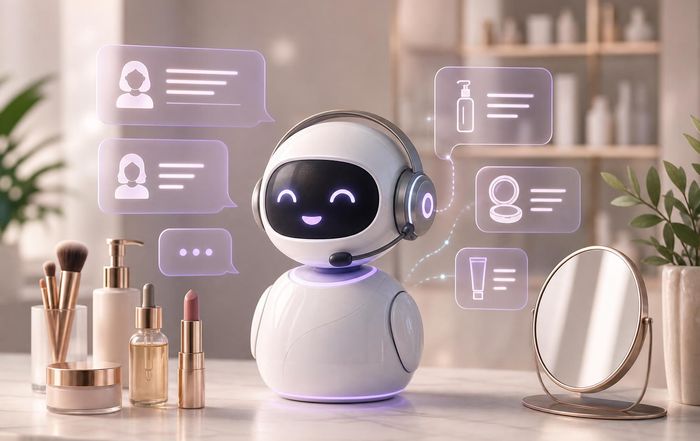
The Role of AI in Beauty Customer Support
A New Era of Beauty Customer Experience
So we are seeing that artificial intelligence has moved from being a novelty in the beauty sector to becoming a strategic pillar that reshapes how brands interact with consumers before, during, and after purchase. For BeautyTipa and its global audience spanning the United States, Europe, Asia, and beyond, the role of AI in beauty customer support is no longer a theoretical discussion; it is an operational reality that influences product discovery, routine building, after-sales service, and long-term brand loyalty across both digital and physical touchpoints. As beauty, wellness, and technology converge, customer support has evolved from reactive problem-solving into a proactive, data-driven experience engine that guides individuals through complex decisions in skincare, makeup, wellness, and lifestyle.
The beauty industry's rapid digitalization, accelerated by pandemic-era e-commerce growth and ongoing shifts in consumer expectations, has made always-on, personalized support indispensable. According to global analysts such as McKinsey & Company, digital engagement is now the primary interface between beauty brands and consumers in many markets, with AI-powered tools shaping everything from product recommendations to post-purchase education. Learn more about how AI is transforming consumer industries on the McKinsey insights portal. For the community around BeautyTipa, this transformation is not only a topic to report on; it is a framework for helping readers navigate the new landscape of intelligent beauty services, technologies, and business models.
From Call Centers to Cognitive Beauty Assistants
Traditional beauty customer support relied heavily on human call centers, in-store consultants, and email helpdesks, which, while often knowledgeable and empathetic, were limited by working hours, training variability, and inconsistent access to product and ingredient data. In contrast, AI-driven systems are capable of centralizing knowledge, standardizing responses, and operating at global scale, while still allowing for local nuance in markets such as the United States, United Kingdom, Germany, France, Japan, South Korea, and Brazil. Modern AI customer support in beauty is not confined to chatbots; it encompasses conversational assistants, intelligent search, visual recognition engines, and integrated omnichannel systems that connect websites, apps, social media, and physical retail.
Organizations such as Google, Microsoft, and OpenAI have invested heavily in natural language processing and multimodal AI, which now underpin many of the conversational tools deployed by beauty brands worldwide. Readers can explore the broader evolution of conversational AI on the Google AI overview and understand the enterprise implications through the Microsoft AI business resources. For beauty consumers, this technological backbone manifests as intuitive experiences: asking a virtual assistant for a routine for sensitive skin, receiving ingredient-safe recommendations, and getting follow-up guidance on how to layer products correctly, all within a single, seamless interaction.
Personalization at Scale: AI as the New Beauty Advisor
Personalization has long been a central ambition in beauty, yet traditional methods-such as in-store consultations or static online quizzes-were limited in their ability to adapt to changing skin conditions, seasonal variations, and lifestyle shifts. AI-enhanced customer support bridges this gap by continuously learning from user interactions, purchase histories, feedback, and even environmental data such as local climate or pollution levels. This continuous learning allows AI systems to propose skincare, makeup, and wellness solutions that are not only tailored to a user's profile but also dynamically updated over time.
On BeautyTipa, personalization is a recurring theme across content on skincare, routines, and beauty, reflecting the growing expectation that each interaction with a brand should feel uniquely relevant. AI-driven recommendation engines, inspired by advances from companies such as Amazon and Sephora, analyze vast datasets to suggest products that align with skin type, tone, concerns, and ethical preferences such as vegan, cruelty-free, or fragrance-free. Industry observers can study how recommendation systems work in consumer sectors via resources from the MIT Sloan Management Review and the Harvard Business Review, which regularly examine personalization and data-driven marketing.
Visual AI and Skin Diagnostics in Customer Support
One of the most transformative applications of AI in beauty customer support has been the rise of visual analysis and skin diagnostics. Using smartphone cameras and computer vision models, consumers can now scan their faces to receive assessments of hydration levels, fine lines, pigmentation, and other skin attributes. These insights are then connected to AI-driven support tools that guide individuals toward appropriate cleansers, serums, sunscreens, and treatments, including advice on how to integrate new products into existing routines.
Companies such as L'Oréal, Shiseido, and Estée Lauder have invested heavily in AI and AR technologies, often partnering with specialized tech firms to deliver virtual try-on and diagnostic capabilities. Readers interested in the broader scientific and technical foundations of computer vision can explore resources from the IEEE Computer Society and the Stanford Artificial Intelligence Laboratory. For BeautyTipa, this technology is particularly relevant for global audiences in markets like South Korea, Japan, and Singapore, where tech-forward beauty consumers expect high-precision analysis and evidence-based recommendations. Content in sections such as technology and beauty and trends increasingly highlights how these diagnostic tools influence purchasing behavior and redefine the role of customer support.
Omnichannel Support: Connecting Online, Mobile, and In-Store Experiences
In 2026, beauty customer support is no longer tied to a single channel. AI systems orchestrate interactions across e-commerce platforms, mobile apps, social media messaging, and physical retail, ensuring that conversations follow the customer rather than being confined to a single context. When a customer in Canada or Germany initiates a chat on a brand's website, receives a follow-up email, and later visits a boutique or department store, AI-enabled systems can provide consultants with a unified view of that individual's history, preferences, and previous support interactions, provided that the customer has consented to data sharing.
This omnichannel capability depends on robust data integration and customer relationship management platforms, many of which are provided by global technology leaders such as Salesforce, Oracle, and SAP. Those interested in how omnichannel strategies are implemented can learn more through the Salesforce resources on customer 360 and the Oracle customer experience hub. For BeautyTipa, which serves readers who shop across marketplaces, brand sites, and physical stores from New York to London, Paris, Seoul, and Sydney, understanding how AI stitches together these fragmented experiences is crucial for evaluating which brands truly deliver consistent, high-quality support.
AI, Wellness, and Holistic Beauty Guidance
Beauty customer support in 2026 increasingly extends beyond surface-level concerns to encompass wellness, lifestyle, and even mental health considerations. Consumers in markets such as the United States, United Kingdom, Australia, and Scandinavia are especially attuned to the links between stress, sleep, diet, and skin health, and they expect customer support to reflect this holistic perspective. AI-powered assistants now integrate information about stress management, exercise habits, and nutrition to offer more comprehensive advice that aligns with the rising demand for inside-out beauty.
On BeautyTipa, sections like wellness, health and fitness, and food and nutrition already underscore this interconnectedness, and AI-driven support complements such content by translating general wellness principles into personalized, practical suggestions. External resources from organizations like the World Health Organization and the Mayo Clinic provide a scientific foundation for understanding how lifestyle influences skin and overall well-being; readers can explore broader health guidance on the WHO official site and evidence-based medical information on the Mayo Clinic portal. When AI customer support tools are trained on trustworthy health information and carefully governed, they can help consumers make more informed decisions about both topical products and wellness habits that affect their appearance over time.
Ethical AI, Data Privacy, and Consumer Trust
As AI becomes more deeply embedded in beauty customer support, questions of ethics, data privacy, and transparency move to the forefront. Consumers in Europe, particularly in countries such as Germany, France, Italy, Spain, and the Netherlands, are acutely aware of data protection regulations such as the General Data Protection Regulation (GDPR), while markets in North America and Asia are gradually adopting stricter privacy frameworks. For AI-driven beauty support to succeed, brands must demonstrate that they handle personal and biometric data-such as facial scans and skin images-with the highest standards of security and integrity.
Regulators and policymakers, including the European Commission and various national data protection authorities, are actively shaping the legal environment for AI and digital services. Readers can stay informed about evolving regulations on the European Commission's digital strategy pages and through the OECD AI policy observatory. For BeautyTipa, which positions itself as a trusted guide, it is essential to emphasize that responsible AI in beauty means clear consent mechanisms, explainable recommendations, and the ability for consumers to control, access, and delete their data. Trust is not only a legal requirement but also a strategic advantage; brands that communicate openly about how AI works and why certain products are recommended are more likely to build long-term loyalty across diverse markets from Singapore and South Korea to South Africa and Brazil.
AI in Beauty Business and Operations: Behind the Scenes of Support
While consumers primarily experience AI through front-end tools such as chat interfaces and diagnostic apps, a significant part of AI's role in beauty customer support occurs behind the scenes. Predictive analytics, inventory optimization, and intelligent routing of customer queries all contribute to smoother, faster, and more reliable service. By analyzing patterns in support tickets, return reasons, and product reviews, AI systems can identify recurring issues-such as packaging problems, shade mismatches, or sensitivities to specific ingredients-and alert product development or quality teams to take corrective action.
This operational intelligence transforms customer support from a cost center into a strategic feedback loop that informs product innovation, marketing messages, and training for human beauty advisors. Business leaders and professionals can explore broader applications of AI in operations and customer experience through resources from Deloitte and PwC, available on the Deloitte insights platform and the PwC AI and analytics pages. For readers of BeautyTipa, especially those interested in business and finance and jobs and employment, understanding how AI reshapes internal workflows is critical for career planning, vendor selection, and strategic decision-making in beauty enterprises of all sizes.
Human-AI Collaboration: Elevating the Role of Beauty Experts
Despite the sophistication of AI systems in 2026, the most successful beauty brands recognize that human expertise remains irreplaceable, particularly in complex, emotionally nuanced interactions. AI excels at handling high volumes of routine questions, providing instant access to product information, and offering data-driven recommendations, but human consultants bring empathy, cultural sensitivity, and creative problem-solving that are essential in situations involving skin reactions, identity expression, or long-term transformation journeys. The emerging best practice is not to replace human advisors but to augment them with AI tools that surface relevant information, suggest next best actions, and free up time for deeper, more meaningful conversations.
Professional organizations and educational institutions, such as the British Beauty Council and the Professional Beauty Association in the United States, are increasingly focused on upskilling beauty professionals to work effectively alongside AI. Readers can explore industry perspectives on the British Beauty Council website and professional development resources via the Professional Beauty Association. For BeautyTipa, which covers guides and tips and international developments, highlighting this human-AI collaboration is essential to reassuring both professionals and consumers that technology is a tool for empowerment rather than displacement, especially in regions where beauty culture is closely tied to in-person consultation, such as Italy, Japan, and the Middle East.
Global and Cultural Nuances in AI-Driven Beauty Support
Beauty is profoundly shaped by culture, climate, and local standards of aesthetics, and AI systems must account for this diversity to provide meaningful support. A consumer in South Korea may prioritize glass skin and multi-step routines, while someone in Scandinavia may focus on minimalist regimens and barrier protection against cold, dry weather, and a customer in Brazil may seek humidity-resistant makeup and sun protection suitable for tropical conditions. Effective AI in beauty customer support therefore relies on diverse training data, localized content, and continuous feedback from regional experts to avoid one-size-fits-all recommendations that overlook cultural context.
Global organizations such as UNESCO and the World Economic Forum frequently highlight the importance of cultural diversity and inclusion in AI development; readers can explore these perspectives on the UNESCO AI and ethics portal and the World Economic Forum's AI initiatives. For BeautyTipa, whose readership spans North America, Europe, Asia, Africa, and South America, this cultural sensitivity is central to editorial choices, product coverage, and event reporting in areas such as events, fashion, and makeup. AI-powered customer support that recognizes local beauty ideals, regulatory constraints, and ingredient preferences is more likely to resonate with consumers and avoid missteps that can erode trust.
The Future Landscape of Opportunities and Risks Still To Come
Watching for the trajectory of AI in beauty customer support suggests deeper integration, greater personalization, and more seamless blending of digital and physical experiences. Emerging advances in generative AI, multimodal interfaces, and wearable devices may enable real-time coaching on skincare application, adaptive makeup suggestions based on lighting and environment, and continuous monitoring of skin health indicators. At the same time, the expansion of AI raises important questions about algorithmic bias, environmental impact of large-scale computing, and the potential over-automation of intimate, identity-related decisions.
Thought leadership from institutions such as the Alan Turing Institute and the Carnegie Endowment for International Peace offers nuanced analysis of these broader AI risks and governance challenges; readers can explore these discussions on the Alan Turing Institute website and the Carnegie AI and ethics pages. For BeautyTipa, the path forward involves not only reporting on new tools and trends but also critically evaluating how they serve-or fail to serve-consumers across different demographics, skin types, and cultural backgrounds. By combining technology literacy with a deep understanding of beauty, wellness, and lifestyle, BeautyTipa is positioned to help fans and readers make informed choices in an increasingly AI-mediated world.
In this evolving landscape, the most successful beauty brands will be those that treat AI not as a shortcut to reduce human contact, but as a powerful instrument to enhance expertise, deepen relationships, and deliver consistent, trustworthy support at scale. Consumers will gravitate toward organizations that are transparent about how AI is used, respectful of privacy, and committed to inclusive, evidence-based recommendations. As AI continues to reshape customer support from New York to London, Berlin to Singapore, and Seoul to São Paulo, BeautyTipa will remain a dedicated guide, connecting its audience to the insights, tools, and perspectives needed to navigate the future of intelligent beauty with confidence and discernment.
