
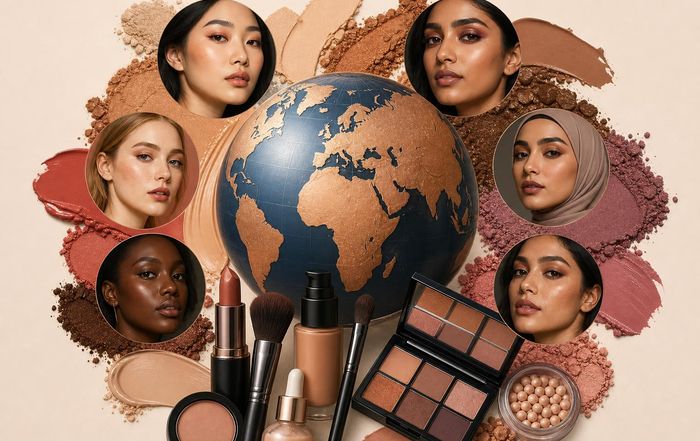
Global Makeup Preferences Across Modern Consumers!
The New Geography of Beauty
In 2026, global makeup preferences reflect a world that is more interconnected, digitally driven, and values-conscious than ever before, and as BeautyTipa speaks daily with readers from North America, Europe, Asia-Pacific, the Middle East, Africa, and South America, it becomes clear that makeup is no longer just a category of products but a complex language of identity, wellbeing, technology, and business strategy. While traditional centers of influence such as the United States, the United Kingdom, France, Japan, and South Korea still shape colour stories and product innovation, emerging voices from Brazil, South Africa, Thailand, and the Nordic countries are redefining what authenticity, sustainability, and inclusivity mean in the beauty space, pushing brands and professionals to evolve their formulations, marketing narratives, and channel strategies in real time.
This global evolution is not occurring in a vacuum; it is tightly linked to broader shifts in wellness, mental health, environmental responsibility, and economic uncertainty, which together make consumers more selective and better informed than at any point in the past. Industry research from organizations such as McKinsey & Company and Euromonitor International shows that consumers in 2026 expect makeup to perform multiple roles at once, from enhancing appearance and protecting skin to signaling values related to diversity and climate responsibility, and these expectations are reshaping entire product portfolios and business models. Readers online or RSS / ATOM / Email subscribers exploring beauty overviews on BeautyTipa increasingly look for context, not just product lists, seeking to understand how global trends translate into their local markets and personal routines.
Skin-First Beauty and the Rise of Hybrid Formulas
One of the most powerful forces shaping global makeup preferences is the ongoing convergence of skincare and colour cosmetics, a movement that accelerated during the pandemic years and has now matured into a mainstream expectation in markets from the United States and Canada to Germany, Japan, and Singapore. Consumers who once treated foundation and serum as separate steps now seek hybrid products that deliver both immediate aesthetic payoff and long-term skin benefits, and this is visible in the growth of tinted serums, SPF-infused complexion products, and colour cosmetics with barrier-supporting ingredients such as ceramides, niacinamide, and peptides.
Dermatology resources such as the American Academy of Dermatology and the British Association of Dermatologists have contributed to greater public awareness of issues like barrier health, hyperpigmentation, and photoaging, pushing consumers to scrutinize ingredient lists and to demand evidence-based claims rather than vague promises. On BeautyTipa's skincare hub at beautytipa.com/skincare.html, readers increasingly ask how to integrate makeup into routines that already include acids, retinoids, and prescription treatments, emphasizing the need for non-comedogenic, fragrance-conscious, and photostable formulations that can coexist with active ingredients without causing irritation or sensitivity.
This skin-first mindset manifests differently across regions, reflecting variations in climate, phototype, and cultural norms. In South Korea and Japan, sheer, luminous bases with high SPF remain central, supported by a long tradition of layering skincare under lightweight complexion products, while in the United States, the United Kingdom, and Australia, there is a growing demand for mineral or hybrid sunscreens that sit comfortably under makeup and do not leave a white cast on diverse skin tones. In countries such as Brazil, South Africa, India, and Malaysia, where UV exposure is intense and humidity is high, long-wear, sweat-resistant textures that still allow the skin to breathe are prioritized, and local consumers are increasingly vocal about the need for inclusive shade ranges that respect undertones and regional skin concerns.
Minimalism, Maximalism, and the New Aesthetic Spectrum
Global makeup preferences in 2026 cannot be described as purely minimalist or maximalist; instead, they inhabit a spectrum where subtle daytime looks coexist with bold, editorial-inspired experimentation, often within the same consumer's weekly routine. The "clean girl" and "no-makeup makeup" aesthetics that dominated social media in the early 2020s have evolved into a more flexible concept of "enhanced naturality," where skin texture, freckles, and individual features are celebrated rather than masked, yet strategic use of concealer, blush, and brow products remains central. At the same time, the influence of TikTok, Instagram, and newer platforms has normalized vibrant colour, graphic liner, and unconventional finishes, particularly among Gen Z and younger millennials who see makeup as a tool of self-expression rather than conformity.
Fashion authorities such as Vogue and Business of Fashion have documented this duality on runways and in street style across New York, London, Milan, and Paris, where barely there complexions are often paired with a single statement element, such as a bold red lip, chrome eye, or hyper-glossed lid. Readers visiting BeautyTipa's trends section encounter this interplay in coverage of seasonal looks from cities like Berlin, Copenhagen, Seoul, and São Paulo, where local interpretations of global aesthetics reflect climate, cultural codes, and the influence of regional celebrities and influencers.
The tension between minimal and maximal is especially visible in markets such as the United States, the United Kingdom, and Canada, where workplace norms and hybrid office structures allow for understated looks on weekdays and more dramatic experimentation on evenings and weekends. In contrast, in many parts of the Middle East and Latin America, full-coverage complexions, sculpted contouring, and defined eye looks remain popular for social occasions, even as younger consumers experiment with softer, skin-revealing finishes for everyday wear. This fluidity suggests that the future of makeup is less about subscribing to a singular aesthetic and more about building a versatile kit that can adapt to different roles, moods, and environments.
Regional Preferences: From North America to Asia-Pacific
Although global digital culture accelerates trend diffusion, regional preferences still matter deeply, and understanding them is critical for brands, retailers, and professionals navigating international expansion. In North America, where the United States and Canada remain highly influential, consumers prioritize convenience, performance, and value, leading to strong demand for multitasking products, travel-friendly formats, and bundles that integrate skincare and makeup. Retail ecosystems led by Sephora, Ulta Beauty, and major drugstore chains continue to shape product discovery, but social commerce and direct-to-consumer channels are increasingly important, particularly for indie and niche brands focused on specific communities or ingredients.
In Western Europe, especially the United Kingdom, France, Germany, Italy, Spain, and the Netherlands, there is a nuanced balance between heritage and innovation, with consumers often trusting established houses such as L'Oréal, Chanel, and Dior while simultaneously exploring emerging, sustainability-focused labels. Regulatory frameworks guided by bodies like the European Commission and the European Chemicals Agency influence ingredient choices and claims, and this contributes to a perception among many consumers that European products are rigorously vetted and relatively safe, though debates around fragrance allergens, preservatives, and "clean beauty" marketing remain active.
Asia-Pacific is perhaps the most dynamic region in terms of makeup innovation and trend creation, with South Korea and Japan continuing to set global standards in textures, packaging, and skin-enhancing bases, while China's vast digital ecosystem drives rapid cycles of product testing and feedback. The popularity of cushion compacts, gradient lips, and soft, blurred finishes in markets like South Korea and Thailand has influenced preferences worldwide, and many readers on BeautyTipa's international page look to K-beauty and J-beauty as sources of inspiration for both everyday and experimental looks. Meanwhile, in Australia and New Zealand, sun protection and sweat-resistant formulas are non-negotiable, with a strong emphasis on breathable, lightweight products that withstand heat and outdoor lifestyles.
In Latin America, particularly Brazil and Mexico, vibrant colour, glow-enhancing highlighters, and long-wear lip products are central to self-expression, often combined with robust brow styling and defined eyes that hold up in humid climates. African markets such as South Africa, Nigeria, and Kenya show growing demand for complexion products that cater to deeper skin tones and local undertones, with consumers increasingly vocal on social media about the gaps they still encounter in shade ranges and marketing representation. The Middle East, with hubs such as Dubai and Riyadh, continues to favor high-impact glam for events and social gatherings, while also embracing luxurious textures and high-performance bases that can withstand heat and long wear.
Technology, AI, and Personalization in Makeup
By 2026, technology has become a core driver of how consumers discover, test, and purchase makeup, and BeautyTipa has seen a surge of interest in how artificial intelligence, augmented reality, and data analytics are reshaping the beauty landscape. Virtual try-on tools, once considered a novelty, are now integrated into major e-commerce platforms and brand apps, allowing users to test foundations, lipsticks, and eye products on live video or uploaded photos, reducing uncertainty and returns while enabling more confident shade selection. Companies such as L'Oréal, Estée Lauder Companies, and Shiseido have invested heavily in these capabilities, often in partnership with technology firms and startups, and their efforts are closely tracked in BeautyTipa's technology and beauty section.
Artificial intelligence also underpins increasingly sophisticated recommendation engines, which draw on skin data, purchase history, and stated preferences to suggest products and routines tailored to specific concerns, climates, and lifestyles. Research from organizations like MIT Technology Review and Gartner indicates that consumers are willing to share certain types of data in exchange for more precise product matches, provided that privacy is respected and transparency is maintained. At the same time, there is growing scrutiny over algorithmic bias, particularly in complexion matching for darker skin tones, and industry stakeholders are under pressure to ensure that training datasets reflect the full diversity of global consumers.
Beyond virtual try-on and personalization, technology is transforming product development and testing, with innovations such as AI-assisted shade range design, digital consumer panels, and predictive analytics for trend forecasting. These tools enable brands to react more quickly to shifts in consumer preferences, whether that means launching a new finish that resonates with Gen Z in the United States or adapting textures to better suit humid climates in Southeast Asia. For professionals and job seekers, this technological shift is creating new roles at the intersection of beauty, data science, and digital marketing, a trend increasingly visible in BeautyTipa's jobs and employment coverage.
Sustainability, Ethics, and Conscious Consumption
Sustainability and ethics, once peripheral considerations, now sit at the heart of global makeup decision-making, especially among younger consumers in the United States, the United Kingdom, Germany, the Nordics, Canada, Australia, and parts of Asia. Surveys by organizations such as the World Economic Forum and NielsenIQ suggest that a growing share of consumers are willing to switch brands, and in some cases pay a premium, for products that align with their environmental and social values, though price sensitivity remains a powerful counterforce in an era of inflation and economic uncertainty.
In practical terms, this translates into heightened interest in refillable packaging, recyclable components, and reduced plastic use, as well as scrutiny of ingredient sourcing, animal testing policies, and supply chain transparency. The European Union's evolving regulations on packaging waste and green claims, alongside initiatives by bodies like the United Nations Environment Programme, are pushing brands toward more verifiable and standardized sustainability practices. Consumers increasingly seek to learn more about sustainable business practices and how they intersect with profitability, innovation, and long-term brand equity.
Ethical considerations extend beyond the environment to encompass labor practices, diversity and inclusion in marketing, and representation in product development. Movements advocating for shade inclusivity, cultural sensitivity in campaign imagery, and fair working conditions in ingredient sourcing regions have gained momentum, amplified by social media and investigative journalism from outlets such as The Guardian and The New York Times. For BeautyTipa, which engages with readers from South Africa, Brazil, Malaysia, and beyond, these issues are not abstract; they shape trust in brands and influence which products and companies the community chooses to highlight and support.
Wellness, Mental Health, and the Emotional Role of Makeup
The relationship between makeup and wellness has deepened substantially, and in 2026 many consumers view their beauty routines as integral to their mental health, self-care, and daily rituals, rather than purely aesthetic pursuits. Studies from organizations like the World Health Organization and Harvard Health Publishing have brought attention to the psychological effects of routines, personal grooming, and self-presentation, highlighting how small, repetitive acts-such as applying a favorite lipstick or blending foundation-can provide grounding, comfort, and a sense of control in uncertain times.
This emotional dimension is reflected in the language consumers use when discussing products, emphasizing how makeup makes them feel-confident, calm, expressive-rather than solely how it makes them look. On BeautyTipa's wellness pages at beautytipa.com/wellness.html, readers frequently connect makeup choices to broader lifestyle factors such as sleep, stress management, nutrition, and exercise, building holistic approaches that integrate health and fitness and food and nutrition with skincare and cosmetics. This convergence has encouraged brands to frame products not only in terms of coverage and wear time but also in terms of sensory experience, mood enhancement, and ritual.
At the same time, there is a growing dialogue about the potential pressures and unrealistic expectations that can accompany beauty standards, particularly on image-centric platforms. Organizations like the National Alliance on Mental Illness and Mind in the United Kingdom have emphasized the importance of media literacy, self-compassion, and boundary-setting in digital environments, and many consumers are now more selective about which influencers and brands they follow, favoring those that promote realistic imagery and balanced messaging. This shift is encouraging a more nuanced understanding of makeup as a tool that can either support or undermine wellbeing, depending on how it is used and framed.
Business Models, Retail Channels, and Economic Realities
From a business perspective, global makeup preferences are tightly linked to shifts in retail channels, pricing strategies, and brand portfolios, as companies navigate a landscape marked by economic volatility, supply chain disruptions, and intense competition. Hybrid shopping journeys-where a consumer might research products on YouTube, test shades via augmented reality, read editorial reviews on platforms like Allure, and then purchase either online or in-store-are now standard, and brands that fail to deliver a seamless omnichannel experience risk losing relevance. On BeautyTipa's business and finance hub, readers follow how legacy conglomerates and indie brands alike adjust their strategies, from subscription models and loyalty programs to collaborations with fashion houses and entertainment franchises.
Economic pressures are shaping preferences in subtle but significant ways, encouraging consumers to seek greater value without sacrificing performance or ethics. This has boosted interest in multi-use products-such as lip-and-cheek sticks, complexion palettes, and versatile eye pigments-that stretch budgets while supporting creative expression. At the same time, premium and luxury segments remain resilient in many markets, particularly where makeup is seen as an accessible indulgence or where consumers prioritize long-term performance, skincare benefits, and elevated experiences over sheer quantity. The balance between mass, masstige, and luxury offerings is evolving differently across regions, influenced by local income levels, retail infrastructure, and cultural attitudes toward conspicuous consumption.
For professionals and job seekers, the evolving business landscape has created new career paths at the intersection of beauty, technology, and sustainability, from data-driven product development roles to ESG-focused leadership positions. Coverage on BeautyTipa's jobs and employment page reflects how makeup artistry, brand management, and retail roles now require fluency in digital tools, cross-cultural communication, and ethical considerations, especially for those working in multinational contexts spanning Europe, Asia, North America, and beyond.
Practical Routines and Everyday Application?
While macro trends and business strategies are important, global preferences ultimately manifest in everyday routines, and BeautyTipa regularly explores how consumers translate these trends into practical steps at the mirror. In the United States, Canada, and the United Kingdom, a typical weekday routine might involve a lightweight, skincare-infused base, targeted concealing, cream blush, brow grooming, and a tinted balm or soft matte lipstick, with optional mascara and subtle highlight, reflecting the desire for efficiency, skin health, and a polished yet approachable look. In Germany, the Netherlands, and Scandinavia, routines often lean even more minimal, with emphasis on SPF, subtle complexion correction, and neutral tones that complement professional environments and climate conditions.
In contrast, in markets such as Italy, Spain, Brazil, and parts of the Middle East, many consumers maintain a stronger emphasis on eye definition and lip colour, even in daytime settings, though there is a noticeable shift toward more breathable bases and less heavy contouring compared to earlier in the decade. Across Asia, routines vary widely, but common elements include meticulous skin preparation, attention to UV protection, and strategic use of blush and highlighter to create dimension without heavy sculpting, often complemented by soft, gradient lip techniques and natural-looking brows. Readers seeking structured guidance can explore BeautyTipa's routines hub and guides and tips section, where regional nuances and product types are translated into step-by-step approaches suitable for different climates, skin types, and cultural norms.
Evening and event looks remain a key area of experimentation worldwide, particularly around weddings, festivals, and social gatherings, where bolder colours, metallic finishes, and advanced techniques such as cut creases or multi-dimensional highlighting come into play. Coverage of beauty events and industry gatherings on BeautyTipa shows how runway shows, trade fairs, and influencer-led masterclasses in cities from New York and London to Seoul and Dubai continue to inspire consumers to refine their skills and expand their product arsenals, often blending global techniques with local aesthetics.
The Future of Global Makeup Preferences!
Looking ahead, global makeup preferences are likely to become even more individualized, data-informed, and value-driven, as consumers around the world continue to negotiate the interplay between self-expression, cultural identity, environmental responsibility, and economic realities. Advances in biotechnology, AI-driven formulation, and sustainable materials may give rise to new categories of products that adapt dynamically to skin conditions, climate, and lighting, while regulatory changes and consumer activism will push brands toward greater transparency and accountability. Platforms like BeautyTipa, which bridge beauty, wellness, technology, and business, will play an increasingly important role in helping consumers make informed decisions, compare regional perspectives, and integrate global innovation into their personal routines.
As readers from the United States, the United Kingdom, Germany, Canada, Australia, France, Italy, Spain, the Netherlands, Switzerland, China, Sweden, and beyond connect with BeautyTipa's global coverage, one theme stands out: makeup in 2026 is no longer about adhering to a single ideal but about curating tools and practices that align with individual values, lifestyles, and aspirations. Whether the priority is skin health, artistic experimentation, sustainability, professional polish, or emotional wellbeing, the modern consumer expects makeup to serve as a trusted partner, and the brands and professionals that thrive will be those that combine experience, expertise, authoritativeness, and trustworthiness in a way that respects both global diversity and personal nuance.
