
Why Your Hair Gets Frizzy After Washing - And How to Actually Fix It
For many people, wash day follows the same frustrating pattern: hair looks smooth in the shower, feels soft while wet, and then dries into a halo of frizz. Understanding why this happens is the first step to changing it. Frizz is not just "bad hair" or something you have to accept; it's usually a sign of how your hair's structure, products, and environment are interacting. With a few targeted changes to your routine, it's possible to keep definition, shine, and smoothness long after your hair dries.
This guide explains what's really happening when hair frizzes after washing, the most common mistakes that make it worse, and practical strategies to keep your hair smoother-whether it's straight, wavy, curly, or coily.
What Frizz Actually Is (And Why Wash Day Makes It Worse)
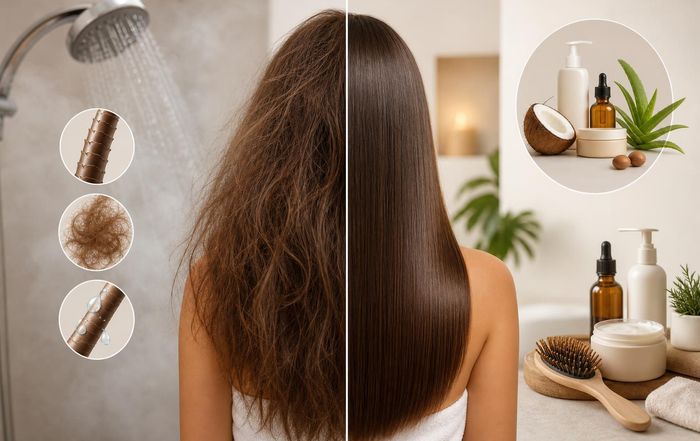
Frizz is essentially hair that is raised, rough, and misaligned. At a microscopic level, each strand is covered in overlapping cuticle scales, similar to shingles on a roof. When these scales lie flat, hair reflects light and appears smooth. When they lift or chip, hair looks dull, feels rough, and individual strands stick out in different directions.
Hair becomes frizzy mainly because it is dry, damaged, or highly porous, which makes it more reactive to humidity and water. The American Academy of Dermatology (AAD) notes that hair damage and dryness can come from chemical processing, heat styling, UV exposure, and rough handling, all of which disrupt the cuticle and internal structure of the hair shaft. When you wash your hair, you expose it to water, surfactants (cleansing agents), friction, and often high heat from blow-drying. For hair that is already porous or fragile, that's a perfect storm: it swells with water, loses lipids and moisture, and then dries in an uneven, swollen state, which shows up as frizz.
Water itself also plays a role. Hair is made largely of keratin proteins held together by different types of bonds, including hydrogen bonds that are easily broken and reformed by water. According to cosmetic science research summarized by the Journal of Cosmetic Science, when hair gets wet, hydrogen bonds break, allowing the strand to temporarily change shape. As hair dries, new bonds form in whatever position the hair is in. If hair dries in a chaotic, rough state with no tension or smoothing product, those new bonds can lock in frizz and fuzz rather than smooth definition.
The Science of Hair Porosity and Why It Matters for Frizz
Porosity describes how easily hair absorbs and loses water and products. While social media often oversimplifies porosity into "high, medium, low," the underlying concept is grounded in how damaged or intact the cuticle and cortex are.
Highly porous hair-often from bleaching, coloring, relaxing, or aggressive heat styling-has gaps and cracks in the cuticle. Studies on chemically treated hair published in the International Journal of Cosmetic Science show that this damage increases water uptake and swelling. The hair shaft can balloon with moisture during washing, then rapidly lose it as it dries, leaving strands rough and dehydrated. This is why bleached or frequently dyed hair often looks frizzy even when it has been conditioned.
Low-porosity hair, by contrast, has tightly packed cuticles that resist water and products. It tends to repel moisture at first and can feel coated or product-laden. If shampoo or conditioner is not rinsed well, residue can sit on the surface and create buildup, which interferes with how the cuticle lies and can cause flyaways and dullness rather than classic "puffy" frizz. For both types, how you wash and dry the hair can either help the cuticle lie flat or encourage it to lift.
Readers who want to dive deeper into hair structure and porosity may find it useful to explore broader hair-health coverage alongside related topics such as skincare and wellness, since skin and scalp health are closely linked.
Common Wash-Day Habits That Trigger Frizz
Most frizz after washing is not inevitable; it's often the result of a few small but significant habits.
One of the biggest culprits is using harsh shampoos or washing too frequently. Many traditional shampoos rely on strong surfactants such as sodium lauryl sulfate, which are very effective at removing oil but can strip the hair and scalp of protective lipids. The AAD and organizations like the British Association of Dermatologists advise that people with dry or textured hair often benefit from gentler, sulfate-free shampoos and less frequent washing. When the protective lipid layer is stripped away, the cuticle is more exposed and more likely to lift, which makes hair more vulnerable to humidity and friction.
Another common issue is rough towel drying. Rubbing hair vigorously with a standard cotton towel creates friction that can ruffle the cuticle and cause breakage, especially when hair is wet and at its weakest. Research on hair fiber mechanics, including work published by L'Oréal Research & Innovation, shows that wet hair stretches more easily and is more prone to damage from mechanical stress. That quick rub with a towel can undo the benefits of even the best conditioner.
Water temperature can also contribute. Very hot water can lift the cuticle and strip scalp oils more aggressively. While there is no universal "perfect" temperature, dermatologists often recommend lukewarm water for both skin and hair to preserve barrier function, as discussed by the Cleveland Clinic in their patient education on healthy bathing habits. Overly hot showers may feel relaxing but can leave hair and scalp more dehydrated and frizz-prone.
Finally, skipping leave-in protection is a subtle but important factor. Once you rinse out your conditioner, hair is essentially unprotected as it dries, especially in dry indoor air or humid climates. Without a leave-in conditioner, cream, or serum to smooth and seal the cuticle, the hair shaft is exposed to friction, pollution, and ambient humidity, which can all drive frizz. For readers building a more complete care routine, it can be helpful to think of hair care similarly to a skin routine, where you wouldn't cleanse without following with moisturizer, as discussed in many of our routines-focused guides.
How Hair Type and Texture Change the Way Frizz Shows Up
Not all frizz looks the same, and hair type plays a major role in how it appears after washing. Straight hair often shows frizz as scattered flyaways, a lack of shine, and ends that look dry or "feathery." Because straight hair lies closer to the scalp, oil distribution from the scalp can be more even, but if the cuticle is roughened by heat or color, it can still look fuzzy and dull after washing.
Wavy hair tends to lose its pattern and puff out, especially at the crown and ends. Many people with wavy hair find that shampooing the entire length too often leaves the mid-lengths and ends dehydrated. The Curly Girl Method, popularized in part by stylist Lorraine Massey, emphasizes applying shampoo mainly to the scalp and using conditioner to cleanse the lengths, a technique that many wavy and curly people adapt in their own routines. While not a scientific protocol, it aligns with the broader understanding that mid-lengths and ends usually need more conditioning than cleansing.
Curly and coily hair types are naturally drier because sebum from the scalp has a harder time traveling down the bends and coils. The American Academy of Dermatology notes that Afro-textured and tightly coiled hair often benefits from less frequent washing, co-washing (cleansing with conditioner), and regular use of rich emollients and oils. After washing, curls can frizz when there is not enough moisture and hold to define the curl pattern, or when the hair is manipulated too much while drying. For textured hair, how you handle it in the "wet-to-damp" phase is often more important than the specific shampoo brand you use.
Understanding your hair type and how it behaves in humidity can help you choose the right techniques and products, and this is where exploring tailored beauty and hair trend coverage can provide additional inspiration.
Step-by-Step: A Frizz-Reducing Wash Routine
Transforming frizzy wash days into smoother ones usually requires changing several steps rather than relying on a single "miracle" product. The following approach can be adapted to most hair types, with tweaks for your specific needs.
Start before you even step into the shower by detangling gently on dry or slightly damp hair. Use a wide-tooth comb or your fingers and, if needed, a light detangling spray. This reduces the amount of tugging and friction you'll need while the hair is wet. The AAD advises avoiding aggressive brushing on wet hair to minimize breakage; getting major knots out beforehand makes it easier to follow that advice.
In the shower, focus shampoo on the scalp and roots rather than scrubbing the lengths. Massage with the pads of your fingers, not nails, to cleanse buildup and sweat without scratching the scalp. Let the suds run down the lengths as you rinse; for many people, that is enough to cleanse the mid-lengths and ends without stripping them. Choosing a sulfate-free shampoo or one labeled for dry, damaged, or color-treated hair can help maintain moisture. Brands often highlight ingredients like glycerin, aloe, or gentle surfactants such as coco-betaine; independent guides from sources like Harvard Health Publishing emphasize that milder cleansers and fewer irritants tend to be better tolerated by sensitive skin and scalps.
Next, apply conditioner generously from mid-lengths to ends, where hair is oldest and driest. Use your fingers or a wide-tooth comb to distribute it and gently detangle. Leaving conditioner on for a few minutes allows it to deposit conditioning agents and smooth the cuticle. Ingredients like fatty alcohols (cetyl or stearyl alcohol), cationic surfactants (behentrimonium chloride), and oils or butters can all help reduce friction and frizz. Rinse with cool to lukewarm water to help the cuticle lie flatter; while the effect is modest, cooler water is less likely to strip remaining lipids.
Once out of the shower, avoid wringing or rough rubbing. Instead, gently squeeze out excess water with your hands, then blot and scrunch with a soft T-shirt or microfiber towel. These materials create less friction than traditional terry cloth. Immediately apply a leave-in conditioner, cream, or serum to damp hair, focusing on the ends and any frizz-prone areas. Look for products that combine humectants (like glycerin), emollients (like oils or butters), and film-forming agents (like polyquaterniums or certain plant extracts), which can help smooth the cuticle and shield against humidity. For readers looking to compare formulas and finishes, product-focused coverage on brands and products can help decode ingredient lists and textures.
Drying Techniques That Make the Biggest Difference
How hair dries is just as important as how it is washed. Air-drying and blow-drying can both be compatible with smooth results, but the details matter.
If air-drying, apply your leave-in products while hair is still very damp and then minimize touching as it dries. Every time you rake your fingers through or flip your hair, you disturb the forming hydrogen bonds and rough up the cuticle. Many curl and wave specialists recommend "setting" hair in the pattern you want-whether that's clumped curls, defined waves, or a smooth blowout-and then letting it dry in that configuration with as little interference as possible. Techniques like "plopping" (wrapping curls in a T-shirt or microfiber towel to encourage clumping) are popular in the curly community and, while not formally studied in clinical trials, align with the principle of reducing friction while hair is wet.
If you prefer to blow-dry, heat and airflow control are critical. The Skin Cancer Foundation and other health organizations point out that excessive heat damages hair proteins and lipids, which can worsen frizz over time. Use the lowest heat and speed that still dries your hair in a reasonable time, and always apply a heat protectant. These products typically contain silicones or polymers that form a thin film around the hair shaft, reducing water loss and direct heat exposure. Research published in the Journal of Cosmetic Dermatology suggests that some silicone-based protectants can significantly reduce cuticle damage from blow-drying and flat ironing.
For smoother results, use a nozzle attachment on your dryer and direct airflow down the hair shaft, from roots to ends, to help lay the cuticle flat. A round brush can add tension and smoothness for straight or blown-out styles, while a diffuser can help curls and waves dry with more definition and less frizz. Always finish with a cool shot if your dryer offers it; this helps set the style and can encourage the cuticle to lie flatter.
Readers interested in the technology behind newer hair tools-such as infrared dryers, brush dryers, and advanced diffusers-may want to explore coverage in technology beauty, where emerging devices and their claims are often examined in more depth.
Product Strategies: Ingredients That Help (And Those That Don't)
While technique is crucial, the right products can make a noticeable difference to frizz control, especially after washing. It's helpful to think in terms of layers: cleanse, condition, protect, and finish.
For cleansing, look for shampoos that are sulfate-free or low-sulfate and contain conditioning agents. Ingredients like cocamidopropyl betaine, decyl glucoside, and sodium cocoyl isethionate are milder surfactants often highlighted in sensitive or dry-hair formulas. The Environmental Working Group's Skin Deep database and similar resources catalog cosmetic ingredients, though they should be used alongside expert guidance from dermatologists and cosmetic chemists rather than as sole authorities.
Conditioners, both rinse-out and leave-in, are your primary anti-frizz tools. Fatty alcohols (cetyl, cetearyl, stearyl) help give slip and softness. Cationic surfactants (behentrimonium methosulfate, cetrimonium chloride) bind to the negatively charged hair surface, smoothing and reducing static. Oils like argan, jojoba, and sunflower can help with shine and lubrication, while butters like shea or mango may suit thicker, coarser hair. The Journal of Cosmetic Science has published studies suggesting that some plant oils, such as coconut oil, can penetrate the hair shaft and reduce protein loss, though not all oils behave this way.
Silicones are often debated. Ingredients like dimethicone and amodimethicone are effective at smoothing frizz and providing slip, and reviews in cosmetic science literature indicate they can protect against mechanical damage. However, some people experience buildup or dislike the feel, especially on fine or low-porosity hair. If you use silicone-heavy products, an occasional clarifying shampoo (used sparingly) can help remove residue. For those avoiding silicones, film-forming humectants like flaxseed extract, aloe, or certain plant gums can offer some smoothing, though often with a different feel and hold.
One ingredient to be cautious with in high-humidity environments is strong humectants (like high levels of glycerin) without adequate sealing agents. Humectants attract water from the air into the hair shaft. In moderate humidity, this can help maintain moisture, but in very humid weather, it can cause excessive swelling and frizz. Balancing humectants with emollients and occlusives is key, a principle also familiar from skincare routines, where similar ingredient categories are used to manage skin hydration.
Lifestyle, Climate, and Long-Term Frizz Management
Frizz is not only about products and wash technique; lifestyle and environment also influence how your hair behaves. Humid climates, for instance, make it easier for water molecules in the air to penetrate the hair shaft, especially if the cuticle is already raised or damaged. According to basic principles of hair fiber science discussed by the Society of Cosmetic Chemists, this humidity-driven swelling is a major driver of frizz. In such climates, anti-humidity sprays, stronger film-forming products, and styles that keep hair more contained (braids, buns, twists) can help preserve smoothness between washes.
Indoor environments can be just as influential. Central heating and air conditioning reduce ambient humidity, which can dry both hair and scalp. Using a humidifier at home, especially in winter, can help maintain a more hair-friendly environment. Organizations like the Mayo Clinic note that moderate indoor humidity is also beneficial for skin and respiratory comfort, which makes this a broader wellness consideration, not just a beauty one.
Nutrition and overall health also matter. Hair is a non-essential tissue from the body's perspective, so chronic stress, restrictive diets, or underlying health conditions can show up as dullness, breakage, or increased shedding. The British Nutrition Foundation and similar organizations emphasize adequate intake of protein, iron, zinc, and vitamins like biotin and vitamin D for normal hair growth and maintenance. While supplements are not a cure-all for frizz, ensuring a balanced diet and managing stress can improve the baseline strength and resilience of your hair.
For readers who enjoy a holistic approach, exploring health and fitness and food and nutrition coverage can provide complementary insights into how lifestyle choices affect not just hair, but overall appearance and well-being.
When to Consider Professional Help
Sometimes, persistent frizz after washing is a sign that hair has been severely damaged or that there are underlying scalp or health issues. If hair feels rough and gummy when wet, breaks off easily, or has white dots along the shaft, it may be experiencing structural damage from bleaching, relaxing, or repeated high-heat styling. In such cases, no at-home routine will fully "repair" the hair, because damage to the cortex is irreversible. Trims, gentler styling, and gradual cutting off of the most damaged lengths are often necessary.
A board-certified dermatologist or trichologist can help assess whether there are scalp conditions-such as seborrheic dermatitis, psoriasis, or fungal infections-that are contributing to hair fragility or uneven texture. The American Academy of Dermatology offers a directory of dermatologists and educational materials on hair and scalp disorders, which can be a starting point if you suspect something more than cosmetic frizz.
Professional stylists can also be valuable partners in managing frizz. They can assess your hair's porosity, density, and pattern in person, recommend appropriate cuts that reduce bulk or encourage curl formation, and suggest salon treatments such as bond-building services. While smoothing treatments like keratin or chemical straightening can dramatically reduce frizz, they also carry risks, including potential exposure to formaldehyde or similar compounds. Reports from organizations like the U.S. Food and Drug Administration (FDA) and Health Canada have highlighted safety concerns around some formaldehyde-releasing hair-smoothing products, so it is important to ask salons about the specific formulas they use and to weigh benefits against possible health risks.
Readers considering professional treatments or career paths in hair and beauty may also be interested in broader industry coverage, including business and finance for salon owners and jobs and employment for those exploring beauty careers.
Putting It All Together: Building a Frizz-Smart Routine
Frizz after washing is not a single problem with a single solution. It's the visible result of how your hair's natural structure, past damage, products, and environment interact-especially in that vulnerable window when hair goes from soaking wet to fully dry. The most effective approach is to adjust the whole routine: gentler cleansing focused on the scalp, thorough conditioning of the lengths, careful handling while wet, strategic product layering, and controlled drying.
Over time, small changes-switching to a softer towel, lowering water temperature, adding a leave-in, using a diffuser instead of blasting hot air, trimming damaged ends regularly-add up. Most people see improvement not in one dramatic wash day but gradually over several weeks as new habits protect the hair and prevent further damage. With a bit of experimentation and attention to how your hair responds, it is entirely possible to step out of the shower and, instead of bracing for frizz, actually look forward to how your hair dries.
